

TL;DR:
- Dresses reflect social and cultural changes throughout the centuries and are a symbol of female identity.
- Modern trends emphasize comfort, light fabrics, and individual style.
- The quality of materials and the correct choice of cut influence the feeling and confidence when wearing.
Many women consider a dress to be an outfit reserved for special occasions. However, it is much more than that. The dress is a garment with a long history, imbued with cultural meaning, social roles, and personal identity. Today, with the market offering hundreds of models, cuts, and fabrics, the choice can seem confusing. This article will guide you through the history, modern trends, and practical tips to find the dress that truly represents you.
Contents
- Historical Evolution of Dresses: From Form to Function
- Modern Trends: The Dress as a Choice for Movement, Comfort, and Style in 2026
- Details That Make a Difference: Construction, Silhouette, and Fabric
- Practical Guide: How to Choose the Perfect Dress for Occasion and Everyday Wear
- Perspective: Why a Dress Is More Than Fashion – A Look Beyond Trends
- Discover the Selection of Modern Women's Dresses with Mythos.bg
- Frequently Asked Questions
Key Takeaways
| Point | Details |
|---|---|
| Related to identity | The dress is not just a garment, but a way of expressing femininity and individuality. |
| Comfort determines choice | Modern dresses feature practical fabrics and cuts that allow movement and comfort every day. |
| Silhouette and fabric are key | A good silhouette and suitable fabric make the dress appropriate for the figure and occasion. |
| History and innovation | Modern trends are based on a rich history and skillfully incorporate new technologies into design. |
Historical Evolution of Dresses: From Form to Function
Having outlined the role of the dress, let's explore where its significance began.
The dress plays a broad role in women's fashion because it is a garment with cultural and social functions that has evolved into different forms and meanings over the centuries. It is not just fabric. It is a message to the world around you and to yourself.
How the Dress Reflected Society
Each historical epoch has left its mark on the silhouette of the dress. The Renaissance featured voluminous skirts and structured bodices, symbolizing wealth and status. The Victorian era transformed the dress into a complex construction of several layers, each of which had its role.
Key mechanics in historical design included structuring layers: corsets, crinolines, and bustles, whose purpose was to create the desired silhouette. Corsets tightened the waist to unrealistic dimensions. Crinolines gave skirts a volume of 2 to 3 meters in diameter. Bustles emphasized the back line of the body.
Here are the main historical periods and their characteristic elements:
- Renaissance (15th-16th century): Bodices, wide sleeves, rich fabrics like velvet and silk
- Baroque and Rococo (17th-18th century): Panniers (skirt cages), artificial volume, pastel colors
- Victorian era (19th century): Corsets, crinolines, bustles, dark colors, and complex details
- Art Nouveau (late 19th century): Flowing lines, floral motifs, gradual abandonment of the corset
- The Roaring Twenties: Loose dresses, shorter skirts, final liberation from the corset
"When women abandoned the corset in the early 20th century, it was not just a fashion decision. It was a political act." These words summarize well how clothing and history are inextricably linked.
The transition from a structured to a loose cut is one of the most important phenomena in fashion. It coincides with women's struggle for political rights and equality. Coco Chanel introduced the loose jersey silhouette not only because it was comfortable but because it carried a new message of female independence.
The Impact on Self-Confidence
The construction of a dress directly affects how a woman feels in it. A tight corset forced a certain posture and behavior. A loose dress allows a different kind of movement, a different kind of self-expression. You can read more about the different types of women's dresses and how the silhouette affects the wearing experience.
Modern Trends: The Dress as a Choice for Movement, Comfort, and Style in 2026
From history, we move to the present, where the dress has become a symbol of comfort and individual style.
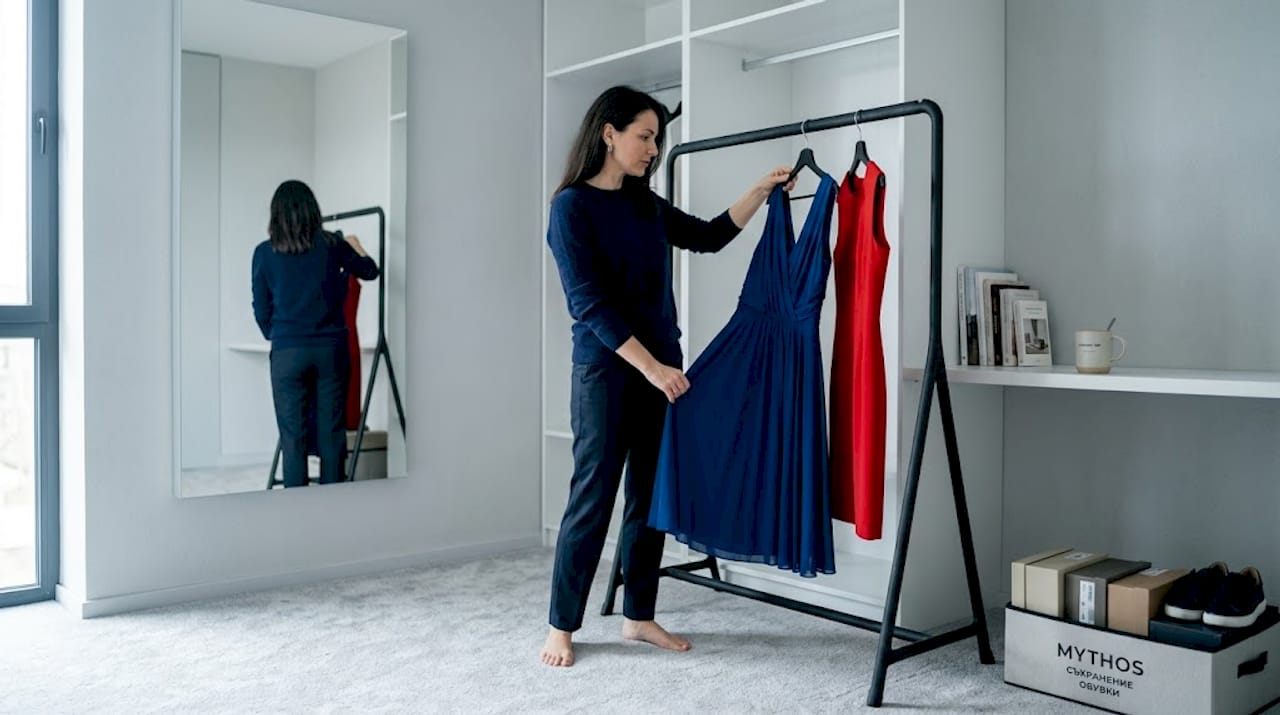
The dress is once again in focus as a choice for movement and comfort, especially in the Spring 2026 collections. The emphasis is on breathable fabrics, cuts that allow free movement, and silhouettes that emphasize femininity without restriction.
Comparison: The Dress Then and Now
| Feature | Historical Dress | Modern Dress 2026 |
|---|---|---|
| Construction | Multi-layered, structured | Single, adaptive cut |
| Fabric | Heavy fabrics, silk, velvet | Light viscose, linen blends, stretch |
| Silhouette | Predetermined by similitude | Personalized choice |
| Comfort | Restricting movement | Priority in design |
| Occasion | Strictly differentiated | Universal, multi-functional |
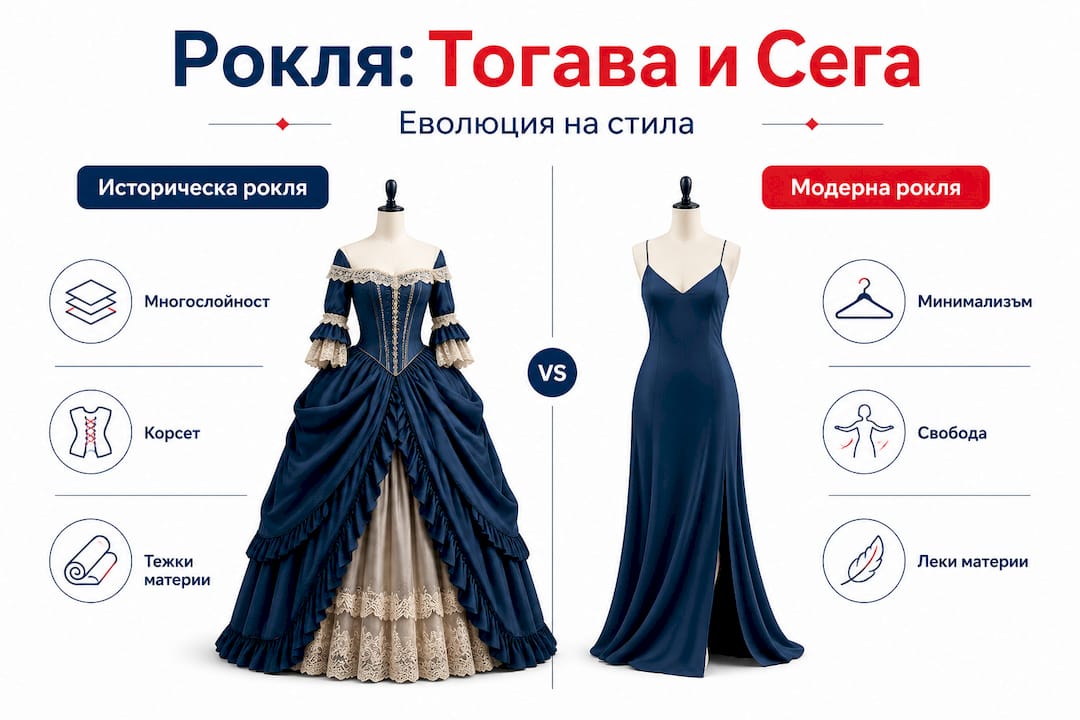
This transformation is not accidental. It reflects the changing lifestyle of the modern woman, who seeks a garment that follows her rhythm, not the other way around.
Leading Trends in 2026 Collections
- Ethereal fabrics with flowing lines. Viscose, modal, and linen blend dresses dominate. They are light, pleasant to the skin, and adapt to any figure.
- Floral and abstract prints. Large floral motifs or bold geometric prints turn a dress into a statement.
- Midi silhouette. The calf-length is versatile. It works for the office, a stroll, and an evening date.
- Asymmetry and original details. Asymmetric necklines, low backs, and unusual sleeves add character without excessive complexity.
- Monochromatic tones. White, sand, olive green, and terracotta are the main colors of the season.
Following fashion trends in women's fashion does not mean blindly copying. It means choosing what works for your body and lifestyle.
Professional tip: If you are looking for a versatile model, check out shirt dresses for women. They combine structure and comfort, are suitable for the office and casual outings, and are easy to combine with accessories.
Details That Make a Difference: Construction, Silhouette, and Fabric
Once we know the trends, it's important to learn to spot subtle differences when choosing a dress.
Two dresses can look almost identical in a photo but feel completely different when worn. The quality of the cut and material directly determines the wearing experience, even with a similar shape. Understanding these differences helps you make a better decision, especially when shopping online.
Types of Fabrics and Their Significance
| Fabric | Properties | Suitable for |
|---|---|---|
| Viscose | Soft, breathable, drapes smoothly | Everyday, hot summer |
| Linen | Natural, breathable, wrinkles easily | Summer outings, seaside |
| Cotton | Versatile, stable | All-season use |
| Polyester | Durable, retains shape | Formal occasions |
| Silk and satin | Shiny, luxurious, delicate | Evening gowns |
| Stretch knit | Elastic, body-hugging | Casual, sporty style |
When looking for a "breathable" dress, keep in mind that the term refers to a fabric that allows air exchange and does not retain moisture. Natural fibers such as cotton, linen, and viscose have this property. Synthetic fabrics like polyester retain heat, making them less suitable for hot summers.
How to Recognize Quality When Shopping Online
- Review the photos in detail. A quality online store shows the dress from the front, back, and in motion.
- Read the fabric description. The percentage content of fibers is an important indicator.
- Pay attention to the stitching. In enlarged photos, you can see if the seams are straight and even.
- Check the size chart. Each manufacturer has its own standards. Compare exact measurements, not just the size number.
- Look for reviews with real photos. Customer photos show how the dress looks in reality.
New construction technologies include heat-sealed seams, invisible zippers, and built-in pads, which eliminate the need for additional underwear. These details are not immediately visible but make a huge difference in comfort.
Professional tip: When choosing between two similar models, check the lining description. Dresses with a thin lining made of natural fabric are more comfortable for all-day wear. Learn how to choose style and cut according to your body type and needs.
If you are looking for a specific model, the elegant women's dress in lilac is an example of a combination of clean lines, quality fabric, and careful cut, achieving a balance between elegance and comfort.
Practical Guide: How to Choose the Perfect Dress for Occasion and Everyday Wear
Once you know which details matter, choosing becomes easy. Especially with our practical guide.
The dress carries social functions and must comply with the context of wearing. This does not mean limitation. It means understanding the rules so you can apply them skillfully.
Steps for Quick Online Selection
- Determine the occasion. A business meeting, a casual stroll, a formal evening, or a weekend event require different characteristics.
- Assess the climate. The fabric must be suitable for the season and expected temperature.
- Choose a silhouette suitable for your figure. Do not blindly follow the trend. Choose the cut in which you feel confident.
- Check the size chart. Measure your waist, bust, and hips. Compare with the chart for the specific model.
- Read the return policy. When shopping online, this is a mandatory step.
What to Consider for Different Occasions
For the office: Midi or maxi length, structured cut, neutral colors. Avoid overly deep necklines or sheer fabrics. A shirt dress is perfect for a work environment.
For an evening occasion: Choose a special fabric: satin, lace, or a sparkly dress. Choosing an evening dress requires attention to length, neckline, and accessories.
For everyday wear: Comfort is the priority. Cotton, viscose, loose cut, practical length. Floral prints and monochromatic tones work great.
For a special occasion (wedding, christening, anniversary): Be mindful of the event's dress code. White is traditionally reserved for the bride. Choose pastel tones or rich colors.
Combining Personal Style with Trends
Trends are inspiration, not an obligation. If you see that loose dresses are popular, but you prefer fitted silhouettes, look for a compromise: a loose top with a slightly tapered line. Your personal style is more valuable than any trend.
Professional tip: Invest in three "basic" dresses that you can combine with different accessories. A black midi dress, a white everyday dress, and a colorful dress for a special occasion will cover 80% of your needs. Learn how to choose sustainable fashion to make smarter investments in your wardrobe.
Tips for a Sustainable Choice
Sustainable fashion doesn't just mean eco-friendly fabrics. It also means buying fewer but higher-quality clothes. A dress you wear 50 times is a more sustainable choice than five cheap dresses, each worn three times. Check if the fabric is certified, if the manufacturer provides information about working conditions, and if the model is timeless or will quickly go out of style.
Perspective: Why a Dress Is More Than Fashion – A Look Beyond Trends
After the practical guide, a deeper question remains: what does it truly mean to choose a dress?
Observing women's behavior when choosing clothes for many years, we notice something interesting. Women rarely choose a dress just for its appearance. They choose it for the feeling it gives them. This difference is more important than it seems.
When a woman puts on a dress she feels good in, her posture changes. Her movement changes. The way she speaks and interacts changes. A dress is not just about appearance. It is a tool for building an internal sense of self. Psychologists call this phenomenon "enclothed cognition." Clothing affects cognitive processes and self-esteem.
Here lies the counterintuitive truth: a comfortable dress is not a compromise with elegance. It is a higher form of it. When you don't think about your clothes because they are comfortable, you can fully concentrate on the moment. You can sit, laugh, and move freely. This is true elegance.
A common mistake is looking for a dress that will look good in a photo. The smarter question is: which dress will make me feel good at the end of a long day? The dress you take off with relief in the evening is not the right choice. The dress you forget you're wearing is.
In the fast-paced daily life, a well-chosen dress saves decisions. When you have dresses you truly feel good in, your morning choice takes minutes, not hours. Building a confident personal style is an investment in quality of life, not just a wardrobe.
Our opinion is clear: don't buy a dress because it's in fashion. Buy it because it makes you feel like yourself.
Discover the selection of modern women's dresses with Mythos.bg
If you are already inspired by the power of the dress, take the decisive step towards your choice.
At Mythos.bg, we have curated a collection of dresses, created with an understanding of everything we discussed: quality fabrics, careful cuts, and silhouettes suitable for various occasions and body types.
Our women's dresses and fashion include models for every woman, from casual to evening, from minimalist to boldly printed. Each dress is described with its exact fabric composition, size chart, and real photos. If you're looking for something that immediately catches the eye, check out the dress with an impressive print with shimmering details, combining style and comfort in one model. Discover the dress you'll forget you're wearing, but others won't stop noticing.
Frequently Asked Questions
How do I choose a dress that will be comfortable all day?
Choose a dress made of breathable fabric with a cut that allows movement and does not constrict the waist or shoulders. Dresses for 2026 emphasize precisely this combination of fabric and comfort.
What silhouettes are suitable for different body types?
Elongated silhouettes are suitable for shorter women, and flared ones are ideal for emphasizing the waist. The construction of the dress affects the visual perception of the figure, and each body type has its ideal silhouette.
What are the fashion trends for dresses in 2026?
Airy fabrics, loose cuts, and an emphasis on comfort and femininity are current. In spring 2026, light fabrics and comfortable silhouettes are at the forefront.
How can I check the quality of a dress online before purchasing?
Examine the photos closely, look for detailed descriptions of the fabrics and the percentage of fibers, and trust established retailers with a clear return policy.
Are dresses suitable for everyday wear or only for special occasions?
Modern dresses are designed for everyday life and special occasions, thanks to adaptable cuts and comfortable fabrics. The dress is once again a choice for movement and comfort in daily life, not just for formal occasions.
Recommended
- Types of women's dresses: how to choose style and cut – Mythos Bulgaria
- Steps to choosing an elegant dress: ideas and tips – Mythos Bulgaria
- Elegant women's dress with polo collar – dark blue pattern with long sleeves and flare – Mythos Bulgaria
- Elegant women's dress with floral print and gathered cuffs - 7825210 – Mythos Bulgaria
0 comments