

TL;DR:
- Fashion-forward style means keeping up with fashion trends and adapting them to your personal style.
- It includes bold fabrics, colors, playful proportions, and details that make the look expressive.
- Confidence in wearing these looks is key to an effective stylish appearance.
Do you think fashion-forward style is a privilege reserved only for fashion editors and runway icons? This very misconception prevents many women from looking current every day. The truth is, being a step ahead in fashion doesn't mean spending huge sums or wearing avant-garde looks from the latest shows. It means understanding trends, adapting them to your personal style, and wearing them with confidence. In this article, you will understand exactly what this concept means, what its key elements are, and how to apply it starting tomorrow morning.
Table of Contents
- What does fashion-forward style mean
- What are the characteristics of a truly fashion-forward look
- Why confidence is key to wearing a fashion-forward look
- How to apply fashion-forward style in your daily life
- A personal take on fashion-forward: myths and truths
- Choose your fashion-forward look with Mythos.bg
- Frequently asked questions
Key Takeaways
| Point | Details |
|---|---|
| Clear Definition | Fashion-forward style is aligned with the latest fashion trends and is characterized by individualism. |
| Confidence is Key | Personal confidence is a major factor in successfully wearing an unconventional look. |
| Practical Application | Anyone can integrate fashion-forward elements with the right selection of details and combinations. |
| Individual Approach | You don't have to follow every trend – what's important is adapting to your style. |
What does fashion-forward style mean
Now that we've debunked the misconceptions, let's specify the meaning of the term fashion-forward.
The word comes directly from English and by definition means to be up to date with trends or even a little ahead of them. It's not just about wearing what's popular this week, but about sensing where fashion is headed and reacting before everyone else. The difference is subtle, but very important.
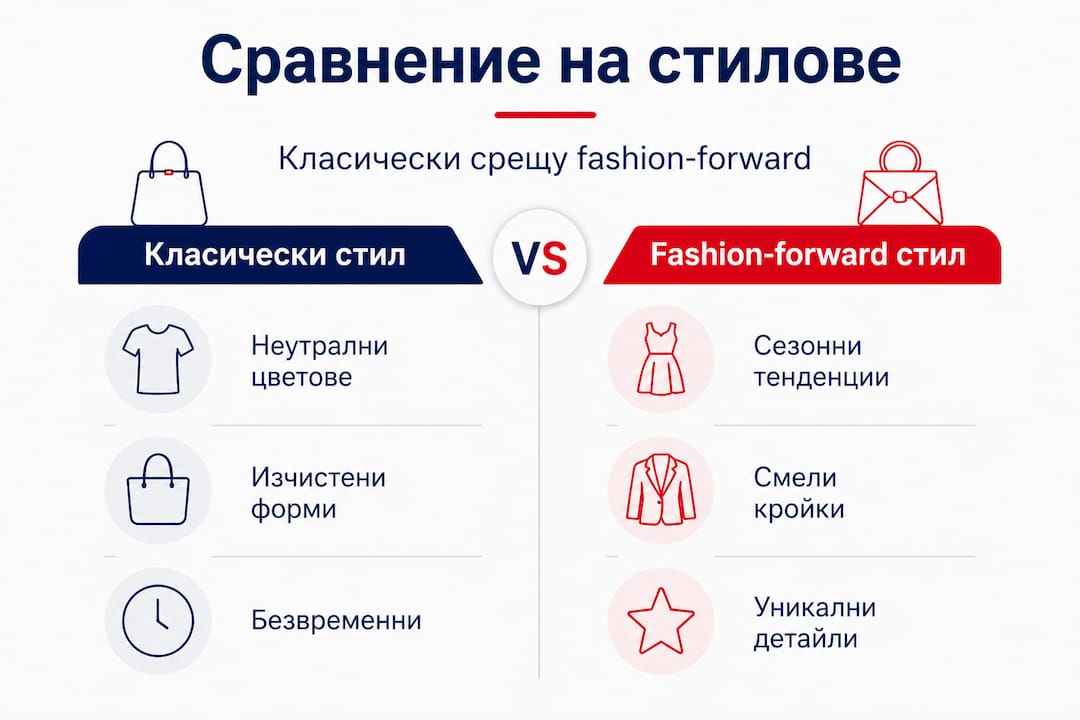
Fashion-forward vision is not equal to classic style. Classic relies on tried-and-true forms, neutral colors, and timeless silhouettes. Fashion-forward style, on the other hand, embraces risk, playing with forms, fabrics, and colors inspired by the current season and even the next. This does not mean that classic is less valuable, it's just that the two approaches have different goals.
To make the distinction clearer, see this comparative table:
| Characteristic | Classic Style | Fashion-Forward Style |
|---|---|---|
| Color Palette | Neutral tones | Seasonal and accent colors |
| Forms | Tried-and-true, symmetrical | Asymmetrical, voluminous, unconventional |
| Fabrics | Wool, silk, cotton | Metallic, sheer fabrics, PU leather |
| Timeliness | Timeless | Based on current trends |
| Risk | Low | Moderate to high |
Key elements of a fashion-forward look include bold choices in cuts, playing with proportions (e.g., a very wide top with narrow trousers), unusual textures, and statement accessories. To recognize these elements in a timely manner, it's important to monitor the recognition of fashion trends and understand where they come from.
The main point is this: temporary fashion is something everyone wears at one point. Truly cutting-edge clothing is what looks fresh and smart even after the season is over.
What are the characteristics of a truly fashion-forward look
Now that we've clarified what fashion-forward means, let's look at the characteristics that distinguish it in practice.
Style based on the latest trends is not arbitrary. It follows a specific logic that you can learn. Here are the leading characteristics:
-
Fabrics with character. Satin surfaces, structured jacquards, leather details, and soft chenilles are among the favorites of fashion designers. Choose at least one such element in your outfit.
-
Colors from the seasonal palette. Every year Pantone (the leading international color system) and the runways define specific shades. This year, there's a strong shift towards dark cherry, warm beige, and metallic tones.
-
Proportional play. Mixing a voluminous top with a fitted bottom, or vice versa, is a sure sign of fashion-forward thinking. This play is what gives dynamism to the look.
-
The detail that makes a difference. An unusual clasp, an unconventional collar, an eye-catching sleeve, or boots with an expressive heel turn an ordinary look into a statement look.
-
Compatibility with personal style. This is the key point: confidently following trends means adapting the trend to yourself, not the other way around.
For everyday wear, an effective combination might be wide-leg, high-waisted trousers in a neutral color, a structured blouse with an interesting collar, and a bag with metallic details. For evening occasions, the bet is on a velvet or satin dress with an asymmetrical line and bold shoes.
Pro tip: You don't need five new trends at once. Choose one trend of the season and weave it into the rest of your wardrobe. This way you look thoughtful, not confused.
Why confidence is key to wearing a fashion-forward look
The key to a stylish appearance often lies not so much in the outward appearance, but in the way we wear it.
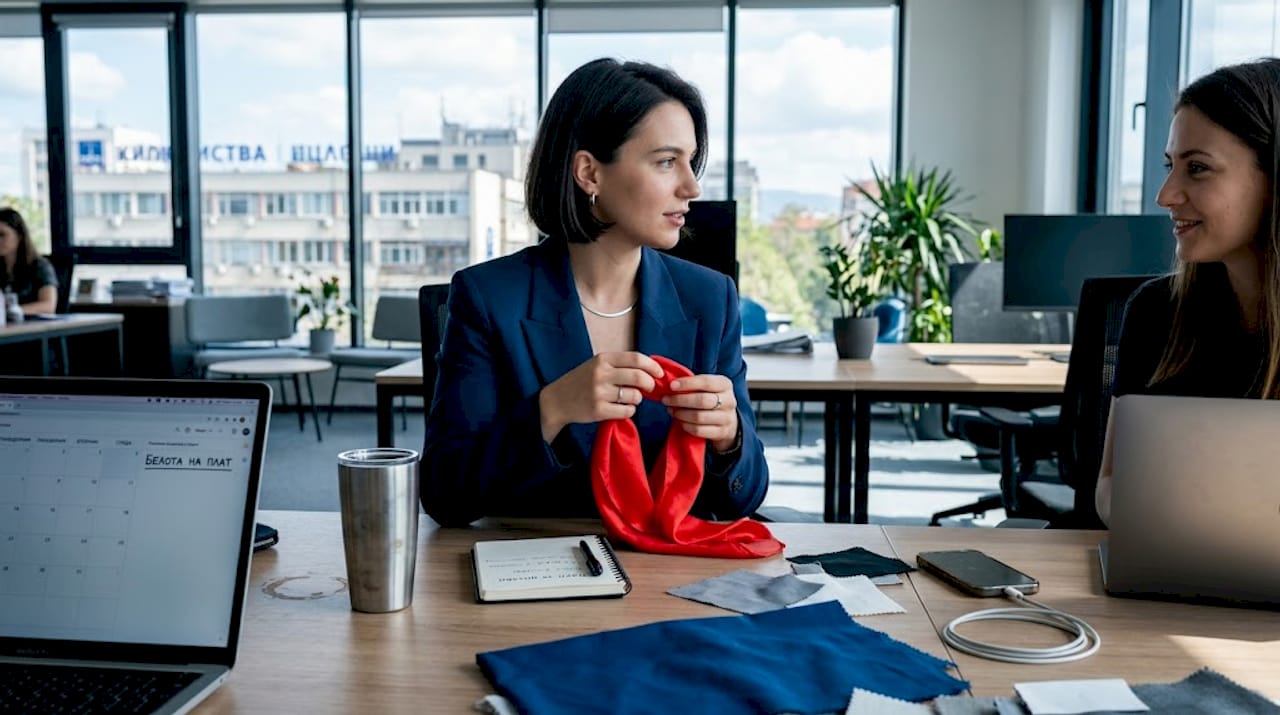
Many women avoid bold looks because they are afraid of other people's stares or comments. However, fashion psychology shows something interesting: people around us perceive our clothes primarily through the prism of how we wear them. A garment worn with relaxed shoulders and a calm gaze looks elegant. The same garment, worn with uncertainty, looks inappropriate.
The existence of the concept "pull off" (to "wear" something unconventional well) is closely related to the confidence of the wearer. This is not a metaphor, but an observation repeatedly confirmed in fashion communities.
“I've worn dresses that my friends said, ‘Is that really you?’ Then, when they saw how confidently I wore them, they completely changed their minds.”
How to build this confidence when choosing clothes? Here are some specific steps:
- Get to know your body. Know what cuts suit you and why. Not to restrict yourself, but to choose from a position of knowledge.
- Practice at home. Try on the new look at home before going out with it. Get used to it in front of the mirror.
- Start with small steps. A bright red lipstick or striking earrings are a much easier start than an entire new look.
- Find your reference point. Is there a woman whose style inspires you? Don't copy, but analyze why her choices work.
This very topic of confidence and style is central to the conversation about fashion-forward vision. Clothes are just a tool. You are the message.
How to apply fashion-forward style in your daily life
Now that your self-confidence is high, it's time for practice: how to incorporate fashion-forward style daily.
The important thing is not to do everything at once. A wardrobe doesn't transform in a day, but with the right approach, it can look completely refreshed in two to three seasons. Here's how:
-
Audit your wardrobe. Take everything out and see what you have. Which pieces are classic and can be combined with new trends? Which no longer reflect you?
-
Identify your three “gaps”. Every wardrobe has missing links. For most women, these are: current trousers, a suitable daytime bag, and one “statement” piece.
-
Invest strategically. Don't buy ten cheap clothes if two quality ones will do more work. For online shopping for modern clothes it's important to read material descriptions and check size charts.
-
Plan your outfits in advance. Every Sunday, set aside 15 minutes and arrange your outfits for the coming week. This way you avoid panicked choices in the morning, when results are rarely good.
-
Follow reliable resources. Use a guide for stylish women to make informed online purchases and avoid disappointment from inappropriate choices.
Here is a table with specific combinations for different occasions:
| Occasion | Top | Bottom | Accessory |
|---|---|---|---|
| Workday | Structured blouse with unusual collar | Wide-leg trousers in a dark color | Leather tote bag |
| Weekday afternoon | Soft knit in an accent color | High-waisted jeans | Metallic belt |
| Evening event | Satin off-the-shoulder top | Straight skirt below the knee | Sparkly clutch |
| Weekend outing | Oversized plaid shirt | Leather trousers | Chunky sneakers |
Pro tip: Your body is unique. If you have wider hips, wide-leg trousers will look surprisingly good on you because they balance the silhouette. If you have narrow shoulders, structured shirts and blouses with volume at the top will add power to the look. The trend is a starting point, not a command. The correct application according to personal style is precisely what distinguishes a good look from simply a "fashionable" one.
A personal take on fashion-forward: myths and truths
After the practical advice, it's important to state some uncomfortable truths about fashion-forward thinking.
The biggest mistake we observe? Copying without personal accent. When the woman on the poster wears a specific look, it works because of her, her body, her aura, and the shooting conditions. Literally copying an outfit rarely works. Therefore, fashion-forward doesn't mean looking like you walked out of a catalog, but taking the idea and making it your own.
The second myth is that trends have a long lifespan. Some trends disappear after literally two seasons. This is well-known in discussions about changes in women's fashion. If you invest a significant amount in something that is only trendy this autumn, a year later you might find yourself with a piece that no longer works in any ensemble.
Our position is this: sustainable individual style always preempts "ready-made" fashion. The woman who has developed her own recognizable style, using trends as building material, not as an end goal, is actually more fashion-forward than the one who wears everything from the latest collection.
The third truth is about quality. A well-tailored piece made of an interesting fabric does more for your look than five cheap "trendy" clothes. That's why there's a growing interest in less, but better clothing. This philosophy not only protects your wallet but also shields you from the trap of constantly "needing something new."
How to adapt a trend without becoming its victim? Ask yourself three questions: "Will I wear this in two years?", "Does it combine with at least five things I already own?" and "Am I wearing it because I like it, or because everyone else is?" If the answers are "yes," "yes," and "because I like it," then the purchase is justified.
Choose your fashion-forward look with Mythos.bg
If you want to apply your knowledge immediately, here's where you can find them curated in one place.
At Mythos.bg, we have selected a special range of clothes that embody the fashion-forward spirit without compromising on quality. Each garment is chosen with attention to fabric, cut, and current seasonal trends.
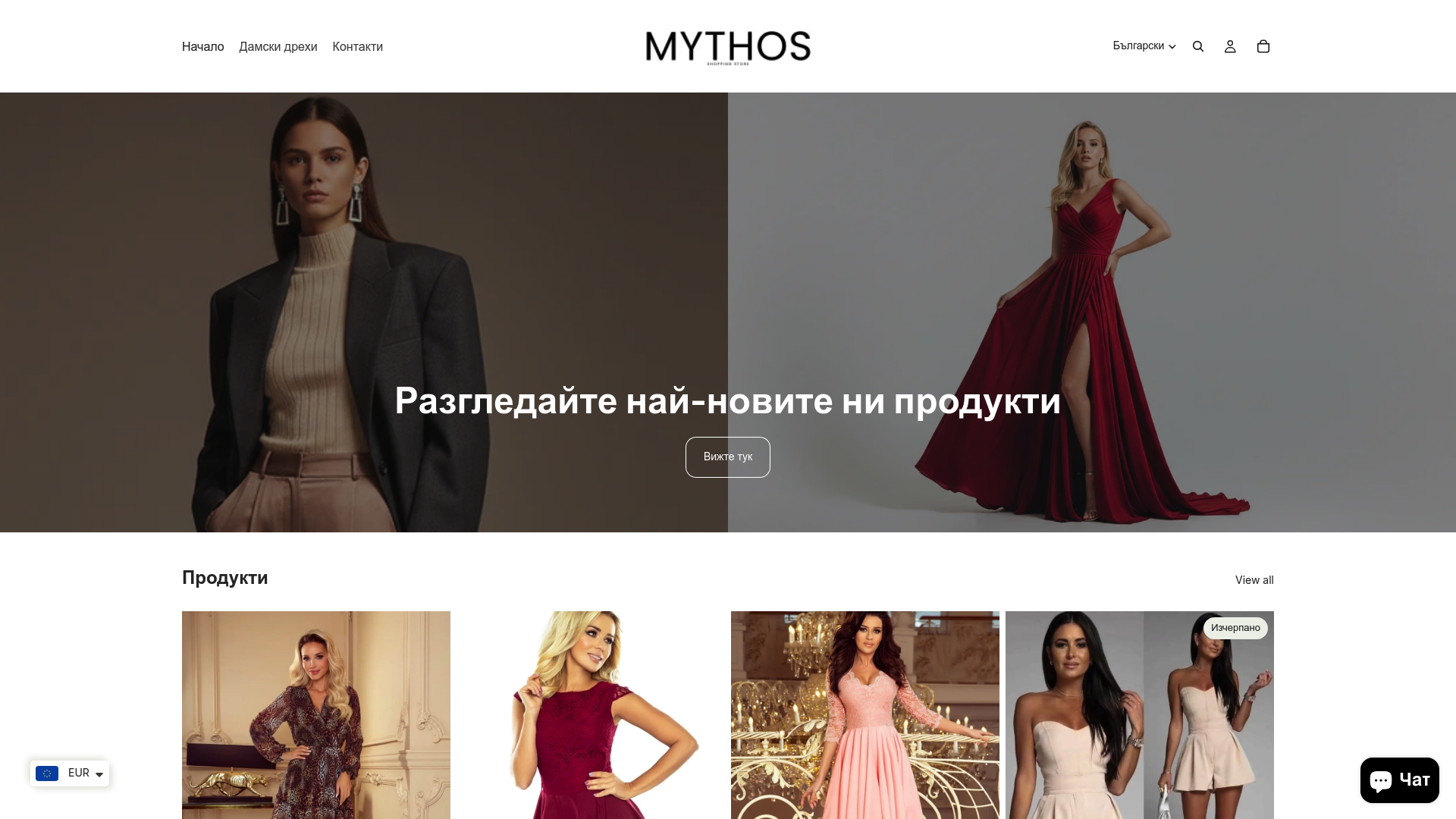
Find your new look in our collections of dresses, blouses, trousers, and sets, all delivered to your home. Online shopping at Mythos.bg is easy, fast, and convenient: browse, select, and order with a few clicks. If you have questions about sizes, fabrics, or combinations, our team is ready to assist you personally. Welcome to the world of style without compromise.
Frequently asked questions
Which fashion brands are considered fashion-forward?
Brands that experiment and introduce new trends are known as fashion-forward: examples include Prada, Balenciaga, and Off-White, whose collections set the direction of fashion for the upcoming seasons.
How do I determine if an item of clothing is fashion-forward?
A garment is fashion-forward if it is inspired by the latest fashion trends and has a unique detail that clearly distinguishes your look from the standard.
Can a fashion-forward style be maintained on a limited budget?
Yes, by strategically choosing one or two key accessories of the season and combining them with classic pieces from your wardrobe.
What's the easiest way to adapt my clothing to fashion-forward trends?
Add a fashionable accent to a familiar classic look and gradually experiment with new shapes and patterns, as proper application to personal style is key.
What is the difference between fashion-forward and classic style?
Classic style relies on tried-and-tested combinations and timeless silhouettes, while fashion-forward is guided by the latest trends and bold visual solutions.
Recommended
- Follow Fashion Trends Confidently: A Style Guide – Mythos Bulgaria
- How Stylish Clothes Inspire Confidence and Individuality – Mythos Bulgaria
- Sustainable Fashion: Style and Responsibility in 10% of CO2 – Mythos Bulgaria
- Discover modern Bulgarian fashion brands and choose your style - Mythos Bulgaria
0 comments