

TL;DR:
- Proper clothing care extends their vibrancy and shape, reducing the need for frequent washing. Airing, spot cleaning, and delicate procedures are more effective and gentle than frequent washing. Invest in quality tools and store clothes correctly to maintain their longevity and style.
You buy a favorite dress or a luxurious blouse, and after just a few washes, it no longer looks like it did the day it caught your eye. Colors fade, the shape deforms, and the fabric loses its luster. The problem is almost never with the quality of the garment but with how you maintain it. Proper clothing care isn't about perfectionism but about an intelligent routine: less washing, more careful handling, and a few simple tricks that extend your wardrobe's life.
Contents
- Basic principles for caring for women's clothing
- What you need: tools and products for storage and cleaning
- Step by step: how to properly clean your clothes
- Storage and organization: how to ensure a long life for your favorite clothes
- Most common mistakes and how to avoid them
- Practical wisdom: why minimalism in maintenance works best
- Your favorite clothes deserve the best care
- Frequently Asked Questions
Key Takeaways
| Point | Details |
|---|---|
| Minimum washing | The less frequently you wash investment clothes, the longer they stay like new. |
| Spot cleaning | Treat stains immediately on the spot to avoid unnecessary and damaging washing. |
| Air frequently | Air clothes between wears for freshness and healthy fabrics. |
| Proper storage | Store delicate fabrics on appropriate hangers and in a well-ventilated wardrobe. |
| Beware of mistakes | Avoid high temperatures, harsh detergents, and an overstuffed wardrobe if you want your favorite clothes to last longer. |
Basic principles for caring for women's clothing
We begin with the basics to understand how our daily care affects our favorite clothes. Most women think that the cleaner and more regularly washed their clothes are, the better they preserve them. The reality is quite the opposite.
Excessive washing is a major enemy of textiles. Each wash is a small aggression on the fibers of the fabric: the mechanical spinning in the machine, the chemical action of the detergent, and the water temperature together degrade the fabric's structure. Therefore, the practice for investment clothing recommends reducing water washing and washing frequency, with an emphasis on airing after wear and spot cleaning.
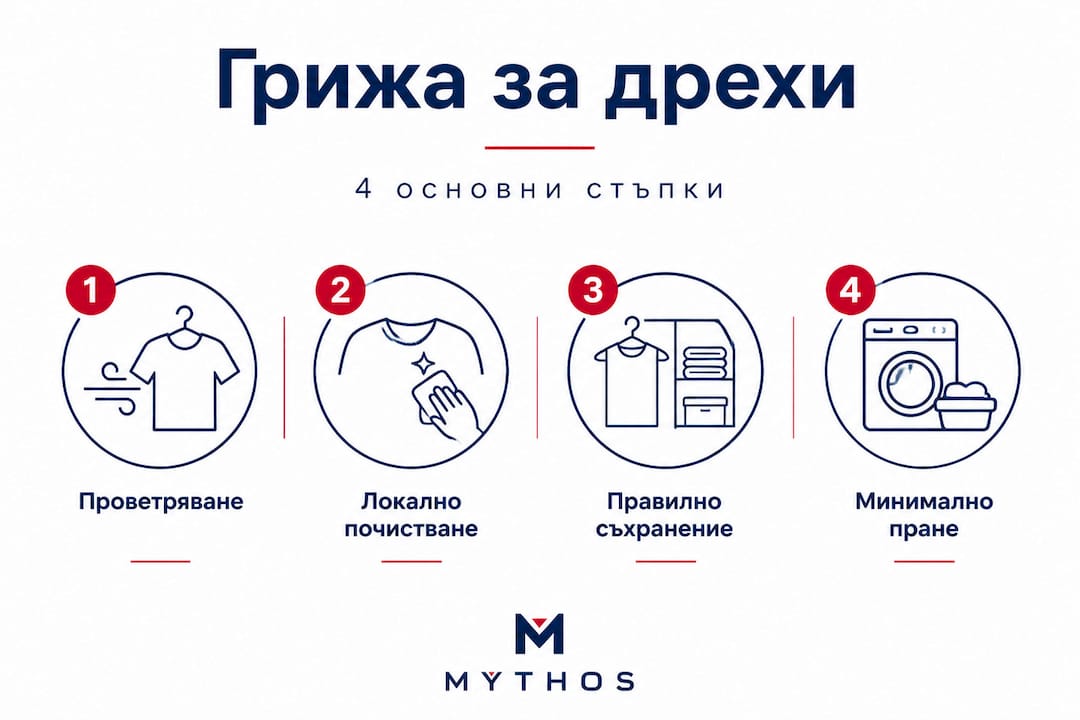
Every fabric has its own needs. Silk satin requires a delicate cycle and low temperature. Viscose shrinks easily. Wool deforms with improper drying. The ability to recognize quality clothing also includes understanding how to treat them after purchase.
Here are the basic principles you should follow:
- Air after each wear. Hang the garment on a hanger in a well-ventilated area for at least 30 minutes before putting it back in the wardrobe.
- Turn clothes inside out before washing to protect the outer side from friction and fading.
- Avoid strong spinning. Speeds above 600 rpm stress the fabric, especially delicate ones.
- Spot clean stains immediately after they appear, instead of waiting for a full wash.
- Check the label before each new cleaning procedure.
“The real investment isn't just in buying nice clothes, but in how you protect them every day.”
Professional tip: If the garment is not visibly dirty and has merely been worn briefly in good conditions, airing it is completely sufficient. It's not necessary to wash after every wear.
What you need: tools and products for storage and cleaning
Now that you know the principles, let's see what you really need at home for proper maintenance. Good clothing care doesn't require expensive appliances, but there's a specific set of tools that makes a huge difference.
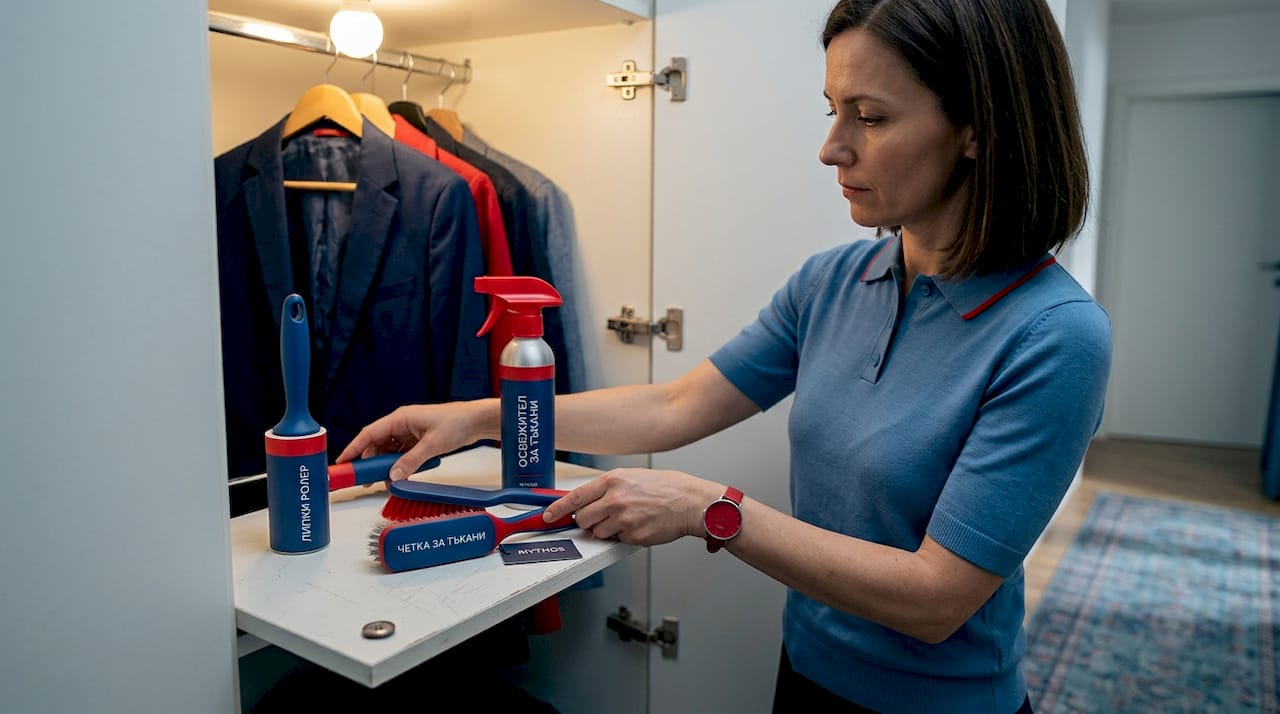
Spot cleaning and airing can replace many washes and genuinely extend the life of your wardrobe. They require the right tools.
| Tool/Product | Purpose | Recommended type |
|---|---|---|
| Garment steamer | Refreshing, wrinkle and odor removal | Handheld, compact |
| Delicate liquid soap | Spot cleaning stains | Chlorine-free, harsh ingredient-free |
| Fabric freshener spray | Odor neutralization | Water-based, alcohol-free |
| Clothes brush | Dust and lint removal | Soft natural bristles |
| Hangers with arms | Proper shape retention | Wooden or velvet |
| Garment bags | Protection from dust and moths | Breathable, not plastic |
| Moth repellents | Protection for natural fabrics | With lavender or cedar wood |
Here's what shouldn't be missing from your care routine:
- A steamer is perhaps the most useful appliance for luxury clothing. Steam refreshes, disinfects, and smooths without any mechanical stress on the fibers.
- Specialized detergents for delicate fabrics are a must. Standard detergents are too harsh for silk, viscose, or wool.
- Breathable garment bags protect clothes from dust but allow air circulation, which is critical for natural fabrics.
- Wooden hangers maintain the shoulder shape of jackets and coats, while thin plastic hangers deform the garment over time.
Don't skimp on quality tools. A good clothes brush or the right fabric spray costs much less than replacing a damaged blouse.
Step by step: how to properly clean your clothes
With the tools already acquired, it's time to apply easy and effective actions in real situations. The process isn't complicated but requires consistency.
It's important to know that not all clothes need frequent washing, and often airing and spot cleaning are completely sufficient. Before putting a garment in the machine, go through the following process:
- Inspect the garment carefully. Is there a visible stain or has it just been worn? Do you smell an odor? If the answer is "just worn," air it, don't wash it.
- Read the label. The symbols on the label are precise instructions: washing temperature, whether it can be tumble dried, whether it requires hand washing only. Ignoring them is a major cause of deformation and shrinkage.
- For a stain: act quickly and gently. Dab the stain with a delicate detergent or cold water. Blot, don't rub. Rubbing spreads the stain and damages the fibers.
- For a full wash: choose cold water and a delicate cycle. Temperatures above 30°C are risky for most luxury fabrics. Cold water preserves colors and shape.
- Place delicate clothes in a mesh laundry bag before putting them in the machine. It reduces friction between garments and prevents deformation.
- Air dry, not tumble dry. Lay the garment flat on a horizontal surface or hang it on a hanger in the shade. Direct sunlight bleaches the fabric.
- Adjust the shape before drying. While the garment is still wet, gently reshape it by hand, especially for knitted items and viscose blouses.
When dealing with women's sets, care for both parts in the same way to maintain color uniformity. Different treatments for the top and bottom parts can lead to a visible color difference after just a few washes.
Professional tip: For a red wine or coffee stain, immediately sprinkle with a little sparkling water and blot with a clean cloth. Never use hot water on fresh stains, as it sets the color in the fabric.
Storage and organization: how to ensure a long life for your favorite clothes
After cleaning comes an even more important step: preserving the condition of clothes for longer. Many women spend a lot on proper washing but ruin their efforts with improper storage.
Spot cleaning and airing only work if storage maintains the result. If you put a freshly aired garment in a cramped, unventilated wardrobe, the effect quickly disappears.
| Garment type | Storage method | What to avoid |
|---|---|---|
| Jackets and coats | Hanging on wide-shouldered hangers | Folding, overcrowding |
| Knitwear and jersey | Folding on a shelf | Hanging (deforms) |
| Dresses and blouses | Hanging in breathable garment bags | Plastic garment bags |
| Silk items | Hanging, away from light | Direct sun, moisture |
| Jeans and trousers | Folding or hanging by the waistband | Creases in wrong places |
Key strategies for proper storage:
- Ventilate your wardrobe at least once a week. Open the doors for 20 to 30 minutes, especially if you have clothes made of natural fabrics like silk, wool, or linen.
- Use lavender sachets or cedar wood against moths. They are effective and gentle on the fabric, unlike chemical repellents.
- Protect from direct sunlight. Even brief daily exposure can bleach the colors of delicate clothes in weeks.
- Do not overfill your wardrobe. There should be space between garments. Pressure deforms the shape, and lack of air creates conditions for odor and mildew.
When you know the advantages of women's sets, you'll understand why you should store them together. Separating the top and bottom parts of a set into different sections of the wardrobe leads to slight color differences and situations where you're looking for one half of the outfit.
Seasonal rotation is a practice that saves both space and hassle. Clothes that are out of season should be placed in garment bags and boxes with clear labels. This keeps your wardrobe organized and your clothes well-protected.
Most common mistakes and how to avoid them
To make our efforts as effective as possible, let's also address the mistakes that are easy to avoid. Many of them are so ingrained in routine that we don't even notice them.
- Washing too often. You don't need to wash a garment after every wear. Airing it for a few hours can completely replace washing and keep fabrics fresh.
- Drying at high temperatures. A tumble dryer is convenient but destructive for most luxury fabrics. Heat shrinks wool, deforms viscose, and bleaches colors.
- Harsh detergents for delicate fabrics. Standard washing powders contain enzymes and bleaches incompatible with silk, cashmere, or Tencel.
- Ignoring the label. The symbols on the label are not decorative. The shrinking of an expensive dress after one wash is almost always a result of ignoring the instructions.
- Overcrowded wardrobe without ventilation. When clothes are pressed tightly against each other, the fibers deform, and conditions for unpleasant odors or mold increase.
“Clothing care isn't for perfectionists. It's for women who know the value of what they wear.”
Many women buy new clothes online and like them for the convenience of online shopping, but then treat them carelessly. Proper care from the very beginning makes a difference.
Knitwear requires special attention. With proper washing and drying of knitted garments, the shape is preserved much longer. The main rule is: never hang them wet, because the weight of the water stretches the fibers.
Practical wisdom: why minimalism in maintenance works best
In the world of fashion, there's a widespread belief that more care equals better quality. Washing more often means cleaner clothes. More detergent means a better result. The reality we see in practice is quite the opposite.
A minimalist approach to clothing maintenance isn't laziness. It's a strategy. The less you subject a garment to mechanical and chemical treatment, the longer it retains its structure, color, and shape. Airing is underestimated. Spot cleaning is underestimated. Both are more effective than the instinctive response, "I'll wash it."
The modern stylish woman doesn't need complex rituals. She needs a clear system: check if washing is truly necessary; if not, air it. If there's a stain, clean only that. If a full wash is needed, do it delicately and at a low temperature. Three steps. That's all.
The complete guide to online women's clothing shopping shows how the right choice at purchase also facilitates subsequent maintenance. Clothes made from quality fabrics respond better to delicate treatment and last much longer when preserved correctly.
Fashion isn't fleeting. The secret to long-lasting style isn't frequent wardrobe renewal but intelligently preserving what you already own.
Your favorite clothes deserve the best care
Garment care and smart shopping go hand-in-hand. When you know how to care for your favorite blouse or dress, your next purchase brings even more joy because you’re sure you'll keep it beautiful for a long time.

At Mythos.bg, you'll find a variety of women's clothing made from high-quality fabrics, designed specifically for women who value style and longevity. Each piece is selected with attention to fabric and appearance, so that even minimal care yields maximum results. For example, this luxurious satin blouse is a perfect example of an item where proper care preserves its luster for many seasons. The combination of a well-maintained wardrobe and boldly chosen new additions is the formula for consistently confident style.
Frequently Asked Questions
How often should I wash luxurious women's clothing?
Luxury clothing requires washing only when visibly soiled or emitting an unpleasant odor. A better alternative is regular airing and spot cleaning when needed.
What should I do for stubborn stains on expensive fabric?
Act immediately with a delicate detergent and gentle soaking, without rubbing. For stains on delicate fabrics, a steamer or specialized sprays yield excellent results, and if in doubt, consult a professional.
How should I store clothes when they are not in season?
Place them in breathable garment bags, store them away from direct light and moisture, and use hangers with wide shoulders for items that should not be folded.
How can I remove odor from clothes without washing?
Hang the garment in fresh air for 2 to 4 hours or use a special textile spray. Airing out an unpleasant odor is an effective alternative to full washing in most cases.
Is it true that frequent washing makes clothes age faster?
Yes, it's absolutely true. Reducing the frequency of washing for investment clothing significantly slows down wear and tear, because mechanical and chemical treatment degrades fabric fibers over time.
Recommended
- Shopping for Women's Clothing Online: Step by Step – Mythos Bulgaria
- How to Recognize Quality Clothing: A Guide for Stylish Women – Mythos Bulgaria
- How to Order Clothes Online: A Guide for Stylish Women – Mythos Bulgaria
- Essence and Advantages of Women's Sets for Stylish Women – Mythos Bulgaria
- How to select flattering dresses for every body type – 16th Avenue
0 comments