

In brief:
- Style is a personal visual signature that expresses identity and values without words.
- It is built from combinations of clothes, accessories, and colors, chosen consciously and with patience.
Style is defined as an individual visual signature, built from a combination of clothes, accessories, and colors, through which we express our personality without words. The word comes from the Latin stilus, which meant a writing instrument, and later acquired the figurative meaning of a way of expressing oneself. Style is not just what you wear. It's how the world sees you before you've said a word. If you're looking for how style is defined and how to build your own, the answer isn't in following trends, but in getting to know yourself.
How Style is Defined Through Its Main Categories
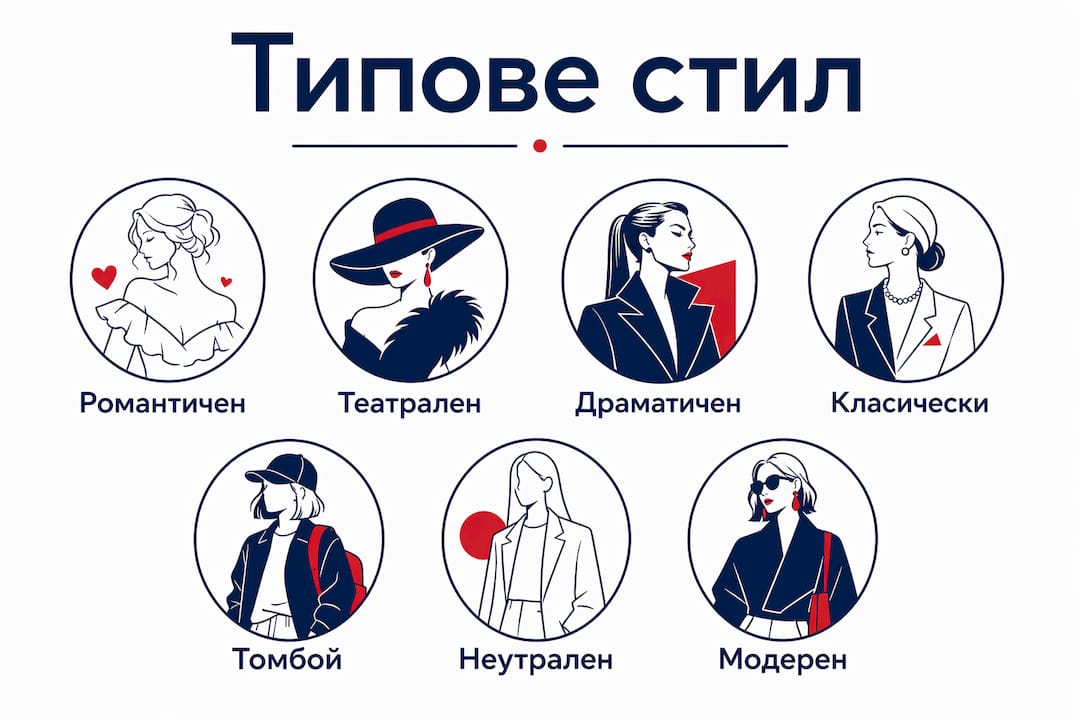
Personal style is divided into 7 main types, each carrying a different aesthetic and characteristic elements. Knowing these categories doesn't mean you have to fit into one box. They serve as a starting point to understand what attracts you and why.
Here's a brief description of each type:
- Romantic — soft fabrics, floral prints, pastel colors, feminine silhouettes. Characteristic elements: lace, ruffles, empire waist dresses.
- Theatrical Romantic — a richer and more ornamental version of romantic. Includes luxurious fabrics, intricate details, and more pronounced forms.
- Dramatic — bold lines, structured silhouettes, dark or contrasting colors. Characteristic elements: sharp shoulders, geometric shapes, minimalist accessories with impact.
- Natural — earthy tones, simple forms, balance between comfort and elegance. Neither too feminine nor too severe.
- Classic — timeless forms, quality fabrics, restrained color palette. Characteristic elements: blazer, pencil skirt, white shirt.
- Tomboy — inspired by men's clothing, but adapted for the female figure. Wide trousers, sneakers, oversized jackets.
- Gamine — natural fabrics, unpretentious forms, a sense of authenticity. Linen, cotton, neutral colors in everyday combinations.
| Style Type | Key Elements | Suitable For |
|---|---|---|
| Romantic | Floral prints, lace, pastels | Dates, special occasions |
| Dramatic | Structured forms, contrasts | Business, evening events |
| Classic | Blazer, pencil skirt, neutrals | Office, formal meetings |
| Tomboy | Wide silhouettes, sporty details | Everyday, leisure |
| Gamine | Linen, cotton, natural tones | Everyday, nature |
Professional tip: Look at photos from the last two years where you felt your best. Look for recurring elements: colors, shapes, fabrics. These reveal your natural style more accurately than any test.
Most women don't belong entirely to one type. A combination of two styles is completely normal. For example, classic with a romantic element, or natural with a dramatic accent through an accessory. The important thing is to recognize which elements make you feel like yourself.
Style as Nonverbal Communication: What Your Clothes Say
Style is a form of nonverbal communication that reveals identity, values, and feelings without words. This makes it one of the most powerful tools for first impressions. Before you shake hands with someone, they've already formed an opinion of you based on what their eyes see.
"Fashion fades, only style remains the same." — Coco Chanel
The difference between style and fashion is fundamental. Style differs from fashion in that it is constant and expresses personality, while fashion is fleeting. Giorgio Armani once said that elegance is not about being noticed, but about being remembered. This difference is key: fashion makes you visible for a season, while style makes you unforgettable.
The choice of clothing also affects self-confidence. When you wear something you feel good in, your body shows it: upright posture, more confident gait, more open gaze. Psychologists call this phenomenon "enclothed cognition," or in short: clothes affect the way you think about yourself. A woman dressed in a well-tailored blazer behaves more confidently in a meeting than when she is in clothes she doesn't feel comfortable in.
Style also reveals values. A woman who chooses natural fabrics and sustainable brands communicates concern for the environment. A woman who wears structured, classic forms signals precision and attention to detail. These messages are conveyed without words and are instantly received by those around us.
To understand what your current style communicates, ask yourself one question: if a stranger had to describe you based solely on your clothes, what would they say? If the answer doesn't match how you want to be perceived, that's your starting point for change.
How to Define Your Unique Style: Steps and Mistakes
Personal style isn't found suddenly. It's an evolutionary process of self-discovery and experimentation that requires time and patience. Here are concrete steps to get started.
-
Audit your wardrobe. Take everything out and ask one question for each item of clothing: "Do I feel good in it?" Not "Is it expensive?" or "Is it fashionable?". Just "Do I feel good?". Clothes you rarely reach for reveal what isn't working for you.
-
Gather visual inspiration. Create a Pinterest board or a folder of images of women whose style attracts you. After a week, look at what's repeating: colors, shapes, fabrics, occasions. This is your aesthetic profile.
-
Define your lifestyle. Style should work for your real life, not an imaginary one. If you work from home and rarely go out, a wardrobe of evening dresses isn't functional. If you travel a lot, you need clothes that combine easily and don't wrinkle.
-
Invest in quality, not quantity. Successful style requires careful distinction from fast fashion and investment in quality clothing that reflects uniqueness. Five well-tailored garments of quality fabric offer more combinations and a longer lifespan than twenty cheap purchases.
-
Experiment without fear. Try a style you're unfamiliar with. Wear a color you usually avoid. Wear an accessory you consider too bold. Only through trial and error do you understand what works for you and what doesn't.
Professional tip: Before buying a new garment, ask three questions: "What will I wear it with?", "Do I have at least three combinations with it?" and "Will I wear it in two years?". If the answer to at least one is "no," return it.
The most common mistake is uncritically copying the style of influencers. Avoiding the uncritical influence of influencers and fast fashion marketing is key to sustainable style and confidence. Influencers sell an image, not reality. They wear clothes paid for by brands, in a controlled environment with perfect lighting. Your style should work in your reality.
The second common mistake is buying clothes "for a slimmer version of myself" or "for when I lose weight." Style works with the body you have now. Clothes bought for a future body remain in the wardrobe and create a sense of failure every time you open the door.
The third mistake is neglecting comfort. A garment that you are constantly adjusting, pulling, or thinking about is not stylish. It's distracting. True style is invisible: you wear it, forget about it, and focus on your day.
How Clothes, Accessories, and Colors Work Together
Style involves a harmonious combination of clothes, accessories, and colors to create a complete visual signature. Each of these elements plays a different role, and together they build the image you present to the world.
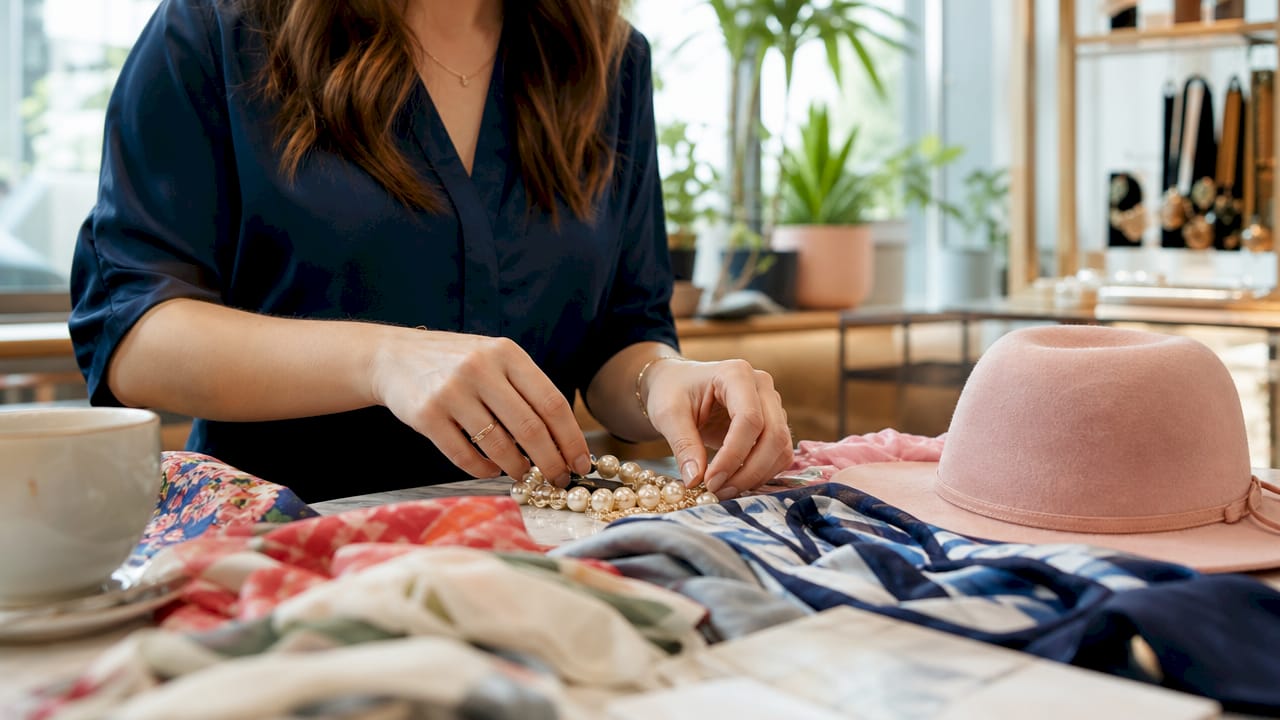
Clothes are the foundation. They define the silhouette and the overall feel. Accessories are the tool for personalization. A bag, necklace, scarf, or shoes can transform a neutral base into an expressive image. A woman in a white shirt and straight trousers looks different with a camel leather bag than with a canvas tote and sneakers. The base is the same, but the message is different.
The color palette is perhaps the most powerful tool in style. It works on two levels. The first is harmony: the colors in the image should complement each other, not clash. The second is psychological impact: dark blue signals authority, red for confidence, beige for calm. The choice of colors is not random, even when it seems intuitive.
To understand the role of accessories in style, think of them as punctuation marks in a sentence. Clothes are the words, accessories are the periods, commas, and exclamation marks. An image without accessories is like a sentence without punctuation: understandable, but flat. An image with too many accessories is like a sentence with punctuation everywhere: confusing and tiring.
Perfume is the last, invisible layer of style. Perfume completes the look in a way no accessory can. It's the only element of style that remains in the room after you've left. Choosing a scent that matches your personality and the occasion is a sign of mature and thoughtful style.
| Element | Role in style | Example |
|---|---|---|
| Clothes | Foundation and silhouette | Pencil skirt + blazer = classic look |
| Accessories | Personalization and accent | Leather bag adds warmth to a neutral tone |
| Colors | Mood and message | Dark blue for authority, pastels for femininity |
| Perfume | Final, invisible accent | Oriental fragrance for an evening look |
The transition between style categories is easier than it seems. If you wear classic clothes but want to add a romantic element, you don't need to change your wardrobe. It's enough to add a floral scarf or shoes with a lace detail. Style is alive and evolves with you.
Key Takeaways
Style is built through self-knowledge, quality choices, and harmony between clothes, accessories, and colors, not by following trends.
| Point | Details |
|---|---|
| Definition of style | Style is an individual visual signature, built from clothes, accessories, and colors. |
| Seven main types | Romantic, theatrical romantic, dramatic, natural, classic, tomboy, and gamine are the starting points. |
| Style vs. fashion | Fashion is fleeting, style is a constant expression of personality and values. |
| Practical steps | Audit your wardrobe, gather inspiration, and invest in quality, not quantity. |
| Harmony of elements | Clothes, accessories, colors, and perfume work together for a complete look. |
Style is Not a Destination, But a Journey
I have spent years observing how women build their style, and one thing has impressed me more than anything else: women with the strongest style rarely follow trends. They know what suits them and stick to it with confidence.
Personal style is the result of experience, life, and personal preferences, evolving over time. This means you can't find your style in one weekend. But you can take the first step: stop buying clothes you don't feel good in, just because they are fashionable or on sale.
The conventional advice is "follow trends and adapt them to yourself." I believe this is the opposite of the right approach. Trends should serve your style, not your style serving trends. If this year's trend is wide trousers and they fit your body type and lifestyle, great. If not, skip them without remorse.
Every person has a specific form of experience with clothes and life that defines their style more than current trends. A woman who has spent ten years in a corporate environment has a different style intuition than a woman who has worked in a creative industry. Neither is better. But each must build a style consistent with their real life.
Patience is an underestimated element in building style. A wardrobe you feel good in is not built in one season. It is built with careful, thoughtful purchases over years. Every good garment added to the wardrobe is an investment in a clearer and more confident version of yourself.
— Milen
Mythos: Clothes that Support Your Style
Building personal style starts with the right clothes. Mythos offers women's clothes for every style: dresses, blouses, trousers, sets, and accessories, chosen with attention to fabric quality and current design.
Whether you're looking for a classic office look, a romantic dress for a special occasion, or an everyday combination with character, at Mythos you'll find clothes that work for your real life. The collection includes dresses with expressive details and blouses with accent, suitable for women who know what they want. Browse the collection and find the clothes that speak your language.
Frequently Asked Questions
What is the definition of style in fashion?
Style in fashion is the individual way a person combines clothes, accessories, and colors to express their personality. Unlike fashion, style is constant and does not depend on seasonal trends.
How many types of personal style exist?
Personal style is divided into 7 main types: romantic, theatrical romantic, dramatic, natural, classic, tomboy, and gamine. Most women combine elements from two or more types.
How do I find my personal style?
Start by auditing your wardrobe and gathering visual inspiration from photos in which you feel good. Personal style is built gradually through trial and error and a sense of comfort in your clothes.
What is the difference between style and fashion?
Fashion is transient and changes every season, while style is a constant expression of personality. Coco Chanel said: "Fashion fades, only style remains the same."
How do accessories affect style?
Accessories personalize and enrich the look, adding an accent to a neutral base. The right accessory can completely change the message of the same basic look.
0 comments