

TL;DR:
- True luxury in fashion is based on quality, exclusivity, and history, not on high prices or logos. Careful selection of materials, craftsmanship, and the application of a discreet style ensure long-lasting value and emotional satisfaction. The smart consumer seeks value and individuality, emphasizing long-term investment and sustainability over superficial showiness.
There's a widespread misconception: if something is expensive, it must be luxurious. The reality is significantly more interesting. You can spend a substantial amount on a garment with a large logo and still receive a compromise in quality, while a impeccably tailored coat from an unknown atelier can accompany you for twenty years. Luxury fashion is a system of values, not just a price category. In this article, we will examine the specific markers that distinguish true luxury and provide you with practical tools for smarter and more satisfying choices.
Contents
- What luxury fashion truly means
- The main markers of luxury: quality, fabric, craftsmanship
- Quiet luxury: a discreet style that stands the test of time
- Luxury fashion and emotion: experience and personal attention
- Quality vs. status: what are the true purchase motives
- True luxury is not just about price: practical tips to avoid mistakes
- The luxury wardrobe is just a click away
- Frequently asked questions
Key Takeaways
| Point | Details |
|---|---|
| Quality over status | True luxury is recognized by quality, fabric, and craftsmanship, not by logo and price. |
| Quiet luxury wins | Discreet minimalism and timeless cuts are the new standard in luxury fashion. |
| Emotion is part of luxury | The personal experience and attention to detail make a garment special. |
| Thoughtful choice | High price does not guarantee quality – look for real markers and versatility. |
What luxury fashion truly means
When most people hear “luxury fashion,” they immediately think of recognizable logos, huge storefronts, and astronomical prices. But this is just the surface. Luxury fashion is first and foremost a complete experience that combines high artisanal value, exclusivity of access, and profound attention to every detail. These three pillars together build something that ordinary clothing cannot offer.
"Luxury fashion differs from fast fashion primarily in its production logic: slower craftsmanship, more carefully selected materials, and an emphasis on mastery as a core value."
An important distinction that many miss: status and quality are not the same thing. Status comes from brand recognition. Quality comes from the method of craftsmanship, materials, and construction. In true luxury, the two intertwine, but neither is sufficient on its own. A brand that relies solely on its history and logo, without maintaining a standard of craftsmanship, is merely a status symbol, not true luxury.
The main elements that distinguish luxury fashion:
- Limited collections with a restricted number of pieces, preserving exclusivity
- Limited distribution at selected points of sale or directly from the brand
- Personalized service and individual approach to purchase
- Brand heritage and history, built over decades
- Transparency in production, including material origin
Modern luxury, style, and sustainability go hand in hand. Luxury brands are increasingly committed to eco-friendly production, because their customers do not buy for a season, but for life. A luxury garment worn for five years leaves a smaller carbon footprint than five fast fashion items bought in the same period.
One of the practical criteria for a truly luxury brand is positioning itself on exclusivity, not just accessibility. The brand consciously limits its production volume to preserve the special character of each garment.
The main markers of luxury: quality, fabric, craftsmanship
How do you recognize a truly luxurious garment when you hold it in your hands? Here are concrete, verifiable criteria, without guesswork.
Here are the steps to check the garment:
- Feel the fabric. Quality fabric has a bodily density and warmth. Synthetic imitations are colder to the touch, noisier, and lighter than expected.
- Check the seams. Turn the garment inside out. Luxury clothing has reinforced, sometimes hand-finished seams. French seams (where the fabric is entirely enclosed) are a classic sign of high standard.
- Look at the details. Are the buttons made of natural materials, like bone or wood? Does the zipper work smoothly and have a sturdy mechanism? These small things say a lot.
- Assess the balance of the garment. Hold it on a hanger. A well-tailored garment does not "fall apart" sideways but maintains symmetry and shape.
- Check colorfastness. Look for dyeing information. Luxury fabrics retain color after washing significantly better than fast fashion counterparts.
| Characteristic | Luxury fashion | Fast fashion |
|---|---|---|
| Fabric | Natural fibers, high density | Synthetic blends, low density |
| Seams | Reinforced, hand-finished | Machine-stitched, minimal |
| Color after washing | Stable after repeated washing | Fades after 5-10 washes |
| Shape after wear | Maintains for years | Deforms quickly |
| Cost per wear | Low (long lifespan) | High (frequent replacement) |
One of the main indicators of quality is precisely the fabric density: a heavier fabric for the same knitwear item usually means a more durable and better-constructed garment.
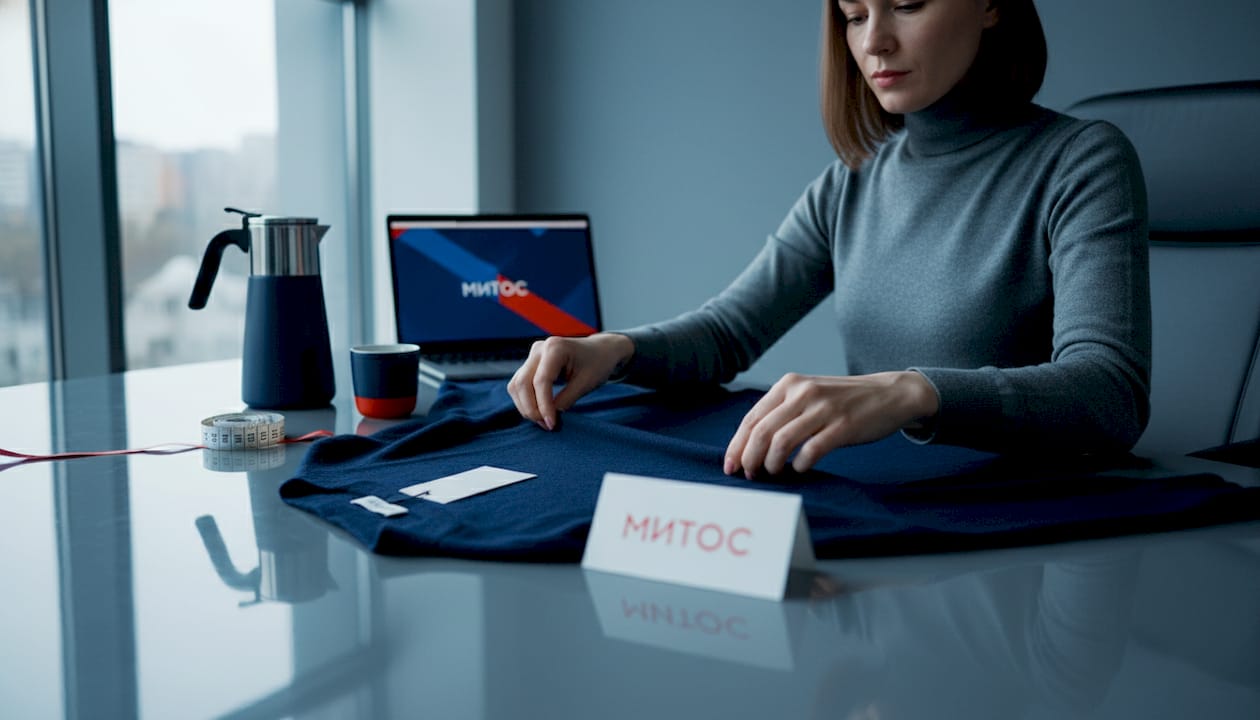
Professional tip: When shopping online, always look for information about the specific type of fabric and its percentage composition. "100% polyester" in a luxury garment is rare and should prompt you to check more carefully. Natural fibers like silk, wool, linen, and cotton are standard for high-quality clothing.
Quiet luxury: a discreet style that stands the test of time
If you've been following fashion for the past few years, you've probably heard the term quiet luxury. This isn't just a trend, but a whole philosophy of dressing that is gaining momentum precisely because it offers something different from traditional logo-mania.
Quiet luxury relies on discretion: the quality of materials, precise details, and timeless lines are the message itself, without the need for a logo to speak for you. The garment should look expensive because it is made expensively, not because it carries a famous letter.
What quiet luxury looks like in practice:
- Monochromatic outfits in neutral colors like beige, cream, graphite, and navy blue
- Garments without visible logos or branding on the front
- High-quality cashmere, silk, and fine cotton instead of synthetics
- Clean lines without excessive decor and accessories
- Emphasis on cut and fit, rather than print
| Style | Visible logo | Emphasis | Suitable for |
|---|---|---|---|
| Logo luxury | Yes | Status, recognition | Social occasions, representation |
| Quiet luxury | No | Quality, cut | Everyday, office, any occasion |
| Minimalist luxury | Rarely | Form and material | Universal application |
The practical advantage of quiet luxury is obvious: these garments are multifunctional. A perfectly tailored merino wool coat works for a client meeting, dinner at a restaurant, and a Sunday afternoon stroll. You don't need to own thirty garments if fifteen of them are truly high-quality and versatile. For more inspiration on combining stylish clothes, you can find specific looks and ideas adapted for modern lifestyles.
It's important to understand that quiet luxury is not synonymous with boring. Clothes can have a subtle print, unconventional construction, or interesting texture. The difference is that each of these decisions is made consciously, with longevity in mind, not for an immediate effect.
Luxury fashion and emotion: experience and personal attention
Buying a luxury garment is never just a transaction. It's a ritual. This is where luxury fashion distinguishes itself most from everything else in the industry.
"Luxury is built as a combination of quality, exclusivity, and narrative, along with an emotional connection to the customer and personalized service."
Think about the last time you felt that the sales consultant truly understood your needs, offered specific solutions for your lifestyle, and cared about the outcome, not just the sale. This is the luxury experience in action. It is not accidental, but built with much effort.
Here are the specific steps through which luxury brands build an emotional connection:
- History and heritage. Each collection tells a story of values, traditions, and vision. When you wear a garment with heritage, you become part of that story.
- Personalized consultation. Good luxury retailers know the customer by previous purchases, preferences, and lifestyle.
- Special buying experience. The packaging, delivery details, and after-purchase care are a pleasure, not just a function.
- Limited access. Limited editions and exclusive models create a sense of specialness that remains after the purchase.
Professional tip: When shopping online, look for brands that offer detailed descriptions of each item, information about material origin, and clear communication after purchase. These signals indicate that the brand stands behind its promises and thinks of you as a customer, not just another order.
For women seeking elegant women's clothing with this emotional value, the choice is a matter of finding a brand whose history and values resonate personally with them.
Quality vs. status: what are the true purchase motives
Why do women choose luxury fashion? Research provides a surprisingly clear answer that breaks many stereotypes.
According to a specific study on motives for luxury purchases, the data shows: 71% cite quality as the leading factor, 32% mention status, and only 26% cite the logo as the main reason. This is very different from the notion that people buy luxury to show off, rather than because they value quality.
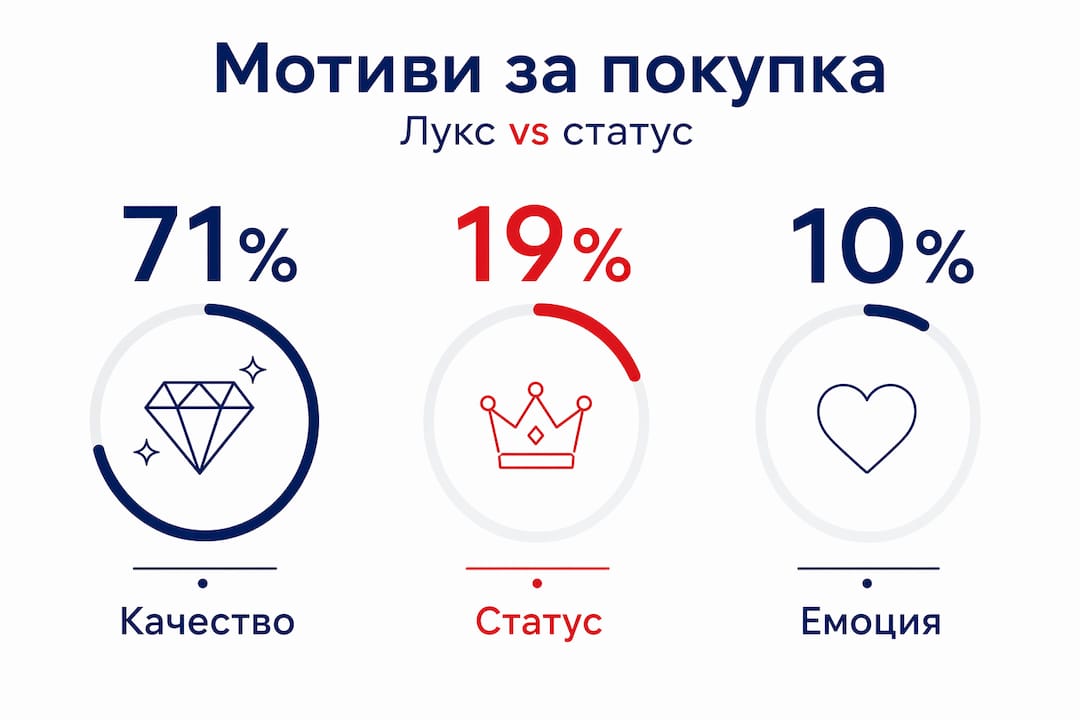
This distribution speaks volumes about the modern consumer. She is informed, pragmatic, and value-oriented. She doesn't buy the logo; she buys the feeling of flawlessness with every wear. She also buys the assurance that after three years, the garment will look as if it was recently purchased.
What follows from this data:
- Logos are losing ground as a motivator among informed buyers
- Quality and durability are leading criteria for choice
- Status remains important, but is now expressed more discreetly
- Personal values and context of use determine the specific choice
Whether you buy a garment for everyday use or for special occasions makes a huge difference. If a garment will be worn once a year, the strategy is different from that for office wear that you put on a hundred times. For frequent wear, luxury clothing of recognized quality always proves more cost-effective in the long run.
True luxury is not just about price: practical tips to avoid mistakes
After all that has been said, let's share something that is rarely openly discussed in the fashion industry: not every expensive brand is automatically luxurious.
High price is not a guarantee of quality for all brands. There are brands with impressive marketing and advertising budgets whose products do not meet the basic criteria for luxury described above. You buy the logo and the history, but not the exceptional quality of craftsmanship.
Our opinion, knowing well how the industry works: a smart choice is an informed choice. Before investing in an expensive garment, ask specific questions. What is the fabric composition? How is it maintained? How do the seams look inside? If the retailer cannot answer, or the answers are unclear, that is a signal.
Luxury fashion is a more profitable investment with repeated and prolonged wear. If you buy a garment for a single occasion, fast fashion might be a logical choice. But if we're talking about basic wardrobe staples, evening dresses, formal suits, or winter wear, a quality investment pays off with interest.
Pay attention to sustainable fashion as a concept. Buying less, but higher quality, is both an ecological solution and financially more advantageous in the long term. A wardrobe of thirty truly good garments, worn regularly, beats a wardrobe of a hundred quickly worn-out items.
The final practical advice: develop a sense of personal wearing pleasure. If a garment feels good, moves well, and looks good after repeated wear, it is truly luxurious for you, regardless of what the label says.
The luxury wardrobe is just a click away
Now that you know how to recognize true value in luxury fashion, the next step is to find it in the right place.
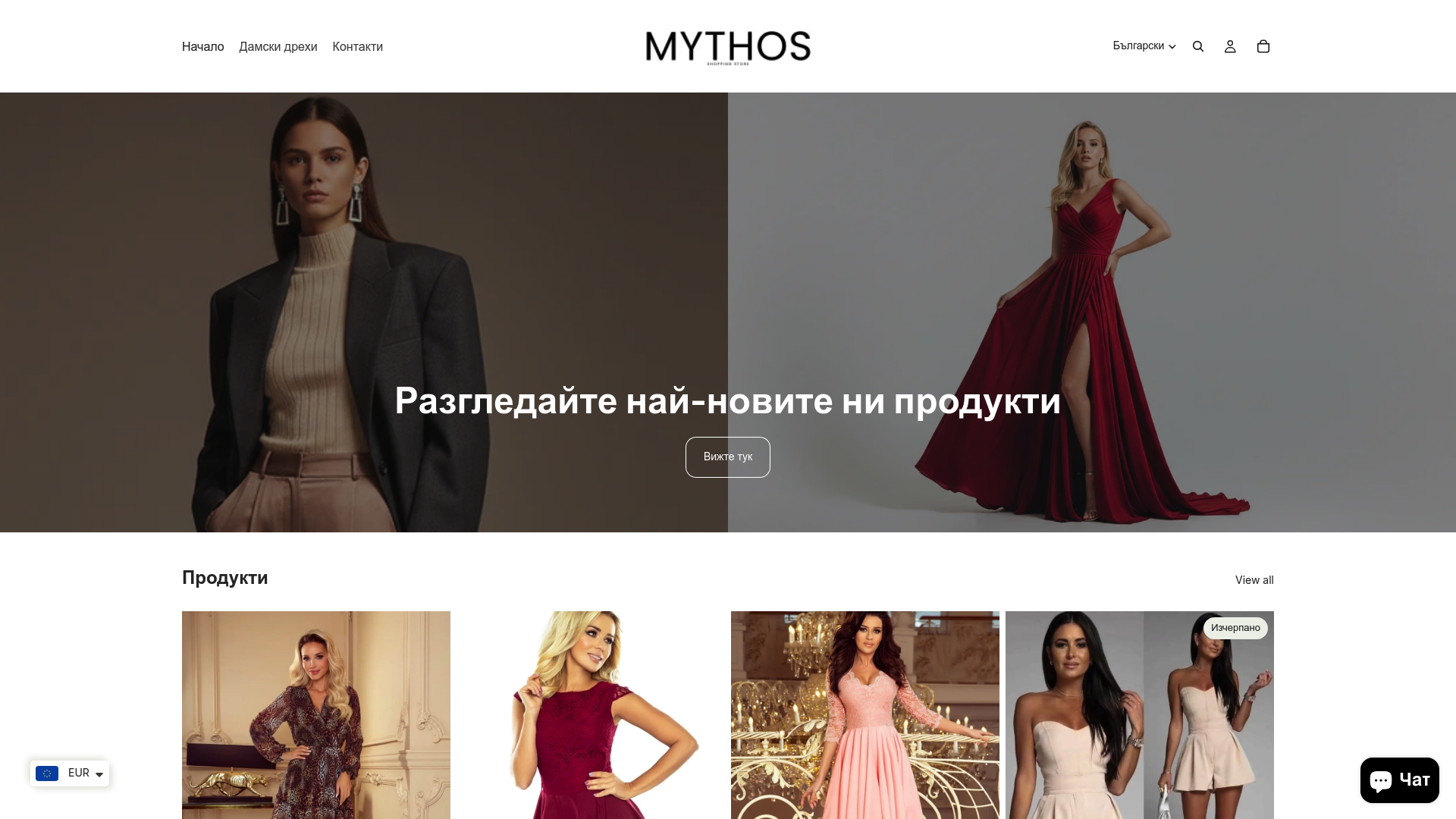
At Mythos.bg, you will find a carefully curated selection of women's luxury clothing that meets all the criteria we discussed. Dresses, blouses, formal sets, and everyday looks, all crafted from high-quality fabrics with attention to detail. Each item is chosen with the modern woman in mind, who values quality and versatility equally. If you are looking for inspiration for a specific look, check out the luxury satin blouse with floral motifs, which combines elegance and versatility in one item. Online shopping has never been easier and closer to true luxury.
Frequently Asked Questions
How to distinguish luxury fashion from premium and fast fashion in a store?
Luxury fashion is characterized by high-quality fabrics, handmade or precise machine craftsmanship, limited access to collections, and personalized service when purchasing. In contrast, premium is more accessible and mass-produced, while fast fashion relies on speed and low prices at the expense of manufacturing quality.
Is a logo essential for luxury fashion?
No. Modern luxury, especially in the quiet luxury style, relies on subtle lines and superior craftsmanship without obtrusive logos. The appeal of logo-based fashion is diminishing among informed buyers who value quality over recognizability.
Does it make sense to invest in luxury fashion if I only wear a garment 1-2 times?
For short-term use on single occasions, fast fashion may be a more rational financial choice. But with repeated wear, a luxury garment repays the investment with interest due to its durability and preserved appearance over the years.
What should I look for when choosing luxury women's clothing?
Pay attention to the fabric composition, the strength and type of seams, the color fastness after washing, and the stability of the shape when worn. These four criteria provide an objective picture of the real quality of each item.
Recommended
- Bulgarian women's fashion: luxury, style, and sustainability – Mythos Bulgaria
- Tips for combining women's clothing: style and luxury with ease – Mythos Bulgaria
- Discover modern Bulgarian fashion brands and choose your style – Mythos Bulgaria
- Why choose elegant women's clothing: the key to style – Mythos Bulgaria
0 comments