

TL;DR:
- Fashion ethics encompasses labor, materials, and social norms, not just ecology. It raises questions about the origin and production conditions of the clothes we buy. Every purchase is a choice that impacts the fashion industry and nature.
Fashion and ethics sound like opposites. One is about glamour and trends, the other about principles and responsibility. But this is precisely where the most common misconception lies. What fashion ethics actually is not a question of sacrificing style. It's a question of choices with which every woman makes a difference every time she shops. The fashion industry is the second most polluting in the world, and behind every garment are people, materials, and decisions with real consequences. Understanding these consequences is the first step towards a more conscious and stylish version of yourself.
Contents
- Key Takeaways
- What is Fashion Ethics: Principles and Moral Norms
- The Impact of Fashion Ethics on the Industry
- Social and Cultural Aspects of Fashion Ethics
- How to Choose Ethical Clothing
- Examples of Fashion Ethics in Bulgaria and the World
- My Perspective on Fashion Ethics
- Mythos and the Principles of Fashion Ethics
- Frequently Asked Questions
Key Takeaways
| Point | Details |
|---|---|
| Fashion ethics is a principled framework | It encompasses labor, materials, and social norms, not just ecology. |
| Greenwashing is a real risk | Not every brand with an "eco" label practices truly sustainable methods. |
| Social context matters | Patriarchal norms and social networks shape women's fashion in the region. |
| Certifications are a guide | Look for labels like GOTS, Fair Trade, or B-Corp when choosing clothing. |
| Personal choice drives change | Every purchase is a vote for or against a particular production model. |
What is Fashion Ethics: Principles and Moral Norms
Fashion ethics is a system of values and moral norms in fashion that defines how clothing is produced, sold, and consumed. It raises questions that we rarely see on the price tag: under what conditions was this blouse sewn? Who paid the price for this low cost? What will happen to this garment in six months?
Ethical fashion places people and nature at the center of design and production. This means fair wages, safe working conditions, and materials that do not destroy ecosystems. But there is an important distinction between sustainability and ethics. Sustainability is primarily an ecological concept. Ethics is broader and includes social justice, workers' rights, and even how advertising portrays women.
The main principles of fashion ethics include:
- Fair labor: Workers in supply chains receive decent wages and work in a safe environment.
- Sustainable materials: Natural, recycled, or organic fabrics with a low environmental footprint are preferred.
- Transparency: Brands publicly share information about their suppliers and production practices.
- Responsible advertising: Images and messages do not objectify or impose unrealistic standards.
- Durability: Products are designed to last, not to be discarded after the season.
Responsibility is shared. Honest production is an integral part of any serious fashion business model. But the consumer also plays her part. Every purchase is a choice, and an informed choice is at the heart of fashion ethics.
The Impact of Fashion Ethics on the Industry
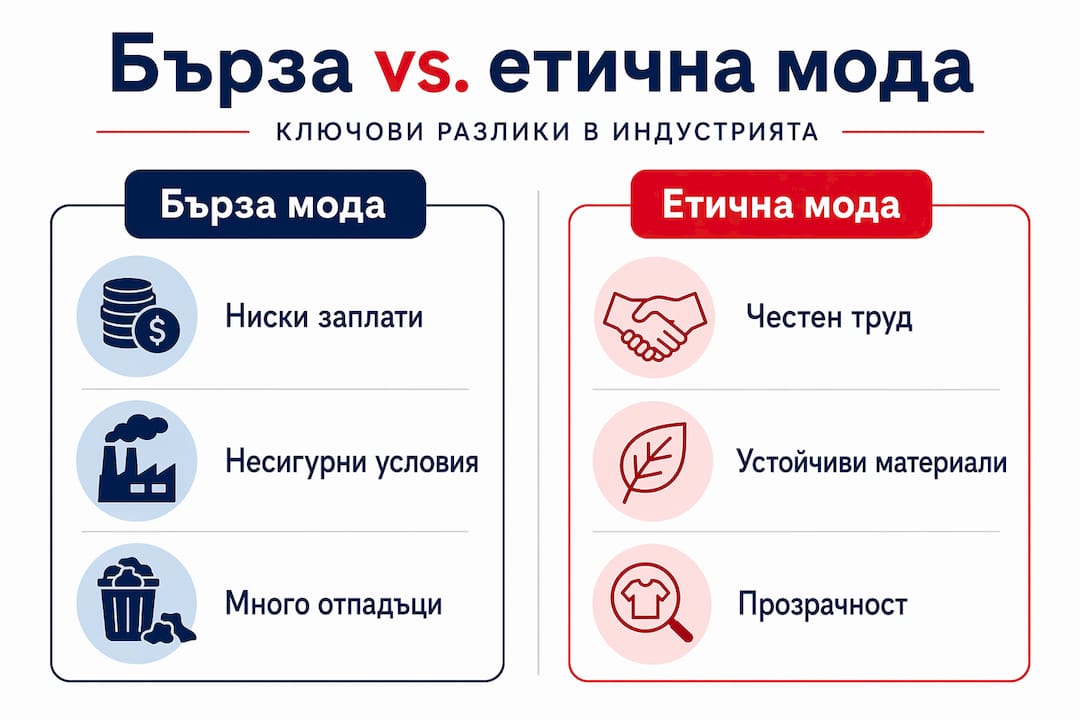
When we talk about criticism of the fashion industry, the numbers speak for themselves. Fast fashion produces about 100 billion garments annually, and a large part of them end up in landfills within months. The ethical approach is not just a moral choice. It is also a business strategy that more and more brands are adopting under consumer pressure.
| Aspect | Fast Fashion | Ethical Fashion |
|---|---|---|
| Working Conditions | Low wages, insecure conditions | Fair wages, certified factories |
| Materials | Synthetic, cheap fabrics | Organic cotton, recycled fibers |
| Transparency | Minimal | Publicly available supply chains |
| Durability | 5-10 washes | Seasons or years of use |
| Cost to Consumer | Low initial price | Higher, but better value |
Sustainable materials and fair labor are the two pillars around which fashion ethics is built in terms of production. But here also comes the problem of "greenwashing." Many brands use words like "eco," "green," or "sustainable" without real substance behind them. For example, recycled polyester releases microplastics with every wash, which calls its "sustainability" into question. Certifications like B-Corp are a useful guide, but not a guarantee.

In Bulgaria and the region, the trend towards sustainable fashion is gaining momentum. Local designers and online platforms are increasingly actively communicating the origin of their products and production conditions.
Professional tip: When you see the word "eco" on a label, look for a specific certification. If the brand cannot name its supplier, the "green" message is more likely marketing.
Social and Cultural Aspects of Fashion Ethics
Fashion ethics doesn't stop at factories and materials. It also delves into the more personal territory of how fashion shapes the image of women in society. In a regional context, this is a particularly relevant topic.
Fashion choices are heavily influenced by patriarchal norms and social expectations in the Western Balkans. Women find themselves between two conflicting expectations: to look attractive, but not "too much." To be fashionable, but "decent." This double standard is the very essence of an unethical approach to women's fashion.
Social networks amplify the problem. Clothing is increasingly chosen for effect in a photo, rather than for personal comfort or style. The result is fashion that serves the gaze of others, not the woman herself.
But things are changing. Here's what we observe as a new code of femininity:
- Moving away from sexualized images towards a more personal and conscious style.
- Emphasis on material quality and cut, rather than on the quantity of clothes.
- Growing interest in brands that portray real women with real bodies.
- Preference for clothes in which a woman feels confident, not just "visible."
"Fashion ethics is the new standard for women who want style with a mission and respect for themselves and nature." CodeFashion
The new code of femininity in 2026 relies on confidence and self-care. This is also the strongest argument for fashion ethics as a personal value, not just an industry standard.
How to Choose Ethical Clothing
The practical side of how to choose ethical clothing is more accessible than it seems. You don't have to give up style or spend twice as much. You need to know what to look for.
- Check certifications. Look for GOTS (for organic textiles), Fair Trade, OEKO-TEX, or B-Corp. These are not just logos. Behind them are audits and standards.
- Ask about the origin. A brand that cannot say where its fabrics come from has probably not checked. Transparency is a sign of responsibility.
- Assess durability. True elegance is built on quality and attention to detail, not on mass trends. A garment you will wear for three years is more sustainable than ten discarded after the season.
- Avoid overproduction. Buy less, but better. A capsule wardrobe is the practical application of fashion ethics.
- Maintain properly. Washing at a low temperature, avoiding the dryer, and proper storage significantly extend the life of the garment.
- Prefer local brands. A shorter transportation route means a smaller carbon footprint and easier verification of production conditions.
When choosing fabrics, pay attention to high-quality materials and their characteristics. Organic cotton, linen, and wool are natural, breathable, and biodegradable. Synthetic blends are cheaper but come with a higher environmental and health cost.
Professional tip: Before purchasing, ask yourself three questions: Will I wear it 30 times? Do I know where it comes from? Will I feel good in it a year from now? If the answers are "yes," the purchase is justified.
Examples of Fashion Ethics in Bulgaria and the World
When we look for women's fashion in Bulgaria, we increasingly find brands that consciously communicate their values. Local designers work with Bulgarian manufacturers, use natural fabrics, and produce limited editions. This is the opposite of fast fashion.
At the European level, initiatives such as the EU Strategy for Sustainable and Circular Textiles oblige brands to provide information on the life cycle of their products. Patagonia is perhaps the most cited global example. The brand publicly encourages customers not to buy a new garment if the old one can be repaired. This is a radically honest approach in an industry built on the desire for novelty.
| Level | Example | Key Practice |
|---|---|---|
| Global | Patagonia | Repair instead of replace, transparent chain |
| European | Eileen Fisher | 100% recycling of own products |
| Regional | Local workshops | Small series, local materials, handmade |
| Online platforms | Mythos | High-quality fabrics, careful selection of collections |
The consumer's role is crucial. When you support local and sustainable brands, you directly influence which production models survive. Global trends are shaped by millions of individual decisions. Yours is one of them.
My Perspective on Fashion Ethics
I have been working in fashion long enough to have seen the topic of fashion ethics move from a niche conversation to a central theme in the industry. And yet I see a persistent myth that needs to be debunked: that ethical fashion is for people with a lot of money and a lot of free time.
It's not true. The real barrier is not the price. It's the habit. We buy fast because we are used to buying fast. Social media algorithms show us new clothes every day and convince us that the need is urgent. But the need is almost never urgent.
What I have learned is simple: less is more. Not in the sense of asceticism, but in the sense of attention. When you buy less often and more consciously, your style actually improves. Because every piece of clothing in your wardrobe is there for a reason.
The critical question we rarely ask ourselves is: who pays for cheap clothing? The answer is almost always a worker in another country or nature. True ethics requires conscious choice, not just following trends. I encourage you to make this distinction next time you shop.
— Milen
Mythos and the Principles of Fashion Ethics
Mythos understands that style and responsibility are not mutually exclusive. The collection of women's clothing at Mythos.bg is curated with attention to fabric quality, cut, and durability. Here you will not find clothes designed to be discarded after the season.
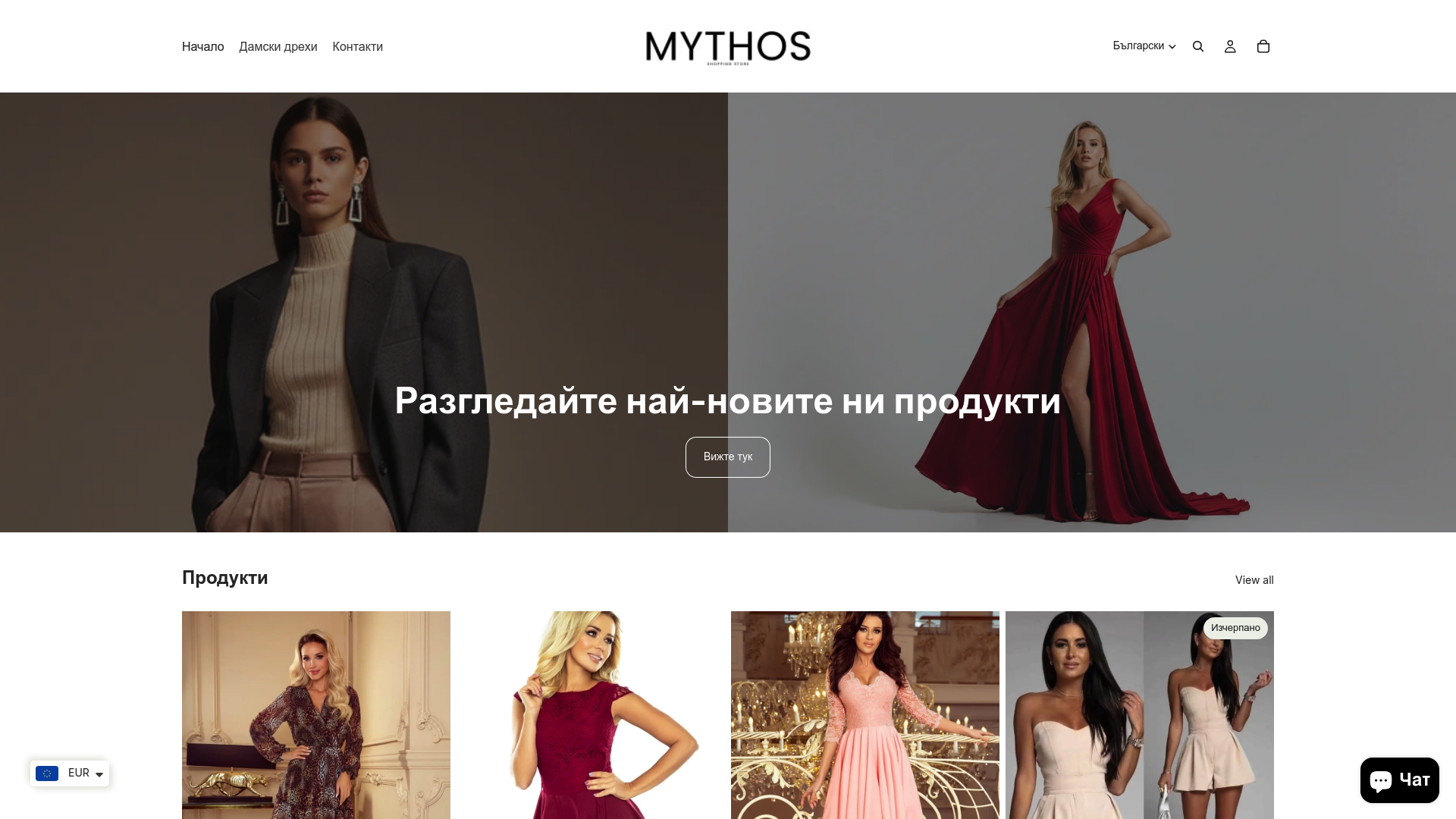
Every garment on the platform undergoes a strict selection process. The emphasis is on high-quality fabrics, modern vision, and style that remains relevant beyond seasonal trends. For example, this dress with an effective print combines sophistication and sustainable style. Shop with a clear conscience and with the confidence that your choices reflect your values.
Frequently Asked Questions
What is fashion ethics in simple terms?
Fashion ethics is a set of principles that define how clothing should be produced and consumed responsibly. It includes fair labor, sustainable materials, and honest advertising.
What is the difference between sustainable and ethical fashion?
Sustainable fashion focuses primarily on environmental footprint. Ethical fashion is a broader concept and also includes workers' rights, social norms, and supply chain transparency.
How do I recognize greenwashing in fashion brands?
Look for specific certifications such as GOTS or Fair Trade. If a brand uses words like "eco" without naming a supplier or standard, it's most likely marketing, not actual practice.
How important is fashion ethics for the everyday consumer?
Every purchase is a choice that supports a particular production model. Patriarchal expectations and social norms influence fashion as much as ecology. An informed consumer is the strongest driver of change in the industry.
Can one shop ethically without a large budget?
Yes. Buying fewer but higher-quality clothes is more accessible long-term than frequently buying cheap items. Maintenance, exchange, and local brands are practical alternatives to expensive international "sustainable" brands.
Recommended
- Current Women's Models: Style, Luxury, and Modern Accents – Mythos Bulgaria
- Sustainable Fashion: Style and Responsibility in 10% of CO2 – Mythos Bulgaria
- Sustainable Women's Fashion: Elegance Without Compromise – Mythos Bulgaria
- Discover Modern Bulgarian Fashion Brands and Choose Style – Mythos Bulgaria
0 comments