

TL;DR:
- An formal dress is a long or midi garment made of luxurious fabrics, suitable for formal events with dress codes such as Black Tie or White Tie. It differs from a cocktail dress in length, fabric, and context of wear, conveying a message of elegance and respect for the event. When choosing, it's important to consider your body type, the dress code, and the material, avoiding mistakes like inappropriate length or a dress without a perfect finish.
A formal dress is a category of women's clothing designed for highly formal events where the dress code requires a long or midi length and luxurious fabrics. Many women confuse a formal dress with a cocktail dress, but the difference is not just in inches. It's in the overall message the dress sends. This article will provide a clear definition of a formal dress, explain its types and silhouettes, help you choose a model according to your figure, and protect you from the most common shopping mistakes.
What is a formal dress: definition, dress code, and main characteristics
A formal dress is an outfit that meets the requirements of formal dress codes such as Black Tie, White Tie, or Formal Evening. It is not just a "nice dress." It is a specific stylistic choice with rules for length, fabric, and silhouette.
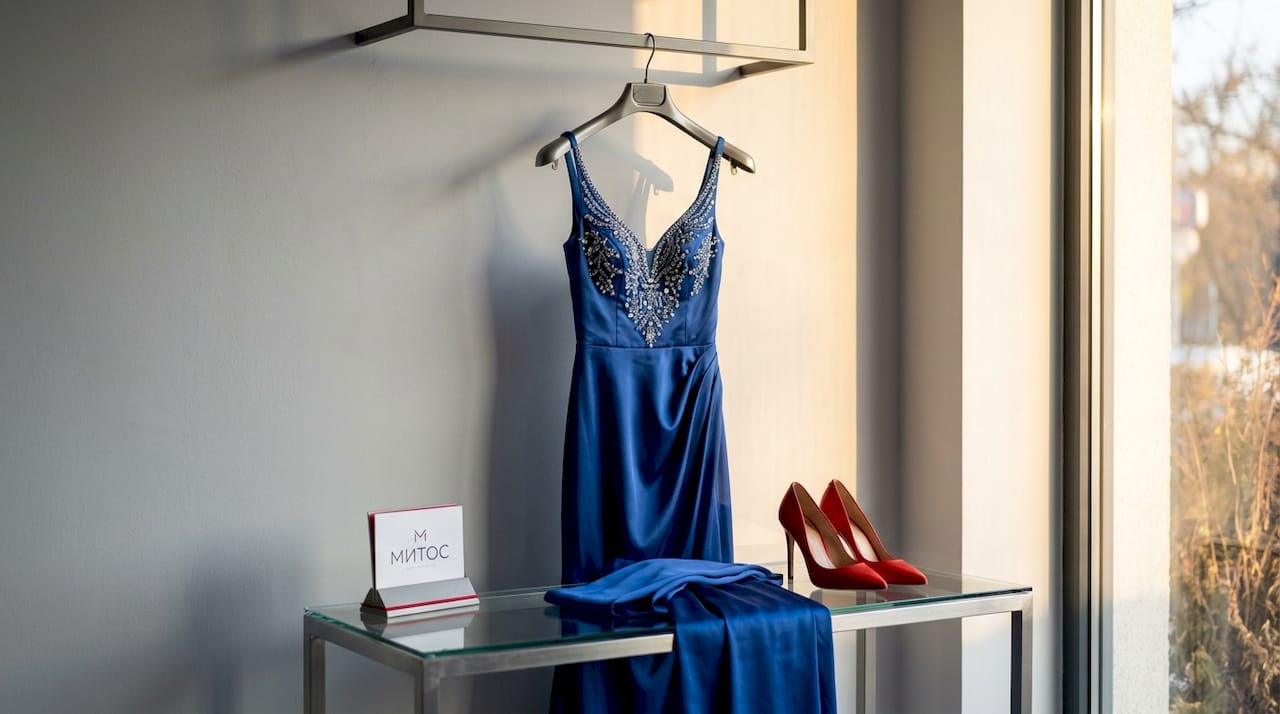
The Black Tie dress code requires a floor-length gown made of luxurious fabrics such as silk, satin, velvet, or chiffon. This means that if your invitation says "Black Tie," a knee-length cocktail dress is simply not an option, no matter how elegant it looks. Formality is achieved through the combination of proper length and high-quality fabric, not just through color or decoration.
The term "официална рокля" (formal dress) is widely used in Bulgaria, but the standard terms in the fashion industry are formal dress or evening gown for the most official variations. Knowing these terms helps you understand international dress codes and shop more confidently.
What is the difference between a formal and a cocktail dress?
The distinction between the two types of dresses comes down to three key factors: length, fabric, and event context.
| Characteristic | Formal dress | Cocktail dress |
|---|---|---|
| Length | Floor-length or midi (below the knee) | Knee-length or slightly above |
| Fabrics | Silk, satin, velvet, chiffon | Lace, crepe, jacquard, jersey |
| Suitable occasions | Black Tie, White Tie, formal dinners, prom | Cocktail parties, more informal dinners |
| Silhouette | A-line, ball gown, mermaid, sheath | Freer, varied |
| Accessories | Clutch, formal shoes, jewelry | More flexible choice |
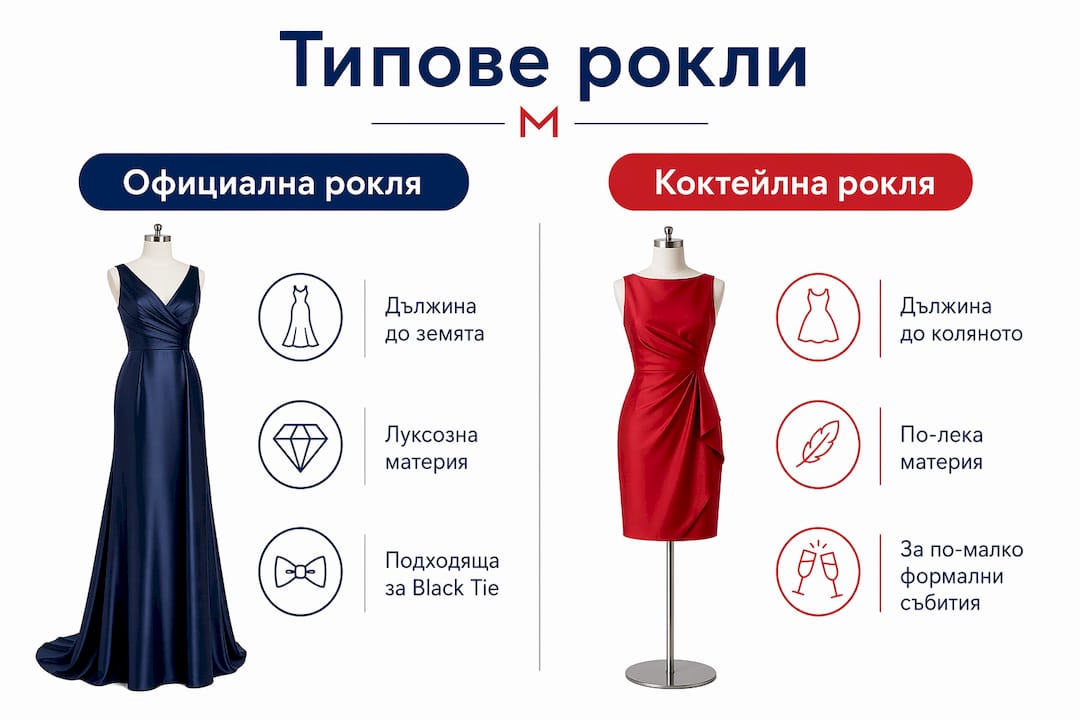
Cocktail dresses are not considered strictly formal for Black Tie evening events. This is a mistake many women make because they think "formal" just means "nicer than everyday." In fact, a formal dress is a category with specific standards, not just a degree of elegance.
When the invitation doesn't specify a dress code, the safest strategy is to choose "a little more sophisticated than casual." If you're debating between a cocktail and a formal dress, choose the formal one. It's better to be slightly overdressed than to feel inappropriately dressed at a highly formal event.
What are the types of formal dresses and when are they worn?
Formal dresses are not all the same. They differ in silhouette, length, and fabric, and each type is suitable for a different context.
Main silhouettes and their characteristics
The A-line is the most versatile silhouette for formal dresses. The dress is fitted at the waist and flares gently downwards, making it suitable for almost any figure. It is a classic choice for a formal wedding guest dress, a prom, or a formal dinner. The A-line works equally well in satin, chiffon, or lace.
The ball gown is the most formal silhouette. It has a corset or fitted bodice and a lavish skirt that flares from the waist. Ball gowns are suitable for White Tie events, formal balls, and galas. They require more space and confidence to wear, but the effect is unforgettable.
The mermaid silhouette follows the body's lines to the knee and then flares out. It is suitable for women with a defined figure and is a popular choice for formal evening events and wedding ceremonies. The fabrics that work best with it are satin, crepe, and lace.
The sheath dress (column dress) is a minimalist choice with an elegant line from shoulder to floor. It is favored by women who prefer a clean look without unnecessary volume. A sheath dress in black satin or dark blue chiffon is a classic for formal dinners and corporate galas.
Fabrics that make a dress formal
The fabric is as important as the silhouette. Satin creates a luxurious sheen and is a classic choice for formal evening dresses. Chiffon adds lightness and movement, making it suitable for warmer seasons. Velvet is ideal for autumn-winter formal occasions and conveys a sense of richness. Lace can be formal when combined with the right silhouette and length.
Professional tip: Avoid fabrics like cotton, denim, or jersey for formal events. Even if the dress is the correct length, the fabric immediately reveals the level of formality.
Formal dress for a specific occasion
For a formal wedding guest dress, the choice depends on the dress code on the invitation and the season. A summer garden wedding allows for a chiffon dress in pastel tones. A winter ballroom wedding requires heavier fabrics and darker colors. Orient yourself according to the venue and the overall formality of the event when the dress code is not explicitly stated.
For a ball or gala evening, a ball gown or A-line in satin or chiffon is an impeccable choice. For a corporate formal dinner, a sheath dress or A-line in neutral or dark tones is more appropriate than a lavish ball gown. The context determines the level of formality even within the category itself.
You can explore types of women's dresses and their stylistic characteristics to get a clearer idea of which silhouette suits you.
How to choose a formal dress according to your figure and personal style
There is no bad figure, only an unsuitable cut. Choosing the right silhouette for your body type is the difference between a dress you wear and a dress that wears you.
Silhouette according to body type
Women with an hourglass figure (defined shoulders and hips, narrow waist) can wear almost any silhouette. A mermaid dress and A-line emphasize their natural proportions. Women with an apple figure (wider midsection) feel best in an A-line or empire silhouette, which starts from under the bust and conceals the waist. Women with a pear figure (wider hips) look balanced in dresses with details around the neckline and a looser skirt. Women with a rectangular figure (without a defined waist) can create the illusion of a silhouette with belted dresses or drapes around the waist.
Here are the steps I recommend when choosing a formal dress:
- Determine your body type before browsing models. Do you know if you have wider shoulders or hips? This is the starting point.
- Read the dress code on the invitation and determine the level of formality. Black Tie requires a different dress than Semi-Formal.
- Choose the fabric according to the season and event. Satin for winter and evening occasions, chiffon for summer and lighter formal events.
- Choose a color that makes you feel confident. Black is a universal choice, but navy blue, burgundy, and champagne are just as formal.
- Try on the dress with the shoes you will wear with it. The length of a formal dress varies significantly depending on the heel.
- Add accessories last. A clutch, earrings, and necklace should complement the dress, not compete with it.
Professional tip: If the dress is more formal than necessary for the event, accessories can adapt the look. A more neutral clutch and simpler shoes reduce the feeling of excessive formality.
Comfort and long events
Formal dresses are often worn for hours. Choosing the right size is critical. A dress that tightens at the waist after two hours will ruin your evening. If you choose a dress with a corset, make sure you can sit and move freely in it. For long gala evenings, a sheath dress or A-line is more comfortable than a ball gown with a lavish skirt.
Also read our tips for choosing an elegant dress to make a more informed choice before a special occasion.
Common mistakes when choosing a formal dress
Mistakes when choosing a formal dress are rarely a matter of taste. More often, they are the result of unfamiliarity with the dress code or hasty shopping.
- Ignoring the dress code on the invitation. Many women choose a dress they like without checking if it meets the event's requirements. Black Tie means specific rules, not just "nicely dressed."
- Choosing an overly short length. Cocktail dresses are not suitable for strictly formal evening events. Even if they are beautiful, they violate the dress code.
- Inappropriate fabrics. A cotton or jersey dress, even with the correct length, does not look formal. The fabric is half the formality.
- Underestimating accessories. A formal dress without appropriate shoes and a clutch looks incomplete. Accessories are not an option; they are a mandatory part of the look.
- Last-minute shopping. Formal dresses require alterations, hemming, and sometimes ordering in advance. Allow at least two weeks before the event.
- Choosing a dress without trying it on with the right underwear. Formal dresses with a neckline or open back require specific underwear. Try the dress with it to see the real effect.
The black dress is a versatile choice that can be adapted from a more informal evening to a strictly formal event by changing accessories. If in doubt, a black formal dress is an impeccable choice that works for almost any event with a formal dress code.
Key takeaways
A formal dress requires correct length, luxurious fabric, and compliance with the event's dress code. Without these three elements, even a beautiful dress can be the wrong choice.
| Point | Details |
|---|---|
| Definition and standard | A formal dress is a long or midi dress made of luxurious fabrics, meeting a formal dress code. |
| Difference from cocktail | Cocktail dresses are shorter and less formal. They are not suitable for Black Tie events. |
| Choice according to figure | Each body type has a suitable silhouette. The A-line is the most versatile option. |
| Dress code above all | Read the invitation before choosing a dress. The dress code determines the length and fabric. |
| Accessories complete the look | Clutch, shoes, and jewelry are a mandatory part of a formal outfit, not an addition. |
My perspective on the formal dress and why the dress code matters
I've worked with many women who come with the question "What dress should I wear?" and actually mean "How do I look confident and appropriate?" These two questions are related, but they are not the same.
I've observed women with impeccable taste appear at formal dinners in cocktail dresses because no one explained the difference to them. And vice versa. Women with a more modest budget, but with a clear understanding of the dress code, look much more appropriate and confident. A formal dress is not a matter of price. It is a matter of knowing the rules.
I believe that modern fashion has blurred the lines between formal and informal too much. This is convenient for everyday life but creates confusion for special occasions. When the dress code says Black Tie, it's not a recommendation. It's the framework within which the entire event operates. Observing it is a sign of respect for the hosts and other guests.
My personal advice is this: invest in one quality formal dress in a classic color and silhouette that you can wear to various occasions. A black A-line in satin or a navy blue sheath dress in chiffon are investments, not one-time purchases. Add the right accessories, and you will look appropriate and elegant at any formal event. The joy of dressing up for a special occasion comes when you know you've made the right choice. Then you focus on the event, not on the dress.
— Milen
Find your formal dress at Mythos
Mythos offers a collection of women's dresses suitable for formal occasions, weddings, proms, and evening events. Each dress is chosen with attention to fabric, silhouette, and current trends in formal fashion.
In the Mythos collection, you will find dresses in various lengths, fabrics, and colors, suitable for every body type and occasion. If you are looking for a dress with modern details and a clean silhouette, check out this striking dress with a belt, which combines formality with a modern look. Shopping is convenient and secure, with delivery throughout Bulgaria.
FAQ
What is a formal dress and how does it differ from an evening dress?
A formal dress is attire for formal events with a dress code, usually with a long or midi length and luxurious fabrics. An evening dress is a broader term that includes all dresses for evening occasions, including less formal options.
Can a cocktail dress replace a formal dress?
Not for strict dress codes like Black Tie. Cocktail dresses are shorter and less formal and do not meet the requirements of formal evening events.
What formal dress should I choose for a wedding as a guest?
The choice depends on the dress code on the invitation and the season. In the absence of a specified dress code, choose a more formal option with a length below the knee or floor-length in a season-appropriate fabric.
What fabrics are suitable for a formal dress?
Silk, satin, velvet, and chiffon are classic fabrics for formal dresses. They create the necessary sense of luxury and formality that the dress code requires.
How do I know if my dress is formal enough?
Check three things: length (below the knee or floor-length), fabric (luxurious fabric, not cotton or jersey), and silhouette (clean and structured). If all three meet the dress code on the invitation, the dress is suitable.
0 comments