

TL;DR:
- Premium clothing quality is determined by high-quality materials, precise craftsmanship, and durability, not just price and brand. Proper care, attention to seams, and quality certifications ensure longevity and comfort. At Mythos, you can find stylish and high-quality women's clothing that combines function and design.
Many believe that premium quality clothing simply means an expensive label and a well-known brand. The truth is different. Behind the term are specific materials, manufacturing techniques, and standards that determine how you will feel in a garment after two hours of wear and how it will look after twenty washes. If you have wondered why one blouse retains its shape for years, while another deforms after a month, the answer lies precisely in these details. In this article, you will learn what exactly makes a garment premium, how to recognize it, and why the investment is worthwhile.
Contents
- Key Takeaways
- Main Characteristics of Premium Quality Clothing
- Difference Between Quality and Standard Clothing
- Practical Benefits of Premium Clothing
- How to Recognize and Choose Premium Quality Clothing
- Denim vs. T/C Blends for Premium Clothing
- My Perspective on Premium Quality Clothing
- Discover Your Premium Clothing at Mythos
- Frequently Asked Questions
Key Takeaways
| Point | Details |
|---|---|
| Materials are the Foundation | Organic cotton, merino wool, and linen provide comfort, breathability, and durability. |
| Craftsmanship is Crucial | French seams and precise construction last significantly longer than standard overlocking. |
| Price is an Investment | Quality clothing, properly maintained, lasts for years and saves money in the long run. |
| Labels Matter | Reading care instructions protects delicate fabrics from irreversible damage. |
| Recognition is a Skill | Checking seams, fabric weight, and certifications helps you choose correctly. |
Main Characteristics of Premium Quality Clothing
When we talk about premium level clothing quality, we are talking about three specific pillars: material, craftsmanship, and durability. Each of them is measurable. None are subjective.
Materials with Proven Origin
Premium clothing uses organic cotton, merino wool, and technical blends with impeccable seams and sturdy construction, with prices ranging from about $35 to over $2000 depending on the brand. Organic cotton is softer than conventional cotton because the fibers are not treated with harsh chemicals. Merino wool regulates body temperature and is naturally antibacterial. Technical blends like modal or lyocell combine the softness of natural fiber with greater resistance to deformation.
Softened linen is a particularly interesting example: special industrial processing removes the "prickly" sensation and wrinkling, while preserving the breathable properties of the natural fiber. The result is a material that looks and feels luxurious, but is practical for everyday use.
| Material | Main Advantage | Recommended Use |
|---|---|---|
| Organic Cotton | Softness, hypoallergenic | Everyday wear, directly against the skin |
| Merino Wool | Thermo-regulation, antibacterial | Autumn/Winter, layering |
| Softened Linen | Breathability, comfort in heat | Spring/Summer |
| Modal/Lyocell | Softness + resistance to deformation | Dresses, blouses |
Craftsmanship: Where the Difference Hides
French seams are a key indicator of premium craftsmanship. They conceal the raw edge inside the seam and take three times longer to produce than standard overlocking. The result is a garment that does not fray from the inside and lasts significantly longer. If you turn the garment inside out and see messy threads or unstable edges, it is not premium quality, no matter what the label on the outside says.
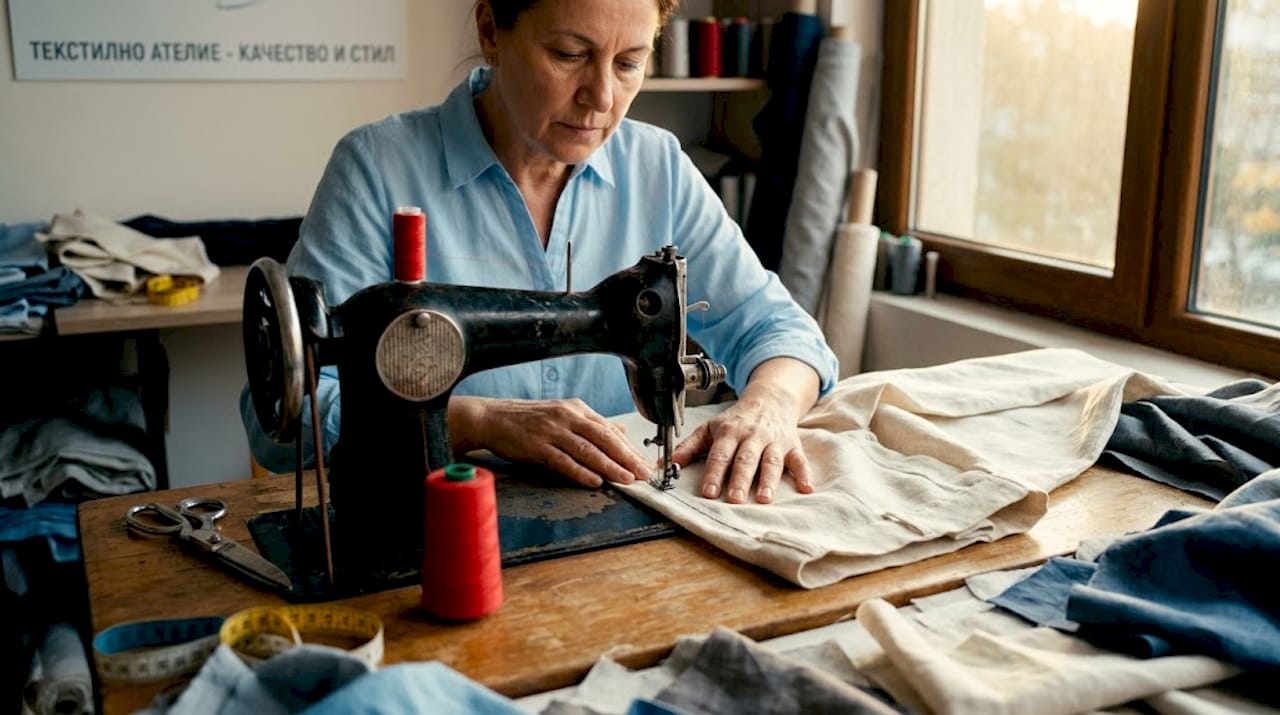
Professional tip: Before buying a garment online, look for photos of the inside or the seams. Many quality-focused brands specifically showcase these details because they know they speak for themselves.
Difference Between Quality and Standard Clothing
The difference between premium quality clothing and mass-produced items is not just in the price. It is in the choices made at every stage of the production process.
Premium brands receive higher ratings for quality (22.4) and prestige (15.8) compared to the mass market, where average ratings are 15 for quality and 9.5 for prestige. Interestingly, customer satisfaction with premium brands is lower because expectations are proportionally higher.
Specific differences you can see and feel:
- Fabric weight. Quality cotton feels dense and stable. Cheap cotton is transparent and light in an unsuitable way.
- Threads and seams. For standard clothing, seams have fewer stitches per centimeter, making them easier to tear. Buttons and zippers. Metal buttons with weight and a smooth zipper are details characteristic of higher quality items.
- Color stability. Premium dyes are more resistant to washing and sun because manufacturers invest in better dyes.
- Shrinkage after washing. A standard T-shirt shrinks and loses shape after the third wash. A quality item retains its size and silhouette.
Standards for premium brands are based on certified materials and guarantee stability, not just visual effect or logo. Manufacturers invest in maintenance, warranty, and functionality, which is the essential difference from the mass market.
Practical Benefits of Premium Clothing
The advantages of premium clothing become apparent not in the store, but when worn. Here's what you actually get:
- Greater comfort. Hypoallergenic properties of organic cotton and linen reduce skin irritations, especially for sensitive skin. If you have experienced itching or redness from synthetic clothes, switching to natural materials is a real game-changer.
- Durability and savings. A garment bought for 150 leva and worn for 5 years costs less on a monthly basis than a garment for 30 leva bought three times. Quality fabrics retain their shape and color significantly longer.
- Better functionality. High elasticity, breathable properties, and durable construction mean that the garment moves with your body, not against it.
- Skin care. Natural fibers allow the skin to breathe and regulate moisture. Synthetics retain heat and moisture, which is unpleasant and potentially harmful when worn for long periods.
To preserve these advantages for as long as possible, maintenance is mandatory. Exceeding the recommended temperature even by 10 degrees can ruin delicate fabrics like cashmere. Read the labels. Do not ignore them.
Professional tip: Store wool and linen items in textile bags, not plastic ones. Natural materials need to breathe even when not worn, to preserve their structure and freshness.
For more detailed information, you can read about why they are worth the investment in quality women's clothing.
How to Recognize and Choose Premium Quality Clothing
Shopping for premium clothing requires skill. Brand and price alone are not a guarantee. Here are the specific criteria to guide you.
Read the fabric composition label. The higher the percentage of natural fiber, the better. Over 80% cotton, wool, or linen is a good sign. Blends with less than 50% natural fiber usually feel cheaper.
Check the seams. Turn the garment inside out. Look for even, dense rows with many stitches. French seams are an indicator of attention to detail and three times greater durability. Loose threads or unstable edges are a bad sign.
Test the fabric weight. Hold the garment in your hands. A quality item has a feeling of density and structure. A transparent or flimsy feel usually indicates low density.
Look for certifications. GOTS (for organic textiles), OEKO-TEX, and similar certifications indicate that the manufacturer has undergone independent verification of material quality.
| Criterion | Indication of Premium | Indication of Standard |
|---|---|---|
| Fabric Composition | Over 80% natural fiber | Mostly synthetics |
| Inside Seams | French or flat seams | Overlock or loose threads |
| Fabric Weight | Dense, structured | Light, transparent |
| Buttons and Accessories | Metal, securely attached | Plastic, easily detached |
| Certifications | GOTS, OEKO-TEX, national standards | Missing or unknown |
A practical guide to recognizing quality clothing can save you many wrong purchases.
Denim vs. T/C Blends for Premium Clothing
The choice of material depends on the intended use. The two popular options are denim and T/C blends (polyester with cotton), and each has its place in the wardrobe.
Denim is durable and dense, while T/C blends are lighter, more breathable, and easier to maintain, preferred for warmer climates and urban use. In the premium segment, denim is usually of higher density (over 12 ounces) and dyed with quality indigo dyes that are resistant to repeated washing.
| Characteristic | Denim | T/C Blend |
|---|---|---|
| Durability | Very high | Medium to high |
| Breathability | Limited | Good |
| Maintenance | Washed rarely, carefully | Easy, washed regularly |
| Recommended Season | Autumn/Winter | Spring/Summer |
| Comfort in Heat | Low | High |
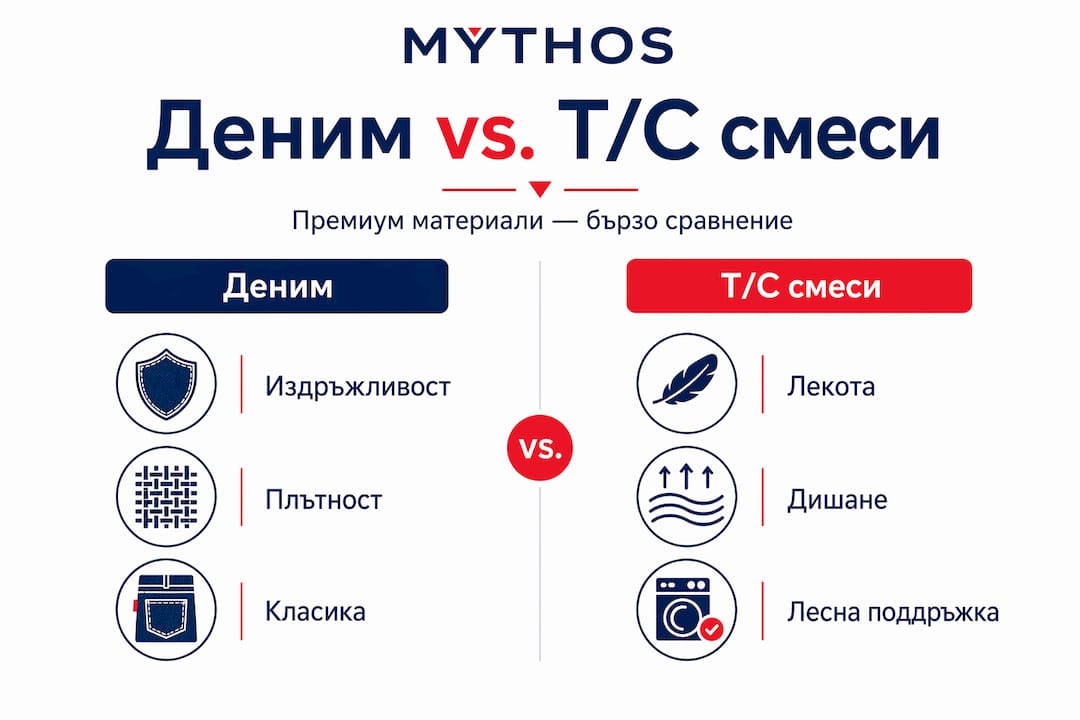
Experts recommend denim for maximum durability and T/C blends for comfort, depending on the needs and environment of use. In premium production, both materials undergo additional processing that improves the feel and extends the life of the item.
My Perspective on Premium Quality Clothing
I've been in fashion for years, and one observation has never failed me: women who invest in fewer, but better, clothes always look better. Not because they spent more, but because every piece in their wardrobe conveys a sense of choice, not compromise.
I have a personal intolerance for the idea that premium quality is visual luxury. It's not. It's a functional compromise in the opposite direction: you pay more once so you don't pay repeatedly. I've seen clothes for 40 leva, discarded after three wears, and clothes for 200 leva, worn for five years with complete pleasure.
The thing few people say openly: maintenance is half the investment. Buying an expensive garment and washing it at the wrong temperature is like buying good wine and chilling it under the wrong conditions. Read the labels. Follow the instructions. You'll be surprised how long a quality item can last.
My practical advice: start with three to five basic pieces with proven good materials. Feel the difference. Then decide how to build the rest of your wardrobe collection.
— Milen
Discover Your Premium Clothing at Mythos
When you know what to look for in quality clothing, the choice becomes much easier. Mythos offers exactly this combination: stylish women's collections with an emphasis on materials and craftsmanship, accessible from the convenience of an online platform.
In women's clothing from Mythos, you will find dresses, blouses, trousers, and sets, selected with attention to detail and tailored for the modern woman. Each piece is positioned at the intersection of style and functionality, precisely where premium textile quality meets contemporary design. If you are looking for a specific example of a complete look, this dress with an effective print demonstrates how craftsmanship and design work together.
Frequently Asked Questions
What does “premium quality” mean for clothing?
Premium quality in clothing means the use of high-quality natural or technical materials, precise craftsmanship with techniques like French seams, and proven durability for everyday use. It's not just a matter of price or brand.
How can I recognize a premium garment in a store?
Check the seams inside, feel the fabric's weight, and read the label for material composition. Seams and construction are the most reliable indicators of manufacturing quality.
Is there a difference between natural and synthetic fabrics in premium clothing?
Yes. Natural fibers such as organic cotton, wool, and linen provide better breathability, hypoallergenic properties, and durability. The main natural materials provide comfort and minimal skin irritation, unlike most synthetics.
How long does a premium quality item last?
With proper care and adherence to label instructions, a good item can be worn for five or more years without losing its shape and color. Incorrect washing is the main reason for premature deterioration of quality fabrics.
Where can I buy premium clothing online in Bulgaria?
Mythos is an online platform focusing on high-quality women's clothing, offering a wide range of dresses, blouses, and sets, selected with attention to materials and modern design. Explore the collection at Mythos for current offerings.
0 comments