

TL;DR:
- Quality clothes are recognized by natural fabrics such as wool, cotton, and silk.
- Attention to seams and pattern matching indicates good craftsmanship.
- Details like the quality of linings and spare buttons are key for durability and style.
Most women believe that a higher price automatically means better quality. But the truth is different. You can pay a significant amount for a garment with a glamorous logo and end up with something that looks worn after five washes. The true marks of quality are hidden in the details, visible only to those who know what to look for: the fabric, the seams, the cut, the lining. This guide will show you exactly how to assess a garment in the store or when it arrives from online clothing shopping, so you can invest wisely and look impeccable.
Table of Contents
- Fabrics and textiles: what distinguishes quality
- Seams and workmanship: the small details speak volumes
- Inspection and tests: how to assess quality yourself
- Style and functionality: choosing quality clothes for your wardrobe
- Unique perspective: why details are the future of your wardrobe
- Next step: discover elegant clothes of proven quality
- Frequently asked questions
Key Takeaways
| Point | Details |
|---|---|
| Soft and dense fabric | Natural fabrics show better quality and comfort compared to synthetics. |
| Excellent craftsmanship | Straight, dense seams and matching patterns always indicate quality. |
| Practical tests | Easily recognize strength and authenticity through touch, slight compression, and seam inspection. |
| Invest in basics | Choose versatile clothes from proven fabrics for a modern and functional wardrobe. |
Fabrics and textiles: what distinguishes quality
To assess the quality of a garment, start with the fabric, as it is the foundation of a good wardrobe. No matter how elegant the design, if the material is poor, the garment will quickly lose its appearance and shape.
Quality clothes are recognized by natural fabrics such as wool, cotton, linen, silk, and cashmere, which are soft, dense, breathable, and quickly regain their shape after wrinkling. These materials "breathe" with the skin, regulate temperature, and remain pleasant to wear for hours. Cashmere, for example, is significantly softer than standard wool and is immediately felt upon touch. Linen drapes heavily and elegantly, while cotton is flexible and easy to maintain.
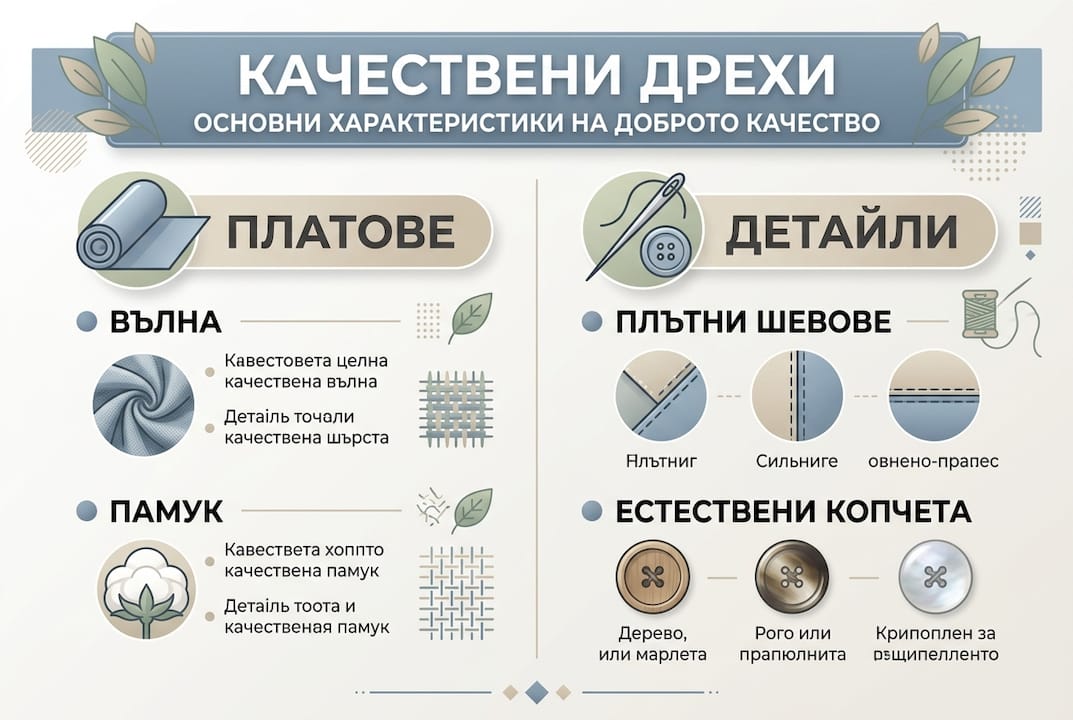
Synthetic fibers like polyester, nylon, and acrylic are widely used in mass production. They are cheap and mechanically durable, but synthetic fibers reduce breathability and comfort. In blends of 20 to 30% synthetic, the natural fiber retains its advantages, and the garment gains additional elasticity. The problem arises when synthetic content exceeds 50%.
What to look for on the label:
- Wool (100% wool or merino wool) for winter clothes
- Cotton (cotton) over 80% for everyday blouses and trousers
- Linen (linen) for spring-summer models
- Silk (silk) and cupro for luxurious occasion wear
- Cashmere (cashmere) for sweaters and knitwear
When examining a model in the store, take it in your hands and gently crumple it. Release and observe. Quality fabric regains its shape almost immediately, without permanent creases. Low-quality synthetic fabric remains wrinkled or shows white lines at the folds.
Comparison of fabrics by quality and functionality:
| Fabric | Breathability | Durability | Maintenance | Suitable for |
|---|---|---|---|---|
| Cotton | Very good | Good | Easy | Everyday wear |
| Wool | Excellent | Very good | Moderate | Autumn/Winter |
| Linen | Excellent | Good | Moderate | Spring/Summer |
| Silk | Excellent | Delicate | Careful | Special occasions |
| Polyester | Poor | Very good | Easy | Sport blends |
| Cashmere | Excellent | Good | Delicate | Luxurious comfort |
The quiet luxury style, which continues to gain popularity in Bulgaria, requires precisely these basic, breathable, and elegant fabrics. A minimalist look with a maximum sense of quality to the touch. If you want to check if a particular model meets your criteria before purchasing, check out our online shopping checklist specifically designed for clothing.
Professional advice: Clothes made of 100% natural fabric without any blend are sometimes less practical for everyday wear. Look for blends with 70 to 90% natural fiber to achieve a balance between luxury and functionality.
Seams and workmanship: the small details speak volumes
Once you are sure about the material, pay attention to how the garment is made, because here small details make all the difference. Even the most beautiful fabric loses its value if the seams are loose or the cut is inaccurate.
Seams are even and straight, with a high stitch density per centimeter and no protruding threads. A quality seam withstands a slight pull without showing gaps or unraveling. When you look at the inside of the garment, a good seam looks almost as neat as the outside. A common mistake in mass production is using fewer stitches per centimeter to speed up the process. The result is a seam that quickly loosens with wear.
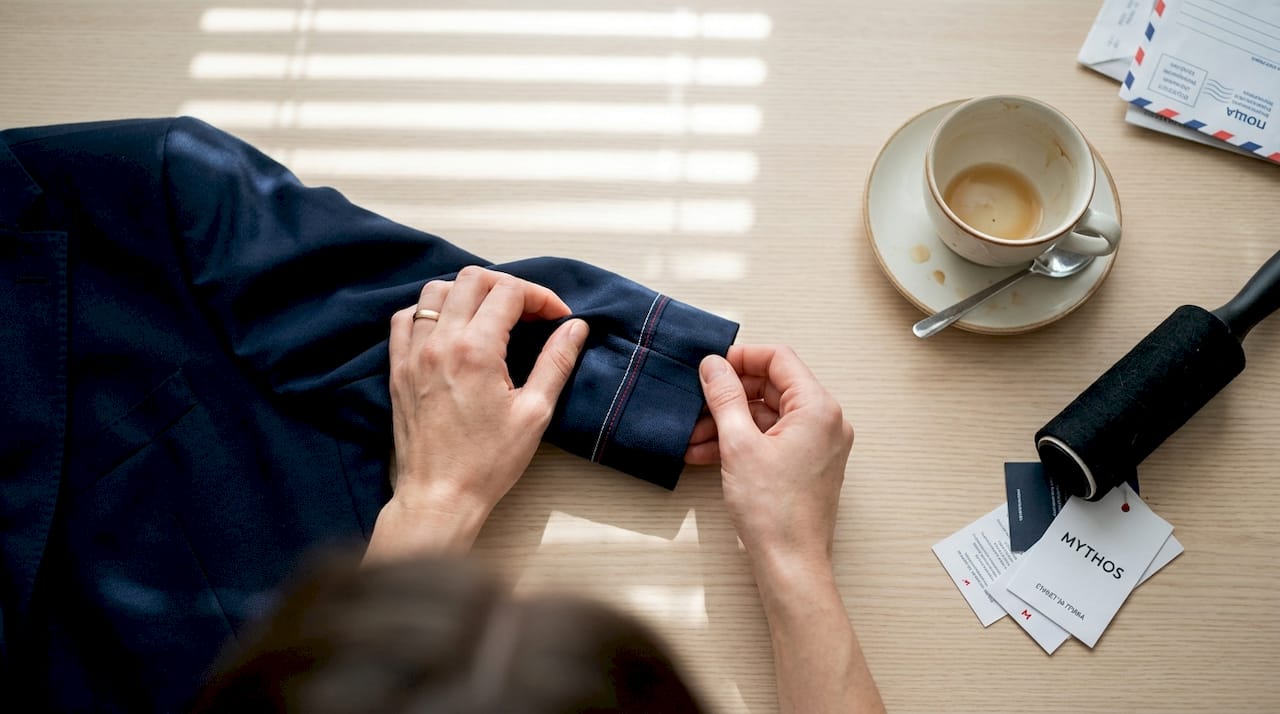
The cut follows the body without tightening or wrinkling, and the patterns match perfectly at the seams. If the garment has stripes or checks, observe the shoulder seams and pockets. Do the lines match? If not, the manufacturer has cut corners in the production process. Correct pattern matching requires more fabric and more labor, so it is a reliable indicator of careful craftsmanship.
Steps for checking seams:
- Look at the inside of the garment. Seams should be finished with an overlock or tape.
- Gently pull the seam in the shoulder area. It should not open or show through.
- Check that the patterns match at the shoulder, pocket, and bottom hem.
- Examine the hems. They should be even and sewn with an invisible stitch.
- Press the button. It should be firm and not rotate.
- Look for spare buttons, usually sewn inside or included in a small bag.
Buttons made from natural materials such as horn or mother-of-pearl, firmly sewn with spares, are a sign of quality craftsmanship. Buttonholes should be neatly finished, without loose threads at the edges.
The lining is another key detail that most women overlook. A lining made of viscose or cupro is smooth, pleasant to the skin, and drapes beautifully. Polyester lining, on the other hand, sticks when warm, creates static electricity, and quickly becomes uncomfortable to wear. When examining the lining, check that it is sewn with enough ease. A too-tight lining restricts movement and tears faster.
Comparison of details by craftsmanship level:
| Detail | Low Quality | High Quality |
|---|---|---|
| Seams | Sparse stitches, protruding threads | Dense, even, hidden threads |
| Lining | Polyester, sticks | Viscose or cupro, smooth |
| Buttons | Plastic, loose | Natural material, firm |
| Hem | Uneven, glued | Invisible stitch, hand-finished |
| Patterns | Do not match | Perfect match |
Review the steps for online purchasing to know how to check these details even when shopping remotely. Good online stores provide photos of the inside of seams and detailed descriptions of materials. If this information is missing, ask before ordering.
Professional advice: Look at the armpits and the back of the jacket or blouse. That's where mass-market manufacturers cut corners, believing no one looks there. That's where you'll find the truth about the workmanship.
Inspection and tests: how to assess quality yourself
Once you've examined the seams and construction, you can apply a few easy tests for a quick assessment of quality. You don't need special knowledge. It's enough to know what to look for and how to interpret it.
Testing methods include touch, visual inspection, weight (heavy fabric drapes elegantly), transparency (density), and wear resistance. These methods work equally well in person and when you receive the garment from an online order.
How to conduct a quick check in five steps:
-
Visual inspection. Examine the garment in good light. Look for stains, pulled threads, uneven color, or fabric defects. Hems and all seams should be smooth and symmetrical.
-
Touch test. Run your hand over the fabric. Quality fabric is soft and pleasant, without irritating the skin. Gently press and release. Quick recovery of shape is a good sign.
-
Pull test. Hold the seam on both sides and pull gently. A good seam does not open, show through, or leave marks. If you see gaps between the threads, the seam is sparse and unreliable.
-
Weight and transparency test. Lift the garment and let it hang freely. Dense fabric drapes heavily and elegantly. Place your hand behind the fabric. If you can see it clearly, the fabric is too thin and likely low quality.
-
Elasticity check. Gently stretch the fabric in different directions. It should return to its original shape without deformation. Fabrics that stretch too easily and don't recover lose shape after wear.
Important: These tests also apply to online purchases once the garment arrives. Don't wait to wash it before inspecting it. Immediately after unpacking, conduct a full inspection and compare it with the description on the website.
If you want to delve deeper into the topic, check out our guide for stylish women with full instructions for online clothing orders.
Practical example: Imagine you are looking at an elegant dark blue blouse. You touch the fabric, and it is cool, smooth, and pleasantly weighty. You crumple a corner in your hand and release. The crease disappears in a second. You examine the seam at the armpit, and the stitches are dense and even. The lining inside is silky smooth. This is a garment worth investing in.
Style and functionality: choosing quality clothes for your wardrobe
Now that you know how to recognize quality, see how to apply this knowledge to your own style and choices. Understanding fabrics and workmanship gives you confidence with every purchase.
Quiet luxury style requires elegant, basic pieces made from quality fabrics. We're not talking about countless clothes in the wardrobe. We're talking about precisely chosen, versatile pieces that work together and last for seasons. This philosophy is both practical and sustainable.
Key principles for building a quality wardrobe:
- Choose neutral tones, as they are easy to combine with everything
- Invest in basic pieces like blouses, classic trousers, and elegant dresses made from natural fabrics
- Buy less, but better. Five quality garments provide more value than twenty cheap ones
- Check versatility before purchasing. A new piece should combine with at least three garments you already own
- Avoid overly trendy details, as they quickly become outdated. Opt for clean lines
The functionality of a quality garment is visible in everyday use. A good cut does not restrict movement, breathable fabric is comfortable for long wear, and strong seams withstand repeated washing without deformation. When adding a new item to your wardrobe, ask yourself: will I wear this in three years? If the answer is yes, it's probably a good investment.
"True style is not in the quantity of clothes, but in the quality of choice."
For more inspiration, check out our luxury women's sets and see how quality fabrics transform into complete looks for every occasion.
Building a good wardrobe is a process, not a one-time action. Read style tips to learn how to develop your own signature in clothing. When you understand why a garment is well-made, you also realize why it fits so well on the body. Knowledge of quality makes you a more confident and stylish woman.
Professional advice: When buying a new garment, envision it with three current favorite garments from your wardrobe. If it easily fits into three different looks, it deserves a place in your closet. If it doesn't combine with anything, postpone the purchase.
Unique perspective: why details are the future of your wardrobe
Many believe that luxury clothing is recognized by a logo or a price tag. We believe in something different. The key to style is not in the visible brand mark, but in what usually remains hidden.
The quiet luxury trend has changed the conversation around fashion. It rejects ostentatious luxury and replaces it with the discreet sense of quality that comes from the perfect stitch, the drape of the fabric, the fine horn button. These details don't shout, but they speak to all who understand.
The true value of a quality garment also lies in its timelessness. It doesn't lose its shape after two washes. It doesn't fade after a season. It doesn't wear out at the elbows in a month. When you choose carefully, every purchase is an investment with a long-term return. Ultimately, a wardrobe built from carefully selected, quality pieces looks better and makes you more confident. Details are not small things. They are everything.
Next step: discover elegant clothes of proven quality
You are ready to shop with confidence. You now know how to read the fabric, appreciate the stitching, and recognize good craftsmanship. Now is the time to apply this knowledge.

At Mythos.bg you will find quality women's clothing, selected with attention to material, craftsmanship, and contemporary style. Each collection consists of models that combine elegance with functionality, for everyday wear and special occasions. If you are looking for a specific example of good craftsmanship and luxurious fabric, check out our quality satin blouse, which is a great example of everything we've talked about. See the details for yourself, feel the difference, and shop with confidence.
Frequently Asked Questions
What should the label of a quality garment say?
Look for a high percentage of natural fibers such as wool, cotton, linen, silk, or cashmere, and avoid fabrics with a predominant polyester content.
How can I visually tell if a garment is well-made?
Seams should be straight, dense, patterns should match, and there should be no loose threads or loose parts on the inside of the garment.
How can I check if the fabric is durable when shopping in person?
Perform a light scrunch and touch test. Quality fabric recovers its shape immediately, is dense, and heavy fabrics drape elegantly, which is a sign of greater durability.
How important is the lining for the overall feel and quality?
A viscose or cupro lining provides greater comfort than polyester options, as it is smooth, breathable, and doesn't cling when worn.
0 comments