

TL;DR:
- Women's fashion psychologically influences self-confidence through symbolism and comfort, activating emotional mechanisms. Conscious clothing choices that reflect personal identity boost confidence and emotional management. Quality accessories and strategies for creating a style that accurately communicates your personality play an important role.
Women's fashion is a proven psychological tool that directly influences self-confidence, mood, and how a woman perceives herself. The role of women's fashion in self-confidence is not limited to appearance. It works through mechanisms such as "enclothed cognition" and "dopamine dressing," where clothes activate specific cognitive and emotional processes. When clothing choices align with personal identity and daily needs, the result is real psychological support, not just a good look.
How the psychological effect of clothes on self-confidence works
The psychological concept of "enclothed cognition" describes how the symbolic meaning and physical wearing of clothes influence thoughts and behavior. In other words, it's not enough to simply wear something. The clothing must carry a specific meaning for you to activate its psychological effect.
A classic experiment convincingly demonstrates this: participants dressed in a doctor's lab coat showed significantly higher concentration and selective attention, but only when the coat was presented as a doctor's coat. When the same garment was described as an artist's smock, the effect disappeared. Symbolism is as important as the clothing itself.
The second concept, "dopamine dressing," refers to choosing clothes that evoke positive emotions and uplift mood. It's not just a fashion trend, but a practice with measurable results. A study cited by the University of Hertfordshire shows that 96% of women report an improvement in mood when wearing favorite clothes, and 60% note a reduction in anxiety. This means that a wardrobe is not just a storage space for clothes, but an active tool for managing your emotional state.
Key mechanisms through which clothes influence the psyche include:
- Symbolic meaning — clothing carries a message about who you are and how you want to present yourself to the world.
- Physical comfort — when the body is comfortable, the mind is freed from distractions and can focus more easily.
- Emotional memory — a favorite dress or accessory carries memories and feelings that reinforce confidence.
- Social signal — clothing communicates status, belonging, and intentions, influencing how people around you react.
“Clothes don't just make us look better. They make us think better of ourselves." — a summary of the "enclothed cognition" principle in an applied context.
How style influences your self-esteem and identity
Self-esteem increases not just from a fashionable appearance, but when clothes match personal identity and daily needs. This is a distinction most women intuitively feel but rarely articulate clearly.
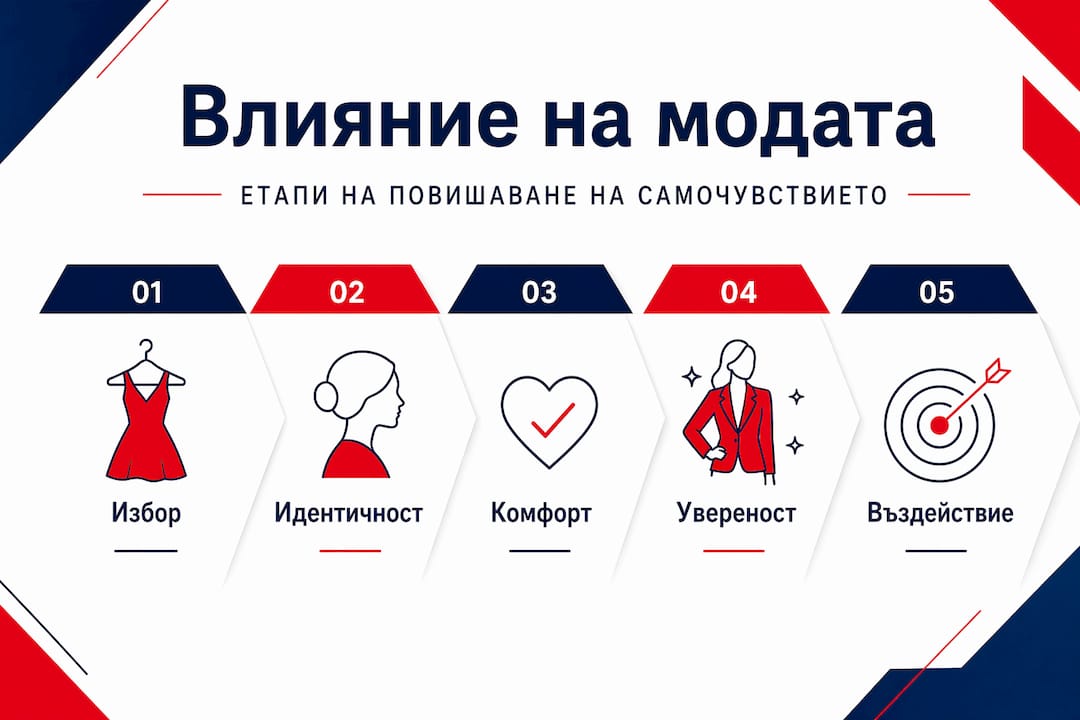
The "nothing to wear" paradox is a telling example. Studies show that 84% of women experience this feeling regularly, despite full wardrobes. The reason is not a lack of clothes, but a lack of connection between the wardrobe and personal identity. When clothes don't reflect who you are now, choosing an outfit becomes a daily stress, not a pleasure.
Building a style connected to identity goes through four steps:
- Get to know your daily life — clothes should work for your life, not the other way around. If you spend 8 hours in an office, your wardrobe should reflect that.
- Choose clothes with personal meaning — not just clothes that look good in a storefront, but ones you feel yourself in.
- Reduce quantity, increase quality — fewer clothes with a clear function reduce stress when choosing and increase the feeling of control.
- Include at least one "power artifact" — jewelry, a scarf, or a bag with emotional value that reminds you of your strength in difficult moments.
Professional tip: Review your wardrobe and ask each item: "Do I feel like myself in it?" If the answer is "no," it's taking up space and energy without giving you anything in return.
Fashion and psychology are also connected through the concept of personal style and identity, where conscious clothing choices aid self-discovery. When you know why you wear a particular garment, it works for you on a much deeper level.
How women's fashion influences confidence in work and social life
Clothing influences how we are perceived, and well-constructed looks boost self-confidence in professional situations. When you feel comfortable in your clothes, your attention shifts to the content of the conversation, not to how you look. This is a specific competitive advantage.

| Situation | Recommended style | Psychological effect |
|---|---|---|
| Business meeting | Structured blazer, pencil skirt or trousers | Feeling of authority and control |
| Creative environment | Expressive color or print with clean silhouette | Signals individuality and confidence |
| Social event | Dress with emphasized silhouette and accessory | Boosts mood and social openness |
| Daily life | Comfortable, well-cut basic clothes | Reduces stress and maintains stable self-confidence |
First impressions are formed in seconds, and clothes play a leading role in them. Research shows that people make judgments about competence, reliability, and status based on clothing before a word is even spoken. This does not mean you should dress for others. It means that when your choice is conscious, you control the message.
Professional tip: Choose one key element for each look, for example, a structured blazer or a striking accessory, and build the rest around it. The "one focal element" strategy reduces decision fatigue and ensures a consistent, confident appearance.
Quality clothes are a high-return investment precisely because they work in multiple contexts. A woman who has built a wardrobe with a clear idea feels more confident and controls her look more easily, regardless of the situation.
Practical tips for a style that boosts self-confidence
Building a style linked to psychological support follows a specific logic. A working approach combines functionality, comfort, and a key visual element that carries personal meaning. Here's how to apply it in practice:
- Choose clothes with dual function. The garment should be physically comfortable and carry symbolic meaning for you. A dress in which you feel both comfortable and beautiful activates both "enclothed cognition" mechanisms.
- Use color consciously. Saturated colors like red, cobalt blue, and emerald green are associated with a sense of power and visibility. Pastel tones bring calm. Choosing a color is a quick way to set your emotional state for the day.
- Include "power artifacts." Personal accessories with emotional value, like jewelry from a loved one or a bag associated with an important moment, contribute to resilience and confidence in difficult situations.
- Avoid an overloaded wardrobe. The reason for low self-confidence when dressing is often the emotional burden of too many options without clear identity, not a lack of clothes. A rationalized wardrobe with a clear concept alleviates this problem.
- Follow current trends selectively. Not every trend works for you. Learn to recognize trends and adapt them to your personal style, rather than following them blindly.
Professional tip: Before buying a new garment, ask yourself three questions: Is it comfortable? Does it reflect who I am? Does it combine with at least three things in my wardrobe? If the answers to all three are "yes," the purchase is justified.
The "one key element" strategy is especially effective for women with busy daily lives. Instead of thinking about the entire look, choose one accent, such as a striking dress, a bright jacket, or a distinctive accessory, and build the rest around it. The result is a consistent style with minimal mental effort.
Key takeaways
Women's fashion influences self-confidence through specific psychological mechanisms, and conscious clothing choices are one of the most accessible tools for managing your confidence and emotional state.
| Point | Details |
|---|---|
| "Enclothed cognition" is a real effect | Clothes influence thoughts and behavior only when they carry symbolic meaning for you. |
| 96% of women feel the effect | Favorite clothes improve mood and reduce anxiety for the vast majority of women. |
| Identity is key | Self-esteem grows when a wardrobe reflects personality and daily needs, not just fashion trends. |
| Quality beats quantity | Fewer, but well-chosen clothes reduce stress and increase the feeling of control. |
| Accessories have psychological value | Personal "power artifacts" support confidence in difficult moments in a measurable way. |
Fashion as a tool for self-discovery: my perspective
I've worked with topics around style and self-confidence long enough to know that most women underestimate the influence of their wardrobe on their psyche. Not because they don't feel it, but because they consider it superficial to attach importance to it. This is a mistake.
I've seen women transform literally in minutes after changing clothes. Not because the new garment is more expensive or fashionable, but because it corresponds to who they are at the moment. The effect is immediate and measurable in their behavior.
What conventional fashion advice misses is this: the problem is rarely the clothes. The problem is the lack of a clear idea of what you want your wardrobe to say about you. When you have that idea, choosing clothes stops being a stress and starts being a means of expression.
My practical advice is simple. Choose three words you want people to use to describe you when they see you. Then look at your wardrobe and check if the clothes in it communicate exactly those words. If not, you know where to start. Stylish clothes inspire confidence only when they are in sync with your personality, not just when they follow trends.
— Milen
Build a confident wardrobe with Mythos
Mythos offers collections created for women who understand that quality and style are not a luxury, but an investment in themselves. Each garment in the assortment is chosen with attention to material, silhouette, and functionality, precisely because we know that the right clothing makes a difference not only to your appearance but also to how you feel.
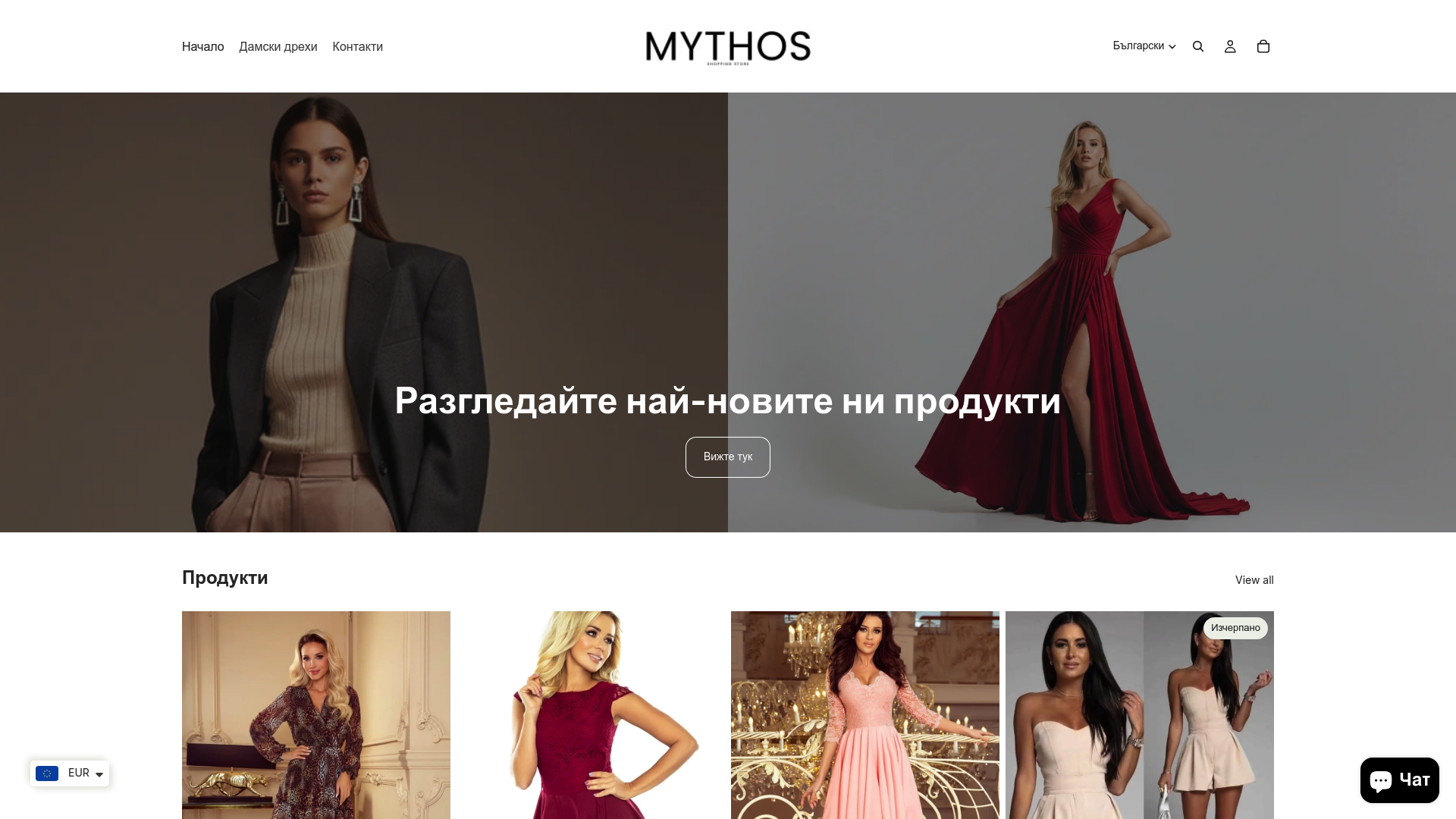
Whether you're looking for an office look, a special occasion, or everyday style with character, in Mythos' women's clothing collection, you'll find clothes that work for your identity. Check out the dress with an eye-catching print as an example of a garment that combines visual accent with an emphasized silhouette. Shop consciously and build a wardrobe where every piece of clothing carries meaning.
FAQ
What is "enclothed cognition" and how does it affect women?
"Enclothed cognition" is a psychological concept where clothes influence thoughts and behavior through their symbolic meaning. The effect is activated only when the garment carries specific meaning for the wearer.
Why do I feel more confident in certain clothes?
When a garment aligns with your personal identity and is physically comfortable, it activates both "enclothed cognition" mechanisms. The result is real psychological support, not just a subjective feeling.
How can I build a wardrobe that boosts self-confidence?
Choose clothes that combine comfort and personal meaning, reduce quantity in favor of quality, and include at least one "power artifact." Your wardrobe should reflect who you are, not just what's fashionable.
Why do I feel stressed when dressing despite a full wardrobe?
The reason is the "nothing to wear" paradox, where 84% of women have many clothes but lack a clear connection to their personal identity. The solution is wardrobe rationalization, not adding new clothes.
Does the color of clothes affect mood?
Yes. Saturated colors are associated with a sense of power and visibility, while pastel tones bring calm. Consciously choosing a color is a quick way to set your emotional state for the day.
0 comments