

In brief:
- Quality in women's fashion depends on materials, craftsmanship, and details. High-quality clothes feel better, retain their shape and color after repeated wear and washing. Recognizing them is based on simple tests, careful inspection of seams, and the fabric label.
Quality in women's fashion is determined by three factors: material, craftsmanship, and detail. The role of quality in women's fashion is not just aesthetic. It determines how long you will wear a garment, how you will feel in it, and what message you send with your choice. Modern women choose clothes that combine comfort, style, and durability, valuing quality over current trends. This is a shift in mindset that transforms a wardrobe from a collection of clothes into a tool for self-expression.
How quality affects the feeling when dressing
A quality garment feels different from the first touch. The fabric does not irritate the skin, does not deform after an hour of wearing, and does not lose its shape after the first wash. These physical characteristics have a direct psychological impact: when clothes fit well, a woman moves with greater confidence.
The "quiet luxury" trend encourages choosing clothes with high-quality materials and craftsmanship instead of visible logos. Elegant looks are based on clean lines, fabric quality, and precise details. This trend is not a fleeting fashion. It reflects a lasting change in how women understand style.
Quality supports personal style in a specific way. When you have a fine cotton blouse or a well-tailored dress, you can combine it with different accessories and get a different result every time. Cheap clothes with a poor cut do not offer this flexibility. They look one way and only that way.
Here's what distinguishes a quality garment in terms of feel:
- Comfort in movement: A well-cut garment follows the body without restricting it.
- Thermal regulation: Natural fabrics breathe and regulate temperature; synthetics do not.
- Shape stability: Quality fabric does not stretch or shrink after washing.
- Visual freshness: The garment retains its color and structure after repeated use.
Professional tip: When trying on clothes in the store, sit down, raise your arms, and bend over. If the fabric stretches unevenly or the cut shifts, the garment will not withstand daily wear.
The role of quality in women's fashion: how to recognize good craftsmanship
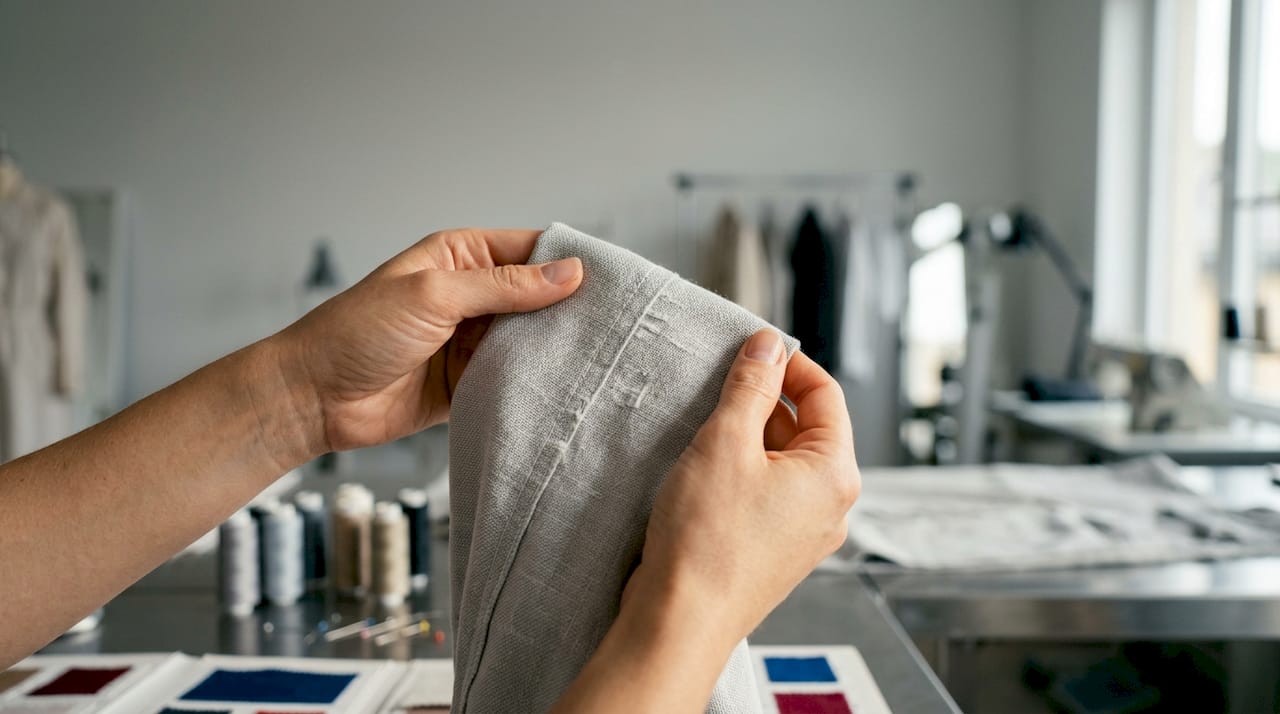
Recognizing quality is a skill that is learned. You don't have to be a designer. You just need to know what to look for.
Fabric test
Professional stylists use the "crumple and release" test on fabric to determine quality. You squeeze a piece of fabric in your hand for three seconds and then release it. High-quality fabric straightens out instantly. Cheap fabric remains wrinkled. This is a quick and reliable indicator of durability, especially for wool and cotton.
Seams, threads, and buttons
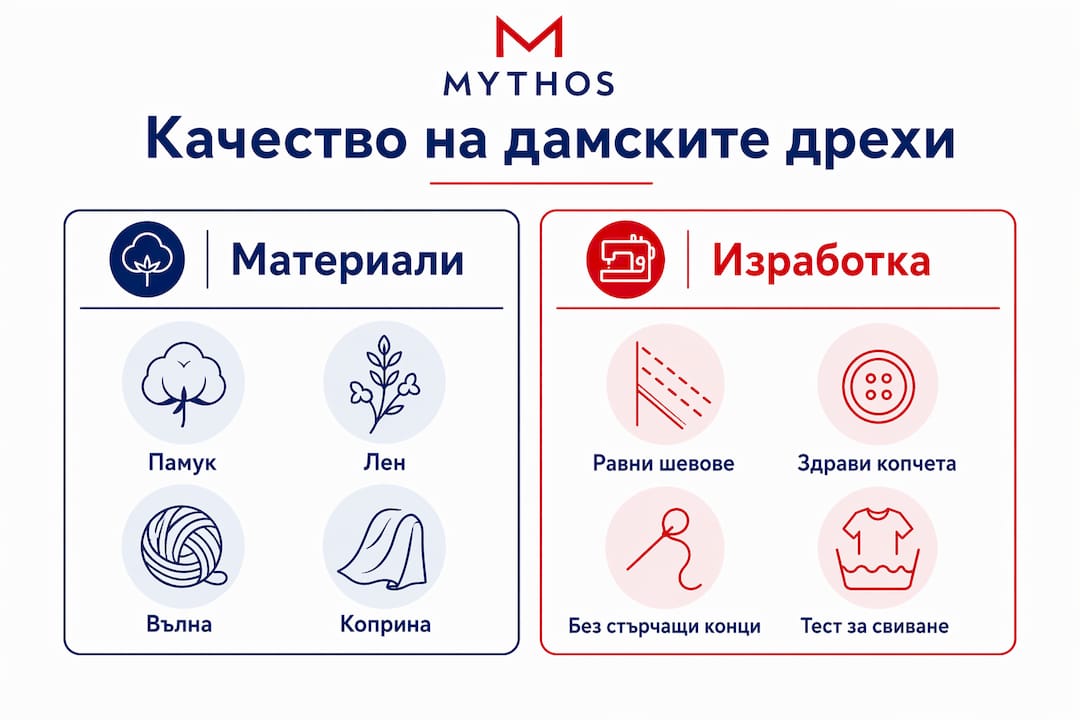
High-quality craftsmanship relies on even, tight seams with no stray threads and extra spare buttons. These details are not accidental. They show that the manufacturer has paid attention to the final product. Turn the garment inside out and check the inner seams. If they are uneven or threads are sticking out, the garment will fall apart faster.
Quality control in manufacturing
Manufacturers in the sector control quality with tests for colorfastness, pilling, and strength to reduce returns. These standards ensure that the garment will maintain its good appearance after repeated washes. When you buy from a brand with clear quality standards, you get a product that has passed real tests.
Here's a practical step-by-step check when shopping:
- Check the fabric label. Look for cotton, linen, wool, or silk as main ingredients. Over 50% natural fiber is a good sign.
- Do the wrinkle test. Squeeze the fabric and release it. Quick straightening means quality.
- Inspect the seams from the inside. Even seams without stray threads indicate good craftsmanship.
- Check the buttons and zipper. Buttons should be securely sewn. The zipper should move smoothly without effort.
- Look for spare buttons. Their presence is a sign that the manufacturer has considered the product's longevity.
- Check the pattern's symmetry. For striped or plaid fabrics, the pattern should match at the seams.
| Indicator | Quality garment | Low-quality garment |
|---|---|---|
| Wrinkle test | Straightens instantly | Remains wrinkled |
| Seams | Even, no stray threads | Uneven, with visible threads |
| Buttons | Securely sewn, with spares | Loose, no spares |
| Material | Over 50% natural | Mainly synthetic |
| Color after washing | Retained | Faded |
Professional tip: Check the garment in daylight. Artificial lighting in stores hides fabric defects and color irregularities. Take the garment to the window or display before deciding.
For a more detailed guide on recognizing quality clothes when shopping online and offline, Mythos offers practical advice tailored to women's real needs.
Natural versus synthetic materials: which is better?
The choice of material is the core of quality in women's fashion. Experts recommend natural materials such as cotton, linen, wool, and silk as more advantageous and higher quality compared to synthetics. These materials retain their appearance and durability after repeated washes, while synthetics wear out faster.
Here are the specific differences:
Cotton is breathable, hypoallergenic, and easy to care for. It is ideal for everyday clothes such as blouses, pants, and dresses for the warmer half of the year. Its disadvantage is that it wrinkles easily and can shrink at high washing temperatures.
Linen is more durable than cotton and improves with time. Each wash makes it softer. It is ideal for summer dresses and pants. It wrinkles, but wrinkling in linen is accepted as an aesthetic feature of the material.
Wool naturally regulates temperature. It is warm in winter and cooler than synthetics in transitional seasons. Quality wool does not itch or cause irritation. Merino wool is particularly prized for its fine fiber.
Silk is the most luxurious natural material. It shines naturally, regulates temperature, and is extremely soft. It requires careful maintenance, but silk garments retain their appearance for years with proper storage.
Synthetic fabrics often retain unpleasant odors, wear out quickly, and form pills. This reduces their longevity and visual appeal. Polyester is cheap to produce, but after about ten washes, it loses its luster and starts to look worn.
Blended fabrics are a compromise. Cotton with elastane provides stretch without loss of breathability. Wool with polyamide is more durable than pure wool. The key is the proportion: if the natural material is over 70%, the garment retains the advantages of natural fibers.
- Natural materials have a lower environmental footprint in production.
- Synthetics release microplastics with every wash, which end up in rivers and oceans.
- Garments made from natural materials biodegrade, synthetics do not.
- A quality natural garment lasts longer, reducing overall consumption.
The choice of material is not just a matter of comfort. It is also a matter of environmental responsibility.
How to build a sustainable wardrobe with attention to quality
A sustainable wardrobe does not mean an expensive wardrobe. It means a thoughtful wardrobe. The fashion industry encourages buying fewer but higher-quality clothes to reduce the ecological footprint. This is also the most practical approach for a woman who wants to look good every day without spending hours in front of her wardrobe.
The principle is simple: ten quality clothes that can be combined with each other offer more options than thirty cheap clothes, each of which looks good in only one way. A classic white cotton shirt, well-cut linen trousers, and a dress with a clean silhouette are examples of clothes that work in multiple contexts.
Here are concrete steps to build such a wardrobe:
- Invest in basics. Neutral colors like white, black, beige, and navy combine with everything. A quality base in these colors is more valuable than ten colorful clothes of poor craftsmanship.
- Buy less often, but more thoughtfully. Before purchasing, ask the question: how many things in my wardrobe will this garment combine with? If the answer is less than three, reconsider.
- Maintain clothes properly. Quality clothes require proper maintenance. Wash at the recommended temperature, dry in the shade, and store on a hanger, not folded.
- Explore the secondary market. When buying second-hand clothes, it is important to check the material, the strength of the seams, and the condition of the buttons. The secondary market offers high-quality finds at affordable prices and reduces textile waste.
- Avoid impulse purchases. A garment bought in a hurry just because it's on sale is rarely worn more than twice.
Professional tip: Before buying a new garment, check if you have something similar at home. If you have three black blouses, a fourth one does not add value to your wardrobe, regardless of the price.
The higher the quality of the clothes, the better their ecological footprint. This is especially true when natural materials and fewer, but better, items are preferred. For women looking for sustainable women's fashion without compromising elegance, the "less is more" approach is the only one that works long-term.
Key takeaways
Quality in women's fashion is recognized by the material, craftsmanship, and details, not by the price or brand.
| Point | Details |
|---|---|
| Material is the foundation | Natural fabrics like cotton, linen, wool, and silk last longer and are more comfortable than synthetics. |
| Workmanship reveals quality | Even seams, securely sewn buttons, and spare buttons are a sign of careful craftsmanship. |
| The wrinkle test works | Squeeze the fabric and release it: quick straightening means durability and quality. |
| Less is more | Ten quality clothes offer more combinations and lower costs long-term than thirty cheap ones. |
| Secondary market is a resource | Quality second-hand clothes are an affordable and sustainable way to enrich your wardrobe. |
Quality as a choice, not a luxury
I have worked with many women who believe that quality clothes are a privilege for those with a large budget. This is a myth that the fashion industry maintains to sell more at lower prices.
The truth is different. The woman who buys three cheap blouses per season spends more over three years than the woman who buys one quality blouse and wears it for five years. The math is simple. The psychology is more complex: it's hard to resist the low price at the moment of purchase.
I have observed how women who have transitioned to fewer but higher-quality clothes describe the change in the same way: "I wake up in the morning and know what to wear." A quality wardrobe eliminates the fatigue of choice. When every garment is good, every combination works.
There's also something rarely said openly: a quality garment makes you feel better not because it's expensive, but because it fits well. The fabric doesn't irritate, the cut doesn't restrict, the color doesn't fade after three washes. These small things build confidence.
My advice is specific: next time you shop, spend half the money but with twice the attention. Check the material, inspect the seams, do the wrinkle test. If the garment passes these three checks, it will last in your wardrobe.
— Milen
Quality women's clothing from Mythos
Mythos offers a collection of women's clothing, carefully selected for material and craftsmanship.

In the Mythos women's clothing collection, you will find dresses, blouses, pants, and sets where fabric quality and precise cuts are a priority. Each model is chosen with the woman in mind who wants to look good without spending hours choosing. Mythos combines current style with attention to detail to provide clothes you wear with pleasure season after season. Browse current women's models and find your next favorite item.
Frequently asked questions
How do I recognize a quality garment when shopping?
Check the fabric on the label, perform the wrinkle test, and inspect the seams from the inside. Even seams and spare buttons are a reliable sign of good craftsmanship.
Which fabrics are of the highest quality for women's clothing?
Cotton, linen, wool, and silk are the highest quality natural fabrics. They retain their appearance and durability after repeated washes, unlike synthetic fabrics.
Why are synthetic materials of lower quality?
Synthetics pill, retain odors, and lose shape faster than natural materials. They also release microplastics during washing, making them less sustainable and environmentally friendly.
How do I build a sustainable wardrobe on a limited budget?
Buy fewer but higher-quality clothes in neutral colors that can be combined. The secondary market is a good resource for quality finds at an affordable price.
What is "quiet luxury" and how is it related to quality?
"Quiet luxury" is a trend where style is built through material quality and precision of details, rather than visible logos. Elegant looks rely on clean lines and fabric quality.
0 comments