

In brief:
- Current fashion is an important tool for self-expression, a social code, and a manifestation of personality. It differs from trends, which are short-lived and seasonal, by emphasizing the long-term fundamental basis of style. Understanding and consciously using fashion boost self-confidence and build an authentic personal image inspired by sustainable and individual choices.
Current fashion is defined as the most powerful tool for self-expression available to the modern woman. It's not just a matter of clothes. It's a social code, a psychological phenomenon, and a personal signature that others read before you've even said a word. Prof. Lyubomir Stoykov, a leading Bulgarian fashion researcher, puts it precisely: fashion should be in step with you, not you with it. Understanding why current fashion is important means understanding yourself, your values, and how you want others to see you.
Why current fashion is important: fashion versus trend
Fashion and trend are not the same thing. Differentiating them is the first step towards building a style that works for you.
Fashion spans years and decades, while trends last months. Fashion sets the basic framework of style. Trends are short-lived waves that come and go. Personal style is the filter between the two. It decides which waves to embrace and which to let pass.
| Characteristic | Fashion | Trend |
|---|---|---|
| Duration | Years, decades | Weeks, months |
| Scope | Broad, cultural | Specific, seasonal |
| Function | Sets stylistic foundation | Adds currency |
| Example 2026 | Classic black blazer | Metallic accessories |
| Role for personal style | Constant support | Selective addition |
A concrete example: a classic black blazer is fashion. It has been present in women's wardrobes from Paris to Sofia for decades. Metallic accessories, widely advertised in early 2026, are a trend. They add sparkle, but after six months, they might look outdated.
Here's how to use this difference wisely:
- Build your wardrobe around fashion fundamentals: classic trousers, neutral blouses, structured jackets.
- Add trends only when they resonate with your character, not because you see them everywhere.
- Ask yourself: "Will I like this garment in two years?" If the answer is uncertain, it's a trend, not fashion.
- Invest more in fashion fundamentals and less in seasonal pieces.
Understanding this difference protects you from impulsive shopping and helps you build a wardrobe with long-term value.
How fashion builds identity and confidence
Fashion is a social and psychological code. The clothes you wear influence not only how others see you but also how you feel about yourself.

The psychology of fashion is a documented field. Research shows that clothing activates what is called "enclothed cognition": when you wear a garment associated with a certain role or quality, your brain activates the behavior associated with it. A woman dressed in a structured blazer feels more confident in a meeting. A woman in a bright red dress enters the room with a different energy. This is not superficiality. This is psychology.
Fashion is a social code and a means of identity building that allows for less frequent but more confident shopping. The shift from authoritarian to horizontal models means that today you create your own taste, without waiting for permission from the fashion runways.
Prof. Lyubomir Stoykov recommends an integral style in harmony with one's personality, instead of blindly following trends. True taste is manifested in the combination of fashion and individuality. A woman who wears clothes chosen with a clear understanding of herself radiates authenticity that no trend can imitate.
Practical real-life examples:
- A 35-year-old woman, a manager in a corporate environment, builds her style around structured dresses and neutral tones. She adds one bold accessory a day, such as a bright bag or unusual earrings, to maintain her individuality in a conservative environment.
- A 28-year-old woman, working in a creative industry, mixes vintage pieces with current silhouettes. She doesn't follow trends literally but interprets them through her own perspective.
- A 42-year-old woman, mother and entrepreneur, chooses quality fabrics and classic cuts. For her, the meaning of fashion is in the feeling of comfort and confidence, not in ostentation.
Professional advice: Before buying a new item of clothing, ask yourself three questions: Does it reflect who I am? Does it combine with at least three other things in my wardrobe? Will I wear it in two years? If the answer to all three is "yes," the purchase is justified.
Understanding the importance of personal style as a tool for self-knowledge is key for any woman who wants to use fashion consciously.
How social media changed the meaning of fashion?
The digital era transformed fashion in a way no designer anticipated. TikTok, Instagram, and Pinterest turned every woman into a potential stylist and a potential victim of the fashion algorithm simultaneously.
The digital era transformed the consumer into an active style creator through style nomadism and digital spaces. Style nomadism means the freedom to explore multiple visual identities without being limited to one. Today you can be inspired by Japanese minimalism in the morning and Italian glamour in the evening. The digital space is a laboratory for stylistic creativity.
Here's how to use social media for self-expression without falling into its traps:
- Follow accounts that showcase styles close to your personality, not just those with the most followers. The algorithm shows what's popular, not necessarily what's right for you.
- Save inspiration in separate folders by category: workwear, everyday, special occasions. This way, you build a visual dictionary of your style.
- Don't buy impulsively after seeing something on TikTok. Wait 48 hours. If you still want the garment, it probably meets a real need.
- Distinguish inspiration from pressure. Social media is full of beautiful images, but they are a curated world, not reality.
“Digital fashion creates new opportunities for creativity and freedom, dismantling the traditional authority of designers and fashion runways.” — Gen Z and digital fashion
The challenge is real. The industry uses consumer insecurity through digital networks to sell illusions of social status. The result is constant credit shopping and a lack of true self-confidence. A woman who buys clothes to please the algorithm loses connection with her own style.
The solution is not to give up social media. The solution is to use it as a tool for inspiration, not as a guide for mandatory following. The practical guide for online shopping for women's clothing can help you navigate the digital fashion world with more confidence.
Professional advice: Once a month, review what you've bought and whether you wear it. If a garment sits in your wardrobe for more than three months unused, it was bought under the influence of a trend or pressure, not out of a real need.
Sustainable fashion: style with responsibility
Sustainable fashion is the concept that combines current style and responsible consumption. It doesn't mean wearing only neutral colors or giving up elegance. It means choosing less, but better.
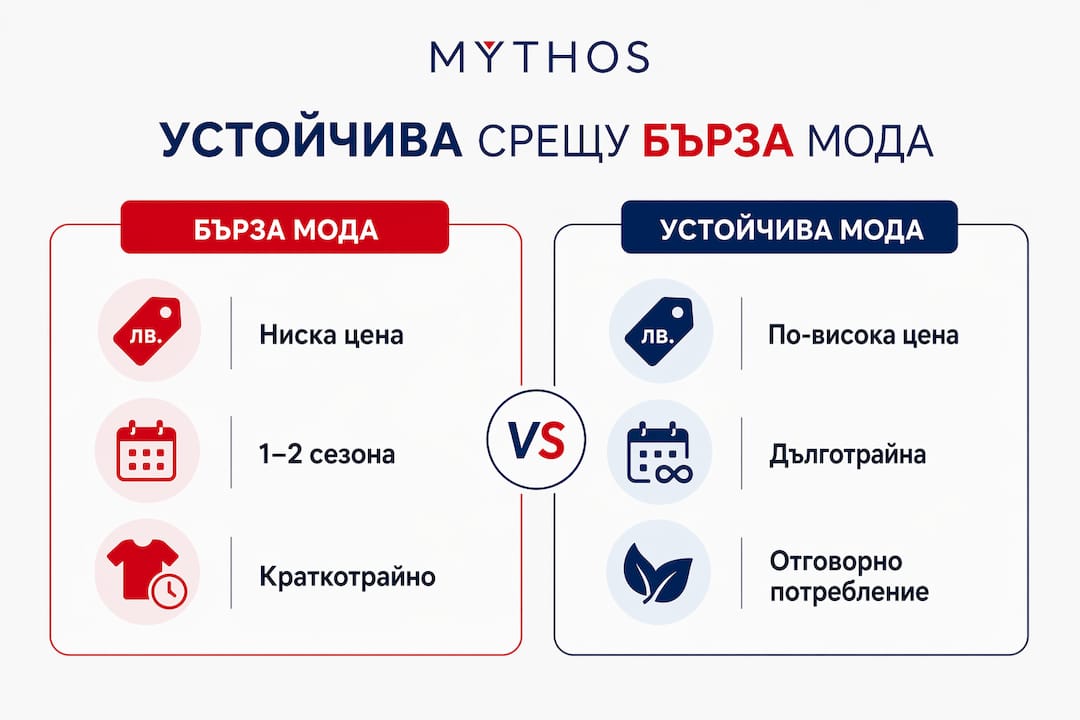
Sustainable fashion combines style and environmental responsibility, supporting durability and quality. Women are increasingly seeking a balance between elegance and conscious choice. This is a change in mindset, not just in shopping.
Here are specific principles for a sustainable wardrobe:
- Quality over quantity. One high-quality blouse that you wear 200 times is more sustainable than ten cheap blouses, each worn 10 times.
- Capsule wardrobe. Build a base of 15–20 versatile pieces that can be combined with each other. Add seasonal accents only when they complement the base.
- Know your fabrics. Cotton, linen, wool, and silk last longer than synthetic fabrics. They also feel better on the skin.
- Repair before discarding. Replacing a button or shortening trousers extends the life of a garment by years.
| Approach | Fast Fashion | Sustainable Fashion |
|---|---|---|
| Purchase Price | Low | Higher |
| Durability | 1–2 seasons | 5+ years |
| Impact | Impulsive consumption | Conscious choice |
| Stylistic Result | Following a trend | Building a style |
Conscious shopping and sustainable practices reduce impulsive consumption and increase satisfaction from choices. When you buy less and more thoughtfully, every garment in your wardrobe brings joy, not guilt.
Practical example: a woman who invests in three quality dresses from Mythos instead of ten cheap ones from fast fashion builds a wardrobe she feels confident in every day. She spends less annually and discards less. Her style looks consistent and well-considered.
Haute couture is now a means of promoting ideologies and values, not just entertainment. When you choose sustainable fashion, you make a statement about your values without saying a word.
Key takeaways
Current fashion is a tool for building identity, self-confidence, and sustainable style when used consciously and authentically.
| Point | Details |
|---|---|
| Fashion versus Trend | Build your wardrobe around fashion fundamentals and add trends only when they match your personality. |
| Psychology of Clothing | Clothes affect self-confidence and behavior, so choosing them is an act of self-discovery. |
| Digital Pressure | Use social media for inspiration, not as a mandatory shopping guide. |
| Sustainable Choice | Buy less and buy better quality to build a wardrobe with long-term value. |
| Authentic Style | Follow Prof. Stoykov's advice: let fashion keep pace with you, not you with it. |
Fashion as a tool for empowerment: my perspective
I have worked with women of different ages and with many different style stories. One thing is constant: the women who feel best dressed are not those with the most expensive clothes or those who follow every trend. They are those who know who they are.
I've seen a 23-year-old woman wearing a 15-leva vintage dress who looked more stylish than a woman with a designer bag worth 3,000 leva. The difference is not in the price. The difference is in confidence and clarity of choice.
The most common mistake I observe is following a trend because "everyone is wearing it." When you buy something because you see it everywhere, you actually disappear into the crowd instead of standing out. Fashion should make you more visible as a person, not less visible.
Another thing that impresses me is how women underestimate the power of consistency in style. You don't have to wear something different every day to look interesting. On the contrary. Women with the strongest stylistic presence have a recognizable signature: a specific color, a specific cut, a specific accessory. This consistency builds identity.
My advice is simple: invest time before you invest money. Understand what makes you feel strong and confident. Build your style around that. Trends will come and go. Your style will remain.
— Milen
Discover your style with Mythos
Mythos offers a collection of current women's clothing, created for women who value quality, style, and authenticity. The dresses, blouses, trousers, and sets in the collection are chosen with attention to fabric and cut, to give you that feeling of confidence we talk about in this article.
Whether you're building a capsule wardrobe, looking for the perfect dress for a special occasion, or simply want to refresh your everyday style, Mythos is the place to start. Browse the style guide and find inspiration for your unique look.
Frequently asked questions
Why is current fashion important for self-confidence?
Current fashion directly influences self-confidence because clothes activate psychological mechanisms related to role and identity. When you dress consciously, you send a signal to yourself and others about who you are.
What is the difference between fashion and personal style?
Fashion is a collective phenomenon, set by industry and culture. Personal style is the individual way you interpret and apply fashion according to your own personality.
How can I follow fashion trends without losing myself?
Use trends as inspiration, not as an obligation. Embrace only those that resonate with your character and integrate them into your existing style foundation.
Is sustainable fashion expensive?
Sustainable fashion requires a higher initial investment but is cheaper in the long run. One quality piece worn for five years costs less than five cheap ones changed every year.
How do social media influence fashion trends?
TikTok and Instagram have accelerated the trend cycle to weeks instead of seasons. This creates pressure for constant shopping, so it's important to use platforms for inspiration, not as a guide for mandatory purchases.
0 comments