

TL;DR:
- Fashion reflects political, social, and cultural changes in society.
- Social media accelerates trends and democratizes fashion choices.
- Psychological cycles and nostalgia lead to the return of retro styles.
Fashion is not just clothes. It is a living record of everything happening around us: political changes, economic crises, technological revolutions, and even collective emotions. Every dress, every blouse, and every trend carries the story of the moment they appeared. If you've ever wondered why your wardrobe looks different from five years ago, the answer isn't just in the new collections. It's in the changing world around you. In this article, we will explore all the key forces driving women's fashion forward and give you practical ideas on how to use them for your own style.
Contents
- Social and Cultural Reasons for Change in Fashion
- Economic Factors Driving Women's Fashion
- Technologies and Social Media: The Accelerator of Fashion Trends
- Psychological Cycles and the Return of Styles
- Globalization and Sustainability: New Challenges for Women's Fashion in Bulgaria
- Fashion is a Living Dialogue Between Community and Individuality
- Inspire Your Style with Current Women's Offerings
- Frequently Asked Questions
Key Takeaways
| Point | Details |
|---|---|
| Fashion reflects society | Changes in women's fashion are a mirror of social, cultural, and economic processes. |
| Digitalization accelerates trends | Technologies and social media make fashion waves shorter and more dynamic. |
| Sustainability is gaining momentum | Women in Bulgaria are increasingly looking for eco-friendly and ethical style solutions. |
| Fashion is a personal choice | True stylish looks come from combining individuality with current trends. |
Social and Cultural Reasons for Change in Fashion
The history of women's fashion is inseparable from the history of society. Every major social movement has left its mark on how women dress. The feminist waves of the 20th century, for example, directly influenced the acceptance of trousers as everyday wear for women. Before that, they were considered inappropriate. Today, they are a staple in every wardrobe.
Women's fashion changes due to profound cultural and social shifts, including movements for equality and identity. When society rethinks women's roles, fashion reacts immediately. We saw it in the 1960s when mini-skirts symbolized liberation. We see it now, when body positivity and inclusivity are introducing more diverse cuts and sizes in leading brands' collections.
Cultural traditions also play a huge role. In different parts of the world, women wear clothes that reflect their identity and belonging. In Bulgaria, for example, folk motifs periodically return in modern design, blending tradition with modern taste. This trend is wonderfully described in materials about luxury, style, and sustainability in the context of Bulgarian fashion.
"Fashion is a mirror of society. When society changes, fashion reflects it immediately and unapologetically." This thought summarizes why fashion as a mirror of society is so important for understanding our own identity.
Here are the main social and cultural drivers of fashion changes:
- Movements for equality and feminism – Each new wave of feminism brings a new aesthetic. The power shoulders of the 80s, the minimalist silhouettes of the 90s, and the oversized cuts of today are direct reflections of these movements.
- Cultural identity and global exchange – When different cultures meet, fashion absorbs new colors, textures, and forms. African prints, Japanese minimalism, and Scandinavian simplicity have entered mainstream fashion precisely this way.
- Historical events – Wars, pandemics, and political crises directly shape fashion. During World War II, fabrics were rationed, and skirts became shorter for practical reasons. During the COVID-19 pandemic, comfortable loungewear and athletic styles dominated globally.
- Rebellion against norms – Fashion can be a tool for protest. The punk movement, goth aesthetic, and streetwear culture are examples of how clothing is used to express dissent against the established order.
Understanding these layers gives us a key to reading fashion not only as a visual phenomenon but also as a social text.
Economic Factors Driving Women's Fashion
Besides socio-cultural reasons, economic factors are also crucial for changes in women's fashion. The connection between economics and wardrobe is more direct than it might seem at first glance.
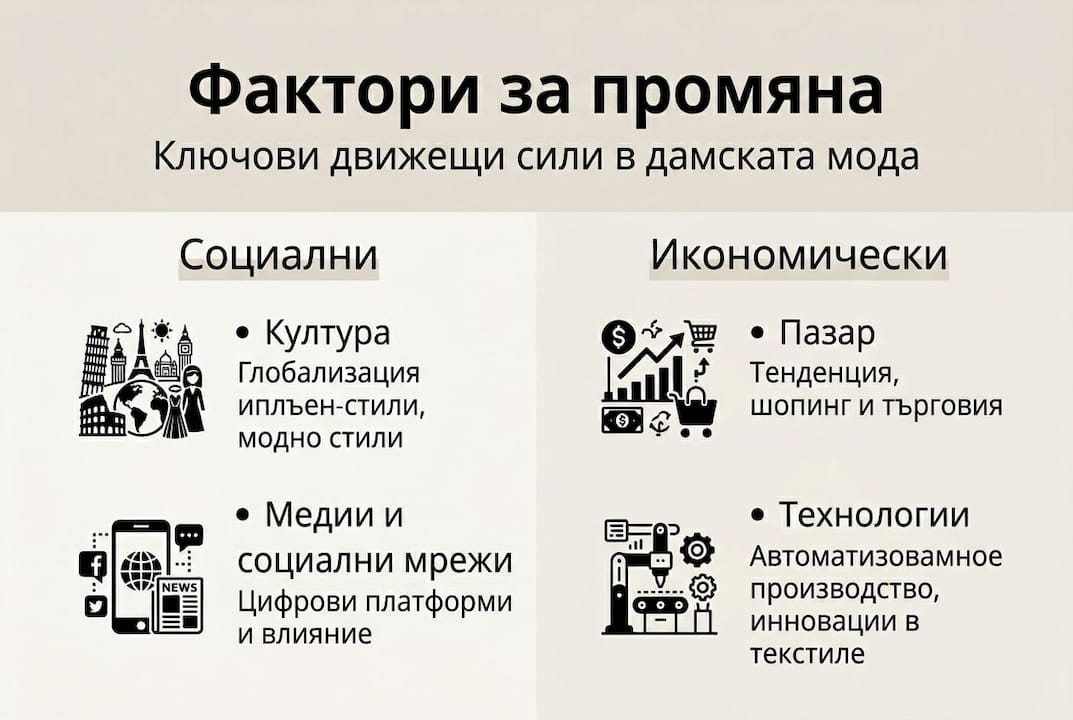
Economic conditions directly influence fashion choices: in times of prosperity, women experiment more, and in crises, they seek practical and durable styles. This is a well-documented phenomenon in fashion history. During the Great Depression in the US, for example, Hollywood deliberately produced glamorous films to compensate for the grim reality. Fashion followed the same logic: glamour was a form of psychological resistance against poverty.
| Economic Period | Fashion Characteristics | Examples |
|---|---|---|
| Economic Growth | Bright colors, luxurious fabrics, accessories | Boom of luxury brands |
| Economic Crisis | Minimalism, neutral tones, practicality | Rise of the "capsule wardrobe" |
| Recovery | Mix of practicality and optimism | Return of colors with moderation |
| Uncertainty | Investments in classic, durable pieces | Search for quality over quantity |
How to use this information practically? Here are four steps:
- Assess the current economic situation – If you are in a period of uncertainty, invest in classic, versatile pieces that work for many occasions.
- Build a capsule wardrobe – Choose 10-15 essential items in neutral tones to which you can add accents. This way you spend less but always look stylish.
- Follow trends through trend recognition – Knowing which styles are current helps you make smarter purchases.
- Invest in quality – A good coat or a quality blouse made of natural fabric will last you for years, while cheap alternatives quickly lose their appearance.
Professional advice: When shopping during economic uncertainty, ask yourself, "Will I wear this in three years?" If the answer is "yes," the purchase is justified. If you're unsure, skip it.
It's interesting that in Bulgaria, the trend towards practicality and quality is particularly strong. Bulgarian women traditionally prefer clothes that can be worn in various situations, from work to dinner. This practicality does not exclude style but enriches it with realism and functionality.
Technologies and Social Media: The Accelerator of Fashion Trends
To economics, we add a new powerful driver: digitalization and the influence of social media. If fashion used to change twice a year (spring/summer and autumn/winter), today we talk about microtrends that come and go in weeks.
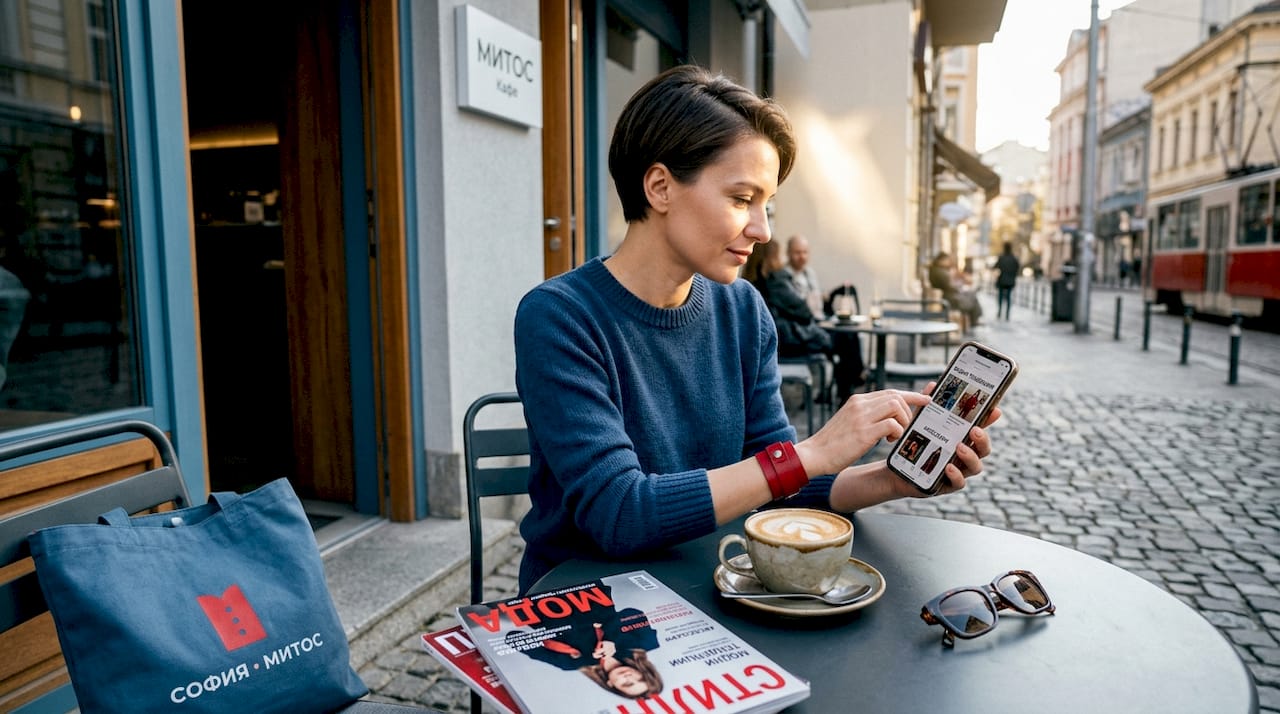
Technologies and social media accelerate trends through instant dissemination of visual content. A post on Instagram or a video on TikTok can make a certain cut or color viral in hours. Before the digital era, fashion trends traveled from runways to mass consumers over months. Now, it happens in days.
Data that speaks for itself:
According to statistics on social media influence, algorithms of platforms like TikTok and Instagram directly shape the fashion preferences of millions of users, shortening the trend cycle to a minimum.
Social media and influencers dominate purchasing decisions among Bulgarian women aged 20-45. This is the reality of the market, and it's important for understanding our own fashion choices.
Here's how social media specifically changes women's fashion:
- Influencers as new fashion editors – Instead of waiting for magazines to tell us what's fashionable, we follow Instagram and TikTok profiles whose owners build entire aesthetics and communities around them.
- Microtrends – Phenomena like "cottagecore", "quiet luxury", or "Y2K revival" are born and die on social media much faster than traditional fashion cycles would allow.
- Democratization of fashion – Every woman can share her style and inspire others. Fashion is no longer solely the property of the elite.
- Sustainable fashion and Gen Z – The younger generation uses social media to promote second-hand shopping, capsule wardrobes, and eco-friendly brands. This trend is strong in Bulgaria as well.
The transformation of online fashion is described in detail in the material on the transformation of online fashion, where you can also find practical tips for shopping in the digital age.
Psychological Cycles and the Return of Styles
After the technological factor comes psychology as a deep and often unconscious driver of fashion evolution. Why does your mom wear the same wide-leg jeans you recently discovered in your favorite store? The answer lies in the psychological cycles of nostalgia.
Psychological cycles and nostalgia bring back styles at approximately 20-year intervals when the new generation discovers the aesthetics of their parents as something fresh and exciting. This is no accident. It's the result of specific psychological mechanisms.
| Decade | Styles that have returned now | How to wear them modernly |
|---|---|---|
| 70s | Bell-bottoms, boho | With modern accessories and a minimalist top |
| 80s | Power shoulders, neon colors | In more subdued versions, mixed with neutrals |
| 90s | Slip dresses, plaid shirts, mini skirts | Layered and combined with modern shoes |
| 2000s | Low-rise, logomania | In more elegant and high-quality versions |
The psychological mechanisms behind these returns include:
Nostalgia as an emotional anchor – When the world is uncertain, people turn to the past as a simpler and more familiar place. Clothing is a quick way to connect with these feelings.
Generational exchange – When daughters find their mothers' dresses "vintage" and cool, they take them and adapt them. This is how style travels between generations.
Reaction against the present – If current trends are too minimalistic, the next wave will be more decorative. If they are too colorful, a period of neutrals will come. Fashion moves in pendulum cycles.
Professional tip: When you notice the return of an old style, don't copy it literally. Take just one element, for example, the wide-leg pants from the 70s, and combine it with a modern blouse and current shoes. This way you look inspired by the trend, but you are not its victim.
In Bulgaria, elements from the 90s and early 2000s are making a strong comeback. Slip dresses, plaid patterns, and Y2K aesthetics are visible in many brands' collections. You can also find inspiration in the material on modern Bulgarian brands, where these trends are presented in a local context.
Globalization and Sustainability: New Challenges for Women's Fashion in Bulgaria
The final layer of analysis combines international influence and contemporary environmental values. Globalization has done something incredible: it has allowed a woman in Sofia to wear trends from the runways of Milan, Paris, and New York almost simultaneously with women there.
In Bulgaria, globalization, e-commerce, and sustainability are actively changing the fashion market and consumer attitudes. Online shopping has provided access to global brands and trends without the need to travel abroad.
Here's how these forces manifest specifically:
- Access to global trends – Through online platforms, Bulgarian women can order from anywhere in the world. This has democratized fashion and raised expectations for quality and style.
- Demand for sustainable materials – More and more women are asking what a garment is made of, under what conditions, and whether the brand has an environmental policy. This trend is growing especially among women under 35.
- Adaptation of global trends – Bulgarian women rarely follow trends blindly. They adapt them to the local climate, lifestyle, and their own taste. The result is an interesting mix of global and local.
- Fashion with care for nature – The concept of sustainable women's fashion is gaining momentum in Bulgaria as well. Women are looking for clothes that not only look good but are also produced responsibly.
- Second-hand and exchange – Online platforms for used clothes are growing rapidly. They combine sustainability with affordability and the discovery of unique pieces.
The topic of fashion and responsibility is particularly important in the context of fast fashion, which produces enormous amounts of waste. Conscious clothing choices are not only trendy, but also necessary.
Globalization also brings challenges. When everyone follows the same trends, individuality is lost. That's why the most interesting styles today are those that skillfully blend the global with the personal and local.
Fashion is a living dialogue between community and individuality
Having explored all the driving forces, we want to share something that is rarely said directly: true fashion is not about following rules. It's about understanding them and then cleverly breaking them.
We see women who buy every new trend and yet don't look stylish. And we see women who wear the same three dresses in different ways and look amazing. The difference is not in the clothes. It's in understanding one's own identity.
Fashion is a dialogue. Between you and society. Between the past and the present. Between the global and the personal. When you understand why trends emerge, you become their co-creator, not just a consumer. You can take an element from retro style, mix it with something contemporary, and add a local accent, for example, inspired by Bulgarian designer brands, and the result will be something unique.
A truly stylish woman does not follow blindly. She observes, understands, chooses, and adapts. This ability for synthesis is the most valuable skill in fashion.
Inspire your style with current women's offerings
Now that you understand why fashion changes and what forces drive it, it's time to turn knowledge into action.
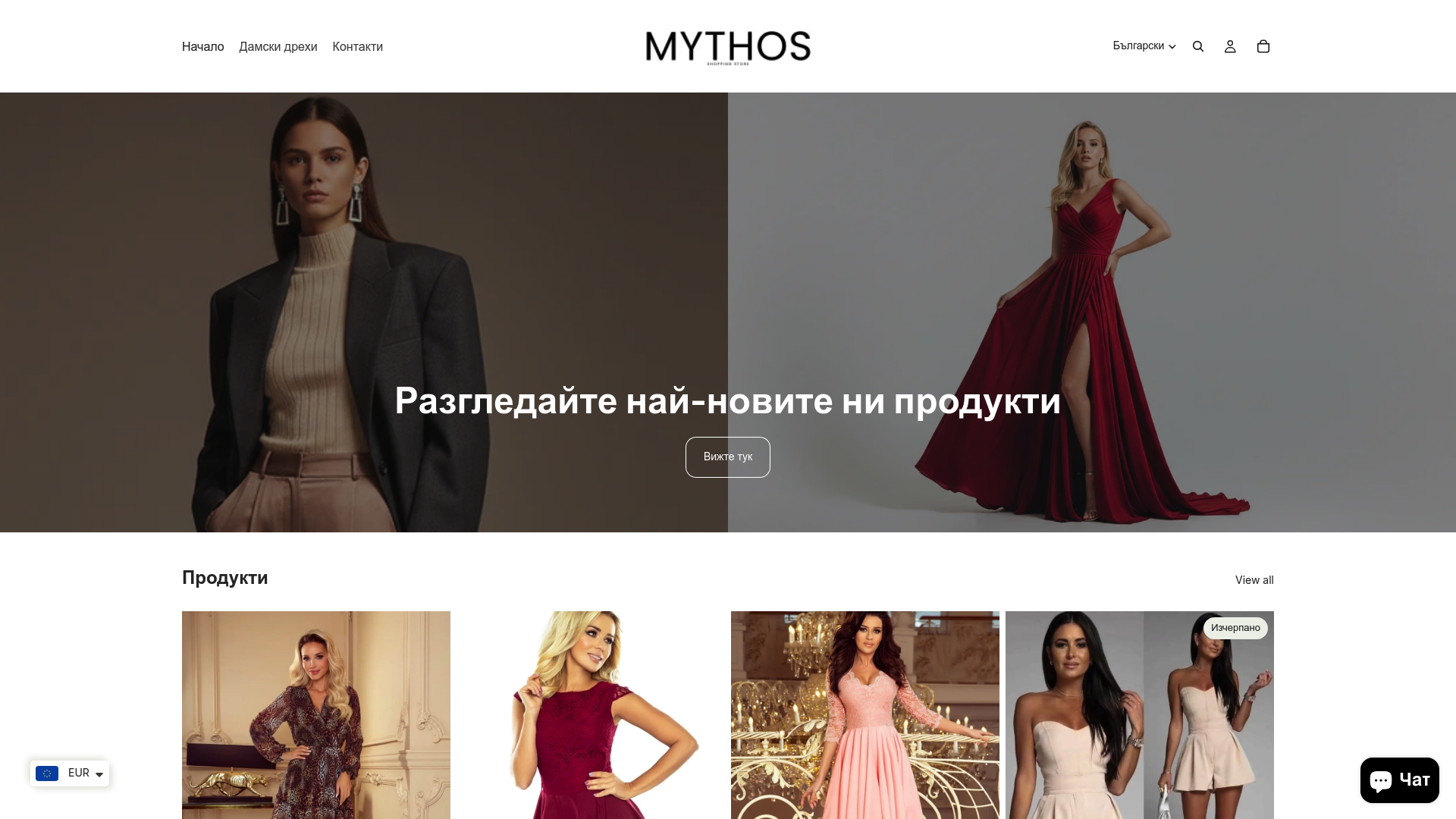
At Mythos.bg you will find women's clothing that reflects all the trends we talked about: from classic silhouettes with a modern twist to sustainable fabrics and current colors. Our collections are selected with attention to quality, comfort, and style, because we believe that you can look amazing without compromising on either. Browse our dresses, blouses, pants, and sets, find the piece that speaks to your individuality, and create a look that is both current and authentically yours.
Frequently Asked Questions
How often do trends in women's fashion change?
Nowadays, fashion cycles can change every 6-12 months, and even faster for micro-trends on social media. The influence of platforms like TikTok and Instagram is key to this acceleration.
Why do many retro styles become relevant again?
Psychological cycles and nostalgia bring back styles from the past at approximately 20-year intervals, when a new generation discovers old aesthetics as something fresh and inspiring.
How can I be stylish without blindly following trends?
Combine modern and classic elements, paying attention to your own individuality and comfort. Choose only one or two trendy items and mix them with tried-and-true classics from your wardrobe.
How does sustainability affect women's fashion in Bulgaria?
Sustainability is becoming increasingly important, with the Bulgarian market showing a growing demand for durable, ethical, and ecologically produced clothing, especially among younger female consumers.
Recommended
- Essence and advantages of women's sets for stylish women – Mythos Bulgaria
- How to recognize the most current trends in women's fashion – Mythos Bulgaria
- Sustainable women's fashion: elegance without compromise – Mythos Bulgaria
- Classic women's fashion: build a timeless and elegant style – Mythos Bulgaria
0 comments